

Annapolis Warehouse Worker Injury Attorney
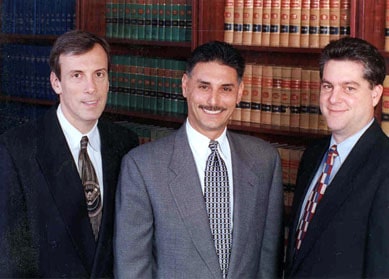
Warehouse work in and around Annapolis carries real physical risk every shift. Forklifts move through tight aisles, shelving systems hold thousands of pounds overhead, loading dock edges sit unguarded, and workers repeat the same lifting motions hour after hour until something gives. When an injury happens on that floor, the workers’ compensation system is supposed to step in. But claims do not resolve themselves, and the process from first report to final benefit payment is rarely as straightforward as employers and their insurers make it sound. The attorneys at Berman | Sobin | Gross LLP have represented warehouse workers and other hard-working Marylanders for 35 years, and they understand how these claims actually work, including when they stall, and how to move them forward.
What Warehouse Work in the Annapolis Area Actually Looks Like from a Claim Perspective
Anne Arundel County has a significant logistics and distribution presence, with warehousing operations clustered along major corridors near the airport, around Glen Burnie, and in industrial parks south and west of Annapolis proper. These facilities range from large national distribution centers to smaller regional operations, and the injury patterns tend to follow the work itself.
Forklift and pallet jack accidents produce some of the most serious injuries: crush injuries to feet and legs, spinal trauma, fractures. Cumulative strain injuries, the kind that build quietly over months of repeated overhead reaching or heavy lifting, are just as common but often harder to claim because there is no single incident an employer can point to. Falls from loading docks, injuries from falling inventory, and strains from manual pallet work account for a large share of what warehouse workers bring to a workers’ compensation attorney.
What makes these claims complicated is not usually the injury itself. It is the employer’s early response. Warehouses with high turnover rates and pressure to maintain production numbers sometimes react to injury reports in ways that create problems for a claim later: delays in reporting to the insurer, pressure on the worker to accept a quick settlement, or a directive to see a company-designated doctor whose opinions consistently favor a return to full duty ahead of schedule. Workers who do not know their rights at that stage end up in a much weaker position.
How Repetitive Stress and Cumulative Injuries Get Denied, and How That Gets Challenged
Maryland workers’ compensation law covers occupational diseases and cumulative injuries, not just single-accident trauma. But the insurer’s default position on a soft tissue claim, a rotator cuff that wore down over two years of overhead stacking, or lumbar disc damage from years of heavy lifting, is frequently a denial. The argument is almost always the same: the condition is degenerative, not work-related, and the treatment is therefore not compensable.
Challenging that denial requires medical evidence that directly connects the work demands to the diagnosed condition. It requires a physician who understands occupational medicine, not just anatomy, and who can explain in credible terms why this worker’s specific job functions accelerated or caused the pathology. That connection is rarely built automatically. It requires preparation, and it requires an attorney who knows what the Maryland Workers’ Compensation Commission is looking for in these disputes.
One of Berman | Sobin | Gross LLP’s founders literally wrote the book on Maryland workers’ compensation, a two-volume treatise that remains a primary reference in the field. That kind of institutional knowledge matters when a claim involves contested medical causation and an insurer with its own team of experts ready to testify.
What Annapolis Warehouse Workers Should Know About Their Benefits
Maryland workers’ compensation provides several categories of benefit. Temporary total disability pays a portion of lost wages when a worker cannot return to their job while recovering. Temporary partial disability applies when the worker can do some work but not their previous duties, and the wage replacement makes up part of the difference. Permanent partial disability is available when the injury leaves a lasting impairment after maximum medical improvement has been reached. Medical benefits cover authorized treatment throughout the claim, which can include surgery, physical therapy, specialist consultations, and necessary medications.
Vocational rehabilitation is another benefit that often goes unclaimed. When a warehouse worker’s injury prevents them from returning to that line of work entirely, they may be entitled to retraining or job placement assistance. The firm has litigated cases on this issue before the courts. In Fikar v. Montgomery County, the firm established that injured workers receiving service-connected disability retirement remain entitled to vocational rehabilitation services. That principle matters for workers who assume they have no path forward once they cannot return to their prior position.
The timeline on these benefits matters too. Waiting too long to file a claim can affect eligibility. Accepting a settlement too early, before the full extent of an injury is understood, can close off future medical coverage for a condition that keeps worsening.
Questions Warehouse Workers in Annapolis Ask Before Hiring an Attorney
My employer said my injury was my own fault. Does that bar my workers’ compensation claim?
Generally, no. Maryland workers’ compensation operates as a no-fault system, meaning an injured worker does not need to prove their employer was negligent to receive benefits. Fault is not the standard. The relevant questions are whether the injury occurred in the course of employment and whether it arose out of that employment. There are limited exceptions, such as self-inflicted injuries, but a worker’s own mistake in how they performed a task typically does not bar a valid claim.
Can I choose my own doctor for treatment?
Maryland law gives workers some ability to change their treating physician, but the process involves authorization from the Commission in certain circumstances, and insurers will often direct workers to panel physicians early on. If you disagree with the treatment recommendations or opinions from a company-selected physician, an attorney can help you request a change and understand your options for obtaining an independent medical evaluation.
What happens if my employer does not report my injury?
You can file a claim directly with the Maryland Workers’ Compensation Commission yourself. The claim process does not depend on your employer completing the paperwork. Missing or late employer reporting is a problem the Commission handles regularly, and it does not eliminate your right to pursue benefits.
My injury happened over time, not in one accident. Can I still file?
Yes. Maryland law covers occupational diseases and cumulative conditions, not just acute traumatic injuries. The filing deadline runs differently for these claims, typically measured from when you knew or should have known that your condition was work-related. Getting this right is one area where legal guidance before you file matters.
Will my case go to a hearing?
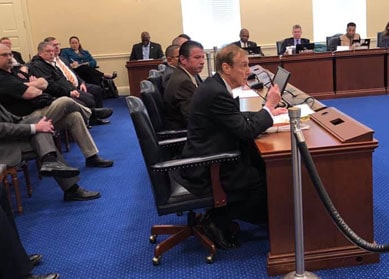
Many claims resolve without a formal hearing, but contested issues, whether over causation, the extent of disability, or the appropriate benefits, will require a hearing before the Commission. If that determination is unfavorable and the law supports an appeal, the case can proceed to circuit court and potentially further. Berman | Sobin | Gross LLP handles cases at every level, including jury trials and appeals before both of Maryland’s highest courts.
What if a third party, not just my employer, was responsible for my injury?
Warehouses regularly involve independent contractors, delivery companies, equipment manufacturers, and facility operators who are separate from the direct employer. If a third party’s negligence contributed to the injury, a personal injury claim against that party may run alongside the workers’ compensation claim. These situations require careful handling to avoid coordination issues between the two recovery streams.
Is there a cost to consult with a warehouse injury attorney?
Workers’ compensation attorneys typically work on a contingency fee basis regulated by the Maryland Workers’ Compensation Commission, meaning there is no upfront cost to retain representation. The attorney’s fee is subject to Commission approval and comes from the benefits recovered.
Counsel for Injured Annapolis-Area Warehouse Workers From a Firm That Handles the Hard Cases
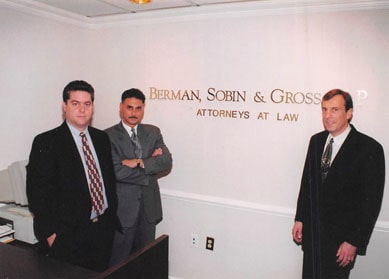
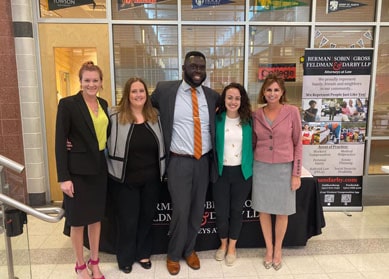
Berman | Sobin | Gross LLP is the largest workers’ compensation law firm in Maryland representing injured workers. With offices in Lutherville, Baltimore, Gaithersburg, and Frederick, and a practice that extends to Anne Arundel County and the greater Annapolis area, the firm regularly handles claims for workers across the full range of industries that operate throughout the region. The attorneys here do not limit their practice to claims that are already clean and easy. If another attorney declined your case or told you a hearing was the end of the road, Berman | Sobin | Gross LLP will evaluate it. The firm has handled tens of thousands of Commission hearings, hundreds of workers’ compensation jury trials, and appeals that have changed the law in Maryland. When a warehouse worker’s injury is serious and the claim is contested, that depth of experience is what the case needs. Contact the firm for a confidential case analysis with an Annapolis warehouse injury attorney who will treat your situation with the attention it deserves.