

Annapolis Mechanic Injury Attorney
Mechanics and automotive technicians in Annapolis work in environments that demand physical precision under genuinely dangerous conditions. Hydraulic lifts, pressurized fuel systems, toxic fluids, falling components, and heavy tools are part of an ordinary shift. When something goes wrong, the injuries are rarely minor. A Annapolis mechanic injury attorney at Berman | Sobin | Gross LLP understands the specific hazards that auto repair workers, fleet mechanics, and dealership technicians face, and what it takes to recover full benefits under Maryland’s workers’ compensation system.
What Actually Happens When a Mechanic Gets Hurt on the Job in Anne Arundel County
Mechanic injuries in Annapolis often fall into predictable patterns, but that does not make them any less serious when they happen to a specific person. Vehicle lift failures, which can occur when equipment is poorly maintained or overloaded, send workers to shock trauma with crush injuries, spinal fractures, and traumatic brain injuries. Repetitive stress to the wrists, shoulders, and cervical spine accumulates over years of torquing, pulling, and working in cramped positions. Chemical burns and respiratory damage from brake dust, transmission fluid, and exhaust exposure are recognized occupational hazards that frequently go uncompensated because workers do not realize these conditions are covered.
The Annapolis area has a significant concentration of dealership service centers along Defense Highway and around the West Street corridor, as well as independent shops, government fleet maintenance facilities, and marine equipment repair yards near the harbor. Each of these environments creates its own injury risks. A mechanic at a dealership and a government vehicle maintenance employee may have different benefit structures, different employers, and sometimes different legal pathways to compensation. Understanding which path applies to your situation is not a formality. It directly affects what you can recover.
Why Mechanic Injury Claims Get Complicated Before They Even Begin
Maryland’s workers’ compensation system covers most employees injured on the job, but mechanic injury claims run into specific complications that do not apply to office workers or retail employees. First, there is the question of employment classification. Some mechanics, particularly those working at smaller shops or doing mobile repair work in the Annapolis area, are classified by their employers as independent contractors. That classification, even when it is legally inaccurate, can be used as a reason to deny a claim outright. Berman | Sobin | Gross LLP has handled claims where workers were misclassified, and the actual working relationship made clear that workers’ compensation coverage should have applied.
Second, there is the occupational disease problem. A mechanic who develops hearing loss from years of shop noise, or a respiratory condition from chronic chemical exposure, has a valid claim, but the timeline for establishing it is more complex than a straightforward traumatic injury. Maryland law has specific rules about when the clock starts running on occupational disease claims, and missing those windows forecloses options entirely. Third, disputes over whether an injury was truly work-related, or arose from a pre-existing condition, are especially common in mechanic cases because of the physical demands of the job. Employers and their insurers frequently argue that degenerative joint disease or chronic back problems predate the employment, even when the work itself was the accelerating cause.
The Benefits a Mechanic in Annapolis May Be Entitled to Recover
Workers’ compensation in Maryland covers more than just medical bills, though fully covering all authorized medical treatment is itself significant for a mechanic facing surgery, physical therapy, or long-term specialist care. Temporary total disability benefits replace a portion of lost wages while a worker is unable to return to work. Temporary partial disability applies when a worker can return but only in a reduced capacity. Permanent partial disability, which addresses lasting functional impairment to a body part or system, is frequently contested in mechanic cases because hands, wrists, knees, and backs are simultaneously common injury sites and the tools of the trade. A permanent impairment rating that does not accurately reflect how the injury affects a mechanic’s ability to do that specific job can dramatically understate the actual loss.
For more serious injuries, permanent total disability benefits may be available. Vocational rehabilitation services, which are a recognized part of the Maryland workers’ compensation system, can provide retraining assistance to a mechanic who can no longer perform that work safely. One of the firm’s appellate victories, Fikar v. Montgomery County, established that workers receiving service-connected disability retirement can still access vocational rehabilitation benefits, which reflects how the attorneys at Berman | Sobin | Gross LLP approach the full scope of what clients are owed.
When a Third Party, Not Just Your Employer, Bears Responsibility
Some mechanic injuries involve equipment defects, faulty parts, or dangerous products that another company manufactured or supplied. When a lift malfunctions because of a design or manufacturing defect, when a tool fails in a way that injures a technician, or when a vehicle brought in for service contains a hazard that the manufacturer should have addressed, there may be a product liability or negligence claim against a party outside of the employer-employee relationship. This is separate from the workers’ compensation claim and operates under different legal standards.
Pursuing a third-party claim alongside a workers’ compensation claim requires attention to the interaction between the two. Maryland law addresses how third-party recoveries affect workers’ compensation liens, and structuring both claims correctly matters. Berman | Sobin | Gross LLP handles both workers’ compensation and personal injury claims, which means clients do not have to coordinate between separate firms navigating this overlap.
Questions Mechanics in Annapolis Ask Before Moving Forward
I reported my injury but my employer is disputing that it happened at work. What do I do?
Document everything you can, including witness contact information, photos of the worksite if accessible, and any written or electronic communications. File your claim with the Maryland Workers’ Compensation Commission directly rather than assuming the employer will do so on your behalf. An attorney can help gather evidence to establish the work-relatedness of the injury, including shop records, surveillance footage, and co-worker statements.
My employer says I am an independent contractor, not an employee. Does that mean I cannot file a workers’ comp claim?
Not necessarily. Maryland courts and the Workers’ Compensation Commission look at the actual nature of the working relationship, not just what the employer labels it. If your work was controlled by the employer, you used their tools and facilities, and you were integrated into their operations, you may be entitled to workers’ compensation coverage regardless of how your employment was characterized on paper.
I developed a back condition after years of doing this work. Is that covered?
Occupational diseases and cumulative injuries that result from workplace conditions are covered under Maryland workers’ compensation law. The challenge is proving that the work was a contributing cause and meeting the filing deadlines that apply to occupational conditions. These cases require medical evidence connecting the diagnosis to the specific demands of your job.
Can I choose my own doctor for treatment?
Maryland’s workers’ compensation system does allow injured workers to see authorized healthcare providers, though there are rules about initial treatment and referrals. An attorney can help ensure that your medical treatment is proceeding under authorized care in a way that supports your claim, and can challenge denials of specific treatments or referrals when they are medically warranted.
My employer’s insurance company wants me to give a recorded statement. Should I?
You should consult with an attorney before providing any recorded statement to an insurer. Insurance adjusters are trained to ask questions in ways that can be used later to minimize your claim. Speaking with an attorney first costs you nothing and protects what you are owed.
What if my injury prevents me from ever working as a mechanic again?
If your injury results in a permanent inability to return to your trade, you may be entitled to permanent total disability benefits and vocational rehabilitation services. These are among the most contested benefits in the workers’ compensation system, and having attorneys who are willing to take cases to hearing and beyond the Commission level matters in these situations.
How long do I have to file a workers’ compensation claim in Maryland?
Generally, you must file a claim with the Maryland Workers’ Compensation Commission within two years of the date of your accidental injury. For occupational diseases, the timeline runs from the date you knew or should have known the condition was work-related. These deadlines are strict, and missing them can bar recovery entirely.
Annapolis Mechanic Injury Representation Backed by 35 Years of Maryland Workers’ Compensation Work
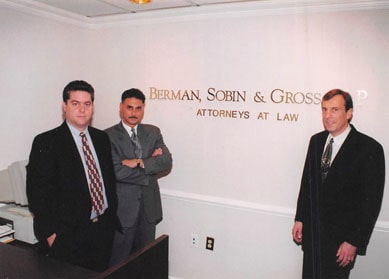
Berman | Sobin | Gross LLP has spent more than 35 years representing Maryland workers in the full range of workers’ compensation cases, including the contested, the complex, and the ones other attorneys have declined to take. One of the firm’s founders literally wrote the treatise that Maryland practitioners use as the authoritative reference on workers’ compensation law in this state. The firm has handled hundreds of jury trials and appeals before Maryland’s highest courts, and its attorneys are present at the legislative level advocating for changes that directly affect how workers are treated under the law. For mechanics and skilled tradespeople in Annapolis and throughout Anne Arundel County, that breadth of experience means having a firm that knows where employer and insurer resistance typically arises in these cases and how to address it. If you are dealing with a work injury as an Annapolis mechanic, Berman | Sobin | Gross LLP is prepared to evaluate your claim and pursue the full compensation the law allows.