

Annapolis Landscaping Worker Injury Attorney
Landscaping is physically demanding work, and Anne Arundel County has a substantial landscaping workforce that keeps residential neighborhoods, commercial properties, and the grounds surrounding Annapolis’s historic sites maintained year-round. Workers in this industry face a steady stream of hazards that few other trades match: rotating blades, heavy equipment on uneven terrain, repetitive strain over long shifts, and chemical exposure from fertilizers and herbicides. When those hazards cause a serious injury, the path through Maryland’s workers’ compensation system is rarely straightforward. Berman | Sobin | Gross LLP has spent 35 years representing injured workers across Maryland, and the firm’s Annapolis landscaping worker injury attorneys understand what it takes to build and pursue a claim for someone in this industry.
What Makes Landscaping Claims Distinct from Other Occupational Injuries
Landscaping injuries do not fit neatly into the mold of a warehouse slip-and-fall or an office repetitive stress claim. The work environment changes constantly. A crew might start the morning in Annapolis proper, move to a property in Severna Park, and finish in Arnold or Edgewater, all in the same shift. That mobility creates documentation challenges that can complicate a claim from the outset.
The equipment involved also matters. Zero-turn mowers, chainsaws, wood chippers, and string trimmers all carry specific injury profiles. Blade contact injuries can cause severe lacerations and amputations. Rollover incidents on slopes present a particular risk in Annapolis’s terrain near the Chesapeake Bay waterfront, where properties often feature significant grade changes. Vibration from extended equipment use contributes to hand-arm vibration syndrome, a condition that is underdiagnosed and frequently disputed by insurers. Workers who spend entire seasons operating vibrating tools may not connect their numbness, grip weakness, or joint pain to a compensable occupational disease.
Heat illness is another category that affects landscaping workers more than almost any other outdoor occupation. In Maryland’s summers, crews work through peak heat hours without reliable access to shade or climate control. Heat exhaustion and heat stroke are serious medical events, and the workers’ compensation implications, including the question of whether a heat illness qualifies as an accidental injury or occupational disease under Maryland law, are not always obvious.
Employers and their insurers sometimes push back on these claims by arguing that the worker’s own conduct contributed to the injury, or by raising questions about whether a particular task was within the scope of employment when the crew was moving between job sites. These arguments need to be addressed directly and early, not after a claim has already been denied.
Compensation Benefits Landscaping Workers in Annapolis Should Understand
Maryland’s workers’ compensation system provides several categories of benefits to injured workers, and the ones that apply in a given landscaping injury case depend on what happened and the medical consequences that followed.
Temporary total disability benefits replace a portion of lost wages while a worker is medically unable to return to their job. For a landscaper who cannot mow, load equipment, or operate machinery following a surgery or acute injury, this benefit is often the most immediate financial need. The calculation is based on average weekly wages, and for workers whose pay varies seasonally, getting that calculation right matters significantly over a long recovery period.
Permanent partial disability benefits apply when a worker recovers from the acute phase of an injury but retains permanent impairment. An injury to a hand, shoulder, knee, or back can translate into a permanency award based on a rating of the affected body part. Maryland’s permanency system is structured but requires proper medical documentation and, often, careful evaluation of whether the rating assigned by an employer’s physician accurately reflects the worker’s actual functional loss.
When a landscaping injury is severe enough that a worker cannot return to their trade at all, vocational rehabilitation becomes relevant. Maryland law provides for rehabilitation services in appropriate cases, including situations where a worker is receiving disability retirement benefits, as recognized in appellate decisions the attorneys at Berman | Sobin | Gross LLP have been part of shaping. Workers who assume they cannot pursue vocational rehabilitation alongside other benefits may be leaving something significant on the table.
Medical benefits cover treatment related to the injury, but disputes over what treatment is authorized and which medical providers are acceptable arise frequently in landscaping claims. Insurers may resist authorization for specialist referrals, physical therapy beyond a limited course, or surgical intervention. Having legal representation during the medical phase of a claim, not just at the hearing stage, affects outcomes that are difficult to reverse later.
How Claims Get Complicated and What That Means for Injured Landscapers
A number of factors specific to the landscaping industry create legal complications that injured workers should be aware of before assuming their claim will proceed without friction.
Employee misclassification is one of the most significant. Some landscaping employers treat workers as independent contractors in an effort to avoid workers’ compensation coverage obligations. Maryland law has specific standards for determining worker status, and a classification as an independent contractor on paper does not necessarily control the outcome at the Workers’ Compensation Commission. If an employer directed the work, supplied the equipment, set the schedule, and had ongoing control over how the job was performed, the classification may not hold. Berman | Sobin | Gross LLP takes on these contested classification cases rather than referring injured workers elsewhere.
Seasonal layoffs also affect claims. A worker injured near the end of the season who is then not called back in the spring may face an employer who disputes whether the absence is related to the injury. Building a clear evidentiary record of what the injury prevented the worker from doing, and when, matters for both lost wage claims and any subsequent hearing.
Language barriers are a reality in this workforce. The firm has attorneys and staff members who are fluent in Spanish and work with clients without translation concerns, which matters in an industry where communication gaps can lead to missed deadlines, misunderstood medical instructions, and claims that do not get filed at all.
Answers to Questions Annapolis Landscaping Workers Ask About Their Claims
Do I have to report the injury to my employer the same day it happens?
Maryland law requires that work injuries be reported to the employer promptly. Delays in reporting can create credibility issues with the insurer, though they do not automatically bar a claim. The safer approach is always to report as soon as possible, in writing if you can, and to make sure you keep a copy or record of when and how the report was made.
My employer said I am a 1099 contractor, not an employee. Does that mean I cannot file a claim?
Not necessarily. The Workers’ Compensation Commission applies its own legal analysis to determine whether a worker was truly an independent contractor or was functioning as an employee regardless of how the employer classified them on paper. This is a fact-intensive inquiry worth pursuing if you were injured on the job.
The insurer sent me to their own doctor, who said I can return to work. What do I do?
You have the right to seek an evaluation from your own physician. Employer medical experts do not have the final word on your condition or your ability to work. Conflicting medical opinions are resolved at the Commission, and Maryland courts have addressed the standards for admissible medical testimony in workers’ compensation proceedings, including when employer experts overstep the evidence.
Can I choose my own treating physician?
Maryland workers’ compensation law governs which medical providers are authorized, and there are specific procedures for changing treating physicians. An attorney can help you navigate those procedures correctly so you receive treatment from someone you trust without jeopardizing your claim.
What if my injury developed over time rather than in a single accident?
Occupational diseases and repetitive trauma injuries are compensable in Maryland, though they require a different kind of showing than a single-incident accident. The date of disablement, the connection between the condition and the work activities, and the employer’s knowledge all become relevant. These claims are more complex to present, but they are pursued regularly by the attorneys at Berman | Sobin | Gross LLP.
How long do I have to file a claim?
Maryland has specific filing deadlines for workers’ compensation claims, and they differ depending on whether the claim involves an accidental injury or an occupational disease. Missing the applicable deadline can forfeit your rights. If you are unsure where you stand relative to any deadline, getting a case evaluation promptly is important.
Can I receive benefits if I was working in a different city but live in Annapolis?
Maryland workers’ compensation coverage applies based on where you are employed and where the injury occurred, not solely where you live. The firm serves injured workers throughout Maryland regardless of which county they live or work in.
Working with Berman | Sobin | Gross LLP on an Annapolis Landscaping Injury Claim
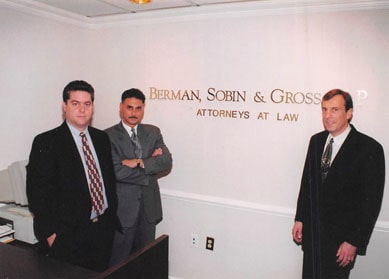
Berman | Sobin | Gross LLP is the largest workers’ compensation law firm in Maryland representing injured workers, with attorneys operating out of offices in Lutherville, Baltimore, Gaithersburg, and Frederick, providing coverage across the state including Anne Arundel County. The firm has handled tens of thousands of hearings and hundreds of jury trials in workers’ compensation matters, and its attorneys have argued before both of Maryland’s highest appellate courts. One of the firm’s founders wrote the definitive two-volume treatise on workers’ compensation in Maryland, a resource that continues to be used as the standard reference in the field. That depth of experience matters when a landscaping injury claim is disputed, when an insurer refuses authorization for needed treatment, or when an employer contests the nature of the employment relationship itself. If another attorney has declined to take your case or told you it is not worth pursuing past an initial hearing, the firm is willing to evaluate the claim and give you an honest assessment.
For an injured landscaping worker in Annapolis seeking legal representation after a serious on-the-job injury, contact Berman | Sobin | Gross LLP to speak with an attorney about your claim and what your options look like from here.