

Annapolis Factory Worker Injury Attorney
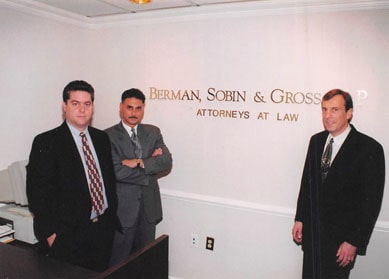
Factory and manufacturing work generates some of the most serious injury claims in Maryland’s workers’ compensation system. The hours are long, the machinery is unforgiving, and when something goes wrong on a production floor, the results can be catastrophic. Workers at Annapolis-area manufacturing facilities, distribution centers, and industrial plants have the same rights to workers’ compensation benefits as any other Maryland employee, but the path to collecting those benefits is rarely straightforward. At Berman | Sobin | Gross LLP, we have spent 35 years representing the hard-working people of this state, including those who make their living in factory and industrial settings. If you are a Annapolis factory worker injury attorney search bringing you here, read on to understand what your claim actually involves.
What Makes Factory Injury Claims Different From Other Workers’ Comp Cases
Manufacturing and industrial environments produce a specific pattern of injuries that does not look like a slip-and-fall at an office or a car accident during a delivery route. Claims from factory workers often involve crush injuries from heavy equipment, amputations or partial amputations, repetitive motion injuries that develop slowly over months or years, hearing loss from sustained noise exposure, chemical burns or toxic inhalation, and injuries caused by inadequate machine guarding or improperly maintained equipment.
Each of these injury types comes with its own medical and legal complications. A crush injury to the hand may require multiple surgeries and lengthy rehabilitation, raising questions about permanent partial disability ratings and future earning capacity. A toxic exposure claim may require expert testimony to connect the substance to the diagnosed condition. Repetitive stress claims are routinely disputed by employers and their insurers, who argue that the condition predates the job or developed outside of work.
Annapolis sits in Anne Arundel County, an area that includes light manufacturing, logistics and distribution, defense-related contractors, and maritime industrial operations along the Chesapeake Bay and its tributaries. Workers at these facilities are covered by Maryland workers’ compensation law, but the complexity of their claims often exceeds what a straightforward filing process can handle without legal representation.
The Disputes That Arise Most Often in Industrial Injury Claims
Employers and their workers’ compensation insurers contest factory injury claims aggressively, and they do so on predictable grounds. Knowing what is coming makes a difference in how a claim gets built from day one.
Causation is the most common battlefield. When a worker develops a back condition, a shoulder tear, or hearing loss, the insurer will almost always argue that the injury was not caused by work, or that a pre-existing condition is responsible for the bulk of the disability. Maryland workers’ compensation law does not require that work be the sole cause of an injury, only that work was a contributing cause, but establishing that contribution requires medical documentation and, in many cases, expert opinion that supports the claim rather than undermines it.
The selection of treating physicians matters. Employers in Maryland have limited rights to direct a worker to specific physicians in some circumstances, and insurance company doctors reliably produce opinions that minimize injury severity and hasten return-to-work timelines. Understanding when a worker can choose their own treating physician, and when an independent medical evaluation is warranted, is something experienced workers’ compensation attorneys know how to address.
Coverage disputes arise when employers claim a worker was an independent contractor rather than an employee, a characterization that becomes more common in industrial settings where contractors cycle through facilities. Maryland law has specific criteria for determining employee status, and firms that have litigated these questions before the Workers’ Compensation Commission and in the courts can challenge a misclassification effectively.
Permanent Disability and Long-Term Consequences of Factory Injuries
Many factory workers who are seriously injured do not fully recover. A lost finger changes how a person can perform work for the rest of their career. Progressive occupational hearing loss cannot be reversed. Spinal damage from years of lifting in awkward postures may reach a point where the worker cannot return to manufacturing at all.
Maryland workers’ compensation provides benefits for permanent partial disability and permanent total disability, but the amounts awarded depend heavily on how the injury is rated and classified. Ratings are conducted by physicians who assign a percentage of loss of use to a body part or function. These ratings directly affect the compensation a worker receives, and a rating that does not reflect the actual functional impact of the injury leaves money on the table.
When a factory worker cannot return to their prior occupation, vocational rehabilitation becomes part of the picture. Berman | Sobin | Gross LLP secured the ruling in Fikar v. Montgomery County that clarified injured workers receiving service-connected disability retirement are also entitled to vocational rehabilitation services. That kind of precedent-setting work reflects the depth of knowledge the firm brings to claims involving long-term consequences.
Serious factory injuries can also give rise to third-party claims separate from the workers’ compensation case. If defective machinery caused the injury, the manufacturer may be liable. If a contractor or subcontractor created the hazard, they may share responsibility. Workers’ compensation benefits are important, but they do not cover everything, and a third-party personal injury claim can reach damages that workers’ comp does not.
Questions Factory Workers in Annapolis Often Have About Their Claims
What do I do if my employer says the injury happened because I was not following safety procedures?
Maryland workers’ compensation is a no-fault system, which means worker negligence generally does not bar a claim. With limited exceptions, employees who are injured at work are entitled to benefits regardless of whether they contributed to the accident. Document what happened, seek medical treatment, and report the injury through the proper channels. Disputes about fault belong in litigation, not in the decision about whether to file.
My injury developed gradually over years. Does Maryland workers’ comp cover that?
Yes. Maryland law covers both sudden traumatic injuries and occupational diseases, including conditions that develop over time through repeated exposure or cumulative physical stress. The filing deadline and the date of injury calculation can be more complicated in these cases, which is one reason to involve a workers’ compensation attorney early.
Can my employer retaliate against me for filing a claim?
Retaliation for filing a workers’ compensation claim is illegal under Maryland law. If you are terminated, demoted, or treated adversely after filing, there are legal remedies available. Keep records of communications and employment actions that follow your claim filing.
What if I was a temporary or contract worker when I was injured?
Temporary workers placed through staffing agencies are generally entitled to workers’ compensation coverage in Maryland. The question of which employer, the agency or the host employer, is responsible for coverage can be contested. This is an area where having an attorney who knows how the Commission handles these disputes makes a real difference.
The insurer wants me to see their doctor. Do I have to go?
In Maryland, the employer or insurer may request an independent medical examination. Refusing to attend can affect your claim. However, you have the right to review the physician’s qualifications and report, and to challenge opinions that do not accurately reflect your condition. An attorney can help you prepare for this process and respond if the report is used against your claim.
How long does a factory injury workers’ comp case take to resolve?
Straightforward claims with clear causation and defined permanent impairment may resolve in months. Claims involving serious permanent disability, disputed causation, occupational disease, or third-party litigation can take considerably longer. Cases that require hearings before the Commission or appeals into the circuit courts take more time still. Resolution timelines depend on the specific facts and how aggressively the employer’s insurer is contesting the claim.
What if a prior workers’ comp attorney told me my case was not worth pursuing?
Berman | Sobin | Gross LLP takes on cases that other firms have turned away. If your claim was declined or you were told it was too difficult to pursue past an administrative hearing, that is not the final word. The firm has handled hundreds of workers’ compensation jury trials and appeals before Maryland’s highest courts, and has the resources to pursue complex cases that require significant time and effort.
Working With Maryland’s Largest Workers’ Compensation Firm Representing Injured Employees
Berman | Sobin | Gross LLP is the largest workers’ compensation law firm in Maryland representing injured workers. That distinction reflects something real: the firm has the attorneys, the staff, and the litigation infrastructure to take on cases of every level of complexity, including the hard industrial injury claims that can require expert witnesses, vocational analysis, and trial preparation.
One of the firm’s founders wrote the definitive two-volume treatise on workers’ compensation in Maryland that practitioners throughout the state continue to rely on. That kind of authorship reflects expertise built over decades, not a general practice approach applied to workers’ comp cases on the side.
When an attorney at Berman | Sobin | Gross LLP takes a factory worker’s case, that attorney stays with the client through the entire process. You will know who represents you. The firm serves clients throughout Maryland, with offices in Lutherville, Baltimore, Gaithersburg, and Frederick, and regularly handles matters for workers in Anne Arundel County and the Annapolis area.
Reaching Out About an Annapolis Factory or Industrial Injury Claim
Factory work carries real physical risk, and workers who are injured deserve straightforward answers about their options, not a runaround from an insurer looking to minimize what it pays out. Berman | Sobin | Gross LLP represents injured factory employees, manufacturing workers, and industrial laborers across Maryland, including those working at Annapolis-area facilities. Contact the firm to discuss your injury with a Maryland factory worker injury attorney who will give your case the attention it actually requires.