

Annapolis Commercial Driver Injury Attorney
Commercial drivers injured on the job in Maryland occupy an unusual position in the workers’ compensation system. The nature of the work, long-haul routes on Route 50 corridor, deliveries through the Naval Station Annapolis area, port runs connecting Anne Arundel County to Baltimore, creates injury patterns and liability questions that differ substantially from a typical workplace injury. An Annapolis commercial driver injury attorney has to understand not just workers’ compensation law but also how federal trucking regulations, employer insurance structures, and third-party liability interact when a driver is hurt. Getting those layers sorted out correctly is the difference between recovering what the law actually provides and settling for a fraction of it.
Why Commercial Driver Injuries Rarely Have Simple Answers
A warehouse worker injured on a loading dock has one employer, one workers’ compensation claim, and one set of insurance records to deal with. A commercial driver’s situation is almost never that clean. Depending on how the driver is classified, who owns the truck, and how the accident occurred, multiple parties may bear legal responsibility, including a trucking company, a freight broker, a shipper who improperly loaded cargo, or another motorist whose negligence caused the collision.
Maryland’s Route 2, the Bay Bridge approaches, and the stretch of Route 301 that runs through Anne Arundel County see heavy commercial traffic, and accidents on these routes often involve drivers employed by carriers headquartered in other states. That introduces federal Department of Transportation regulations and FMCSA rules into what might otherwise look like a straightforward Maryland claim. Hours-of-service logs, inspection records, electronic logging device data, and pre-trip inspection documentation become evidence that has to be preserved quickly.
Maryland workers’ compensation law provides a baseline of benefits for employees injured in the course of employment, including medical treatment, temporary total disability payments, and permanent partial or permanent total disability awards. But those benefits do not foreclose a separate personal injury claim against a negligent third party. For commercial drivers, that third-party claim is often more valuable than the workers’ compensation claim and is governed by a completely different legal framework. Understanding which avenue of recovery applies, and how they interact when both are available, requires working with attorneys who have handled these cases in depth.
Occupational Hazards Specific to Drivers Working the Annapolis Region
Commercial drivers in the Annapolis area face a specific combination of hazards that shapes both the injuries they sustain and the legal claims that follow. The Chesapeake Bay Bridge carries enormous truck traffic and creates bottleneck conditions where rear-end collisions are common. Deliveries to the historic district involve tight streets, inadequate loading zones, and pressure to move quickly. Drivers serving the defense contracting facilities and government agencies clustered around Annapolis and Parole often work irregular hours that compound fatigue risk.
The Port of Baltimore, accessible via Interstate 97 from Annapolis, generates significant drayage traffic through Anne Arundel County. Drayage drivers, who haul containers between the port and warehouses or rail yards, are frequently classified as independent contractors rather than employees, which raises immediate questions about workers’ compensation eligibility. Maryland courts and the Workers’ Compensation Commission have addressed misclassification disputes in detail, and the factual analysis of whether someone is truly an independent contractor versus a statutory employee under Maryland law is one that requires careful legal review rather than acceptance of whatever label an employer has assigned.
Back and spinal injuries are the most common serious injuries commercial drivers sustain, often from the cumulative vibration exposure of years of long-haul driving followed by a single traumatic event. Shoulder injuries from loading and unloading, repetitive stress injuries of the hands and wrists, and hearing loss from constant engine noise are also documented occupational conditions in this industry. The distinction between an acute injury and an occupational disease matters procedurally in Maryland, including how and when a claim must be filed, which is another reason that drivers benefit from legal guidance early in the process.
Third-Party Claims and the Interaction with Workers’ Compensation
When a commercial driver is injured because of someone else’s negligence, Maryland law allows the driver to file a workers’ compensation claim with their employer and pursue a personal injury claim against the at-fault party simultaneously. There is a subrogation component to this arrangement: if the workers’ compensation insurer has paid out benefits and the driver later recovers damages in a personal injury suit, the insurer has a right to be repaid from that recovery. The mechanics of how subrogation is handled, and how it is negotiated, significantly affects how much of a personal injury settlement the driver actually keeps.
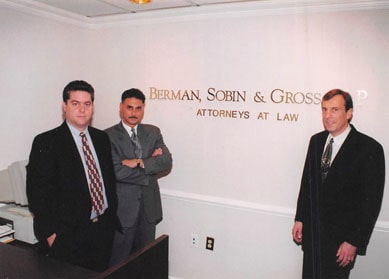
This interaction is one area where commercial driver cases become more complex than a standard car accident claim. The attorneys handling the workers’ compensation side and the personal injury side need to be coordinating rather than working at cross-purposes. Berman Sobin Gross LLP handles both Maryland workers’ compensation claims and workplace accident personal injury matters, which means the firm can look at a commercial driver’s situation whole rather than in pieces.
Third parties who may be liable in a commercial driver injury case include other negligent drivers, cargo owners who failed to properly secure loads, truck manufacturers if a mechanical defect contributed to the accident, and premises owners where a driver was required to work in unsafe loading conditions. Each of these requires different evidence, different expert support, and different legal theories to pursue effectively.
What Maryland Commercial Drivers Frequently Ask
Can I file a workers’ compensation claim if I was hurt in a traffic accident while making a delivery?
Yes. Injuries that occur in the course of employment, including vehicle accidents while driving for work purposes, are covered under Maryland workers’ compensation. The fact that the accident happened on a public road rather than at a fixed workplace does not remove the claim from the system. Coverage questions arise more often around commuting, personal detours, and dual-purpose trips, and the factual details of what the driver was doing at the time of the accident matter.
My trucking company says I am an independent contractor. Does that mean I have no workers’ compensation rights?
Not necessarily. Maryland applies a multi-factor test to determine whether someone is truly an independent contractor or whether they function as a statutory employee entitled to workers’ compensation coverage. Employer control over how the work is performed, whether the driver is economically dependent on a single carrier, and who provides the tools and equipment are among the factors examined. The label on a contract does not control the legal outcome.
What happens to my workers’ compensation benefits if I recover money in a personal injury lawsuit?
Maryland’s workers’ compensation insurer has a subrogation lien against any personal injury recovery that covers the same injury. How that lien is handled and negotiated is an important part of resolving both claims. The goal in coordinating the two claims is to maximize what the driver actually receives after accounting for the lien, attorney fees, and litigation costs.
Is there a deadline for filing a commercial driver injury claim in Maryland?
Workers’ compensation claims in Maryland generally must be filed within two years of the date of injury or the date the claimant knew or should have known the injury was work-related. For occupational diseases, different rules apply that are tied to the date of disablement. Personal injury claims are subject to a separate statute of limitations. Delay creates real risk of losing the right to file entirely, which is why it matters to get legal review early.
Can I be fired for filing a workers’ compensation claim after a driving injury?
Maryland law prohibits retaliation against employees for filing workers’ compensation claims. If an employer terminates or otherwise penalizes a driver for filing a claim, that is a separate legal violation. Documentation of the timing and circumstances of any adverse employment action after a claim is filed is important.
What if the accident involved a truck with a defective part?
A product liability claim against the manufacturer, distributor, or seller of a defective component can exist alongside a workers’ compensation claim. Brake failure, defective tires, and malfunctioning coupling equipment have all been the basis of product liability claims in commercial truck injury cases. These claims require early investigation to preserve physical evidence from the vehicle before it is repaired or destroyed.
Does Berman Sobin Gross LLP handle cases outside of Annapolis?
Yes. The firm maintains offices throughout Maryland and represents commercial drivers and other injured workers across the state, from the Eastern Shore to Western Maryland and throughout the Baltimore-Washington corridor.
Representing Annapolis Area Commercial Drivers
Berman Sobin Gross LLP has spent 35 years representing Maryland workers in some of the most complex workers’ compensation and workplace injury cases in the state. The firm is the largest workers’ compensation law firm in Maryland representing injured workers, with attorneys who have handled hundreds of jury trials and appeals before Maryland’s appellate courts. One of the firm’s founders authored the definitive two-volume legal treatise on workers’ compensation in Maryland, the resource that practitioners across the state rely on. When commercial drivers in the Annapolis area need an attorney who will pursue every avenue of recovery, coordinate the workers’ compensation and personal injury sides of a claim, and take a case to trial if the evidence warrants it, Berman Sobin Gross LLP is prepared to do that work.
Drivers with questions about an injury that occurred on Route 50, around the Annapolis waterfront, at a port facility, or anywhere in Anne Arundel County are welcome to contact the firm for a confidential case analysis. An Annapolis commercial driver injury lawyer at Berman Sobin Gross LLP will evaluate what benefits and claims are available and explain clearly what the path forward looks like.