

Annapolis Car Accident Attorney
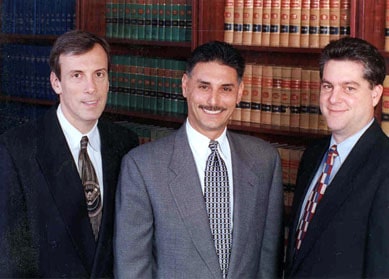
Route 50, the Bay Bridge corridor, and the dense surface streets around downtown Annapolis generate some of the most congested and collision-prone driving conditions in Anne Arundel County. When a crash happens here, the consequences rarely stay simple. Medical bills arrive before you know the full extent of your injuries. Insurance adjusters call quickly, sometimes the same day, asking for recorded statements. Decisions get made in those early hours and days that shape everything that follows. The attorneys at Berman | Sobin | Gross LLP represent car accident victims throughout the Annapolis area, and have spent 35 years understanding exactly how those early decisions can either preserve or undermine a claim.
What Makes Annapolis Crash Cases Distinct from a Liability Standpoint
Annapolis presents a specific mix of road conditions that affects how liability plays out in a collision. The city is home to heavy tourist and event traffic around the State House and City Dock area, naval personnel commuting through the Rowe Boulevard and Route 2 corridors, and commercial traffic moving through the Route 50 interchange toward the Eastern Shore. That mix matters because the parties potentially responsible for a crash are not always obvious.
A rear-end collision near the Westfield Annapolis mall might involve a distracted commercial driver operating under a federal hours-of-service log. A sideswipe on Aris T. Allen Boulevard might involve a government vehicle, which brings sovereign immunity rules into the analysis. A crash at one of Annapolis’s notoriously tight downtown intersections might involve poor road markings or inadequate signage, which can implicate municipal liability. Identifying all responsible parties from the beginning is not a formality. It is the difference between a full recovery and leaving compensation on the table.
Maryland’s contributory negligence rule makes this identification even more critical. Unlike most states, Maryland bars a plaintiff from any recovery if they are found even partially at fault for the collision. That is not a technicality. It is the legal standard that insurance defense attorneys and their adjusters build their entire response strategy around. Getting the liability picture right, early and completely, is non-negotiable.
The Medical Reality After a Serious Collision
Soft tissue injuries from car accidents do not always announce themselves immediately. Whiplash, disc injuries, and ligament damage often take days to manifest, which means a person who walks away from a crash feeling shaken but functional may be facing a significant injury diagnosis within a week. This delay is well-documented medically, and it is also something insurance companies exploit. If you waited to seek treatment, the adjuster’s argument is that you were not seriously hurt.
Traumatic brain injuries present a parallel problem. Concussions and mild TBIs frequently go undiagnosed in emergency settings because the initial scan comes back clean. Cognitive symptoms, headaches, and sensitivity to light can persist for months or longer. When those symptoms are later connected to the crash, establishing that connection requires documentation that starts at the very first medical visit, not weeks later.
The attorneys at Berman | Sobin | Gross LLP work with clients whose injuries required months of treatment, surgery, or long-term care. Understanding the full arc of a person’s recovery, not just the emergency room bill, is what allows a claim to account for future medical needs, lost earning capacity, and the non-economic effects of an injury that changes daily life.
How the Insurance Process Actually Works Against You
Maryland requires drivers to carry minimum liability coverage, but minimum coverage rarely covers serious accident losses. Most significant crashes involve gaps: the at-fault driver is underinsured, the at-fault driver’s insurer disputes coverage, or the at-fault driver has no insurance at all. Your own policy’s uninsured and underinsured motorist coverage often becomes the primary source of recovery, and your own insurer does not have a natural incentive to pay that coverage promptly or fully.
Recorded statements are one of the most common tools used to limit a claim. An adjuster asking you to “just describe what happened” in the days after a crash is gathering information that may later be used to argue you were moving too fast, you didn’t see the other car because you were distracted, or your injuries pre-existed the accident. You are not required to give a recorded statement to the other driver’s insurer. You generally are obligated to cooperate with your own insurer, but that cooperation has legal limits that an attorney can help you navigate.
Settlement offers that arrive early in the process are almost never in line with the full value of a claim. An offer made before your treatment is complete cannot account for future surgery, physical therapy, or wage loss that hasn’t happened yet. Accepting a settlement closes your claim permanently. There is no reopening it when the next medical bill arrives.
Annapolis Car Accident Claims: What People Actually Ask
How long do I have to file a car accident lawsuit in Maryland?
Maryland’s statute of limitations for personal injury claims is generally three years from the date of the accident. However, certain circumstances, such as accidents involving government vehicles or government-owned roads, can require notice within a much shorter window, sometimes as little as 180 days. Waiting until the deadline approaches creates serious risks. Evidence degrades, witnesses become unavailable, and the investigation that could support your claim becomes harder to conduct.
What if the other driver claims I was partly at fault?
This is precisely where Maryland’s contributory negligence rule becomes critical. If a jury finds you even one percent at fault for the crash, you recover nothing under Maryland law. Anticipate that defense insurers will look for any basis to assign some fault to you, from your speed to your lane position to whether you used a turn signal. Building a thorough liability record from the scene, including photos, witness information, and the police report, is the starting point for defending against that argument.
Do I need a lawyer if the other driver’s insurer already admitted fault?
Admission of liability does not determine the value of a claim. An insurer can acknowledge that their driver caused the crash and still dispute the nature of your injuries, the necessity of your treatment, or the amount of your wage loss. Representation at the damages stage, even when liability is not contested, consistently affects outcomes in these cases.
What damages can I recover after a car accident in Annapolis?
Maryland allows recovery for economic losses including medical expenses (past and future), lost wages, and diminished earning capacity. Non-economic damages, often called pain and suffering, cover the injury’s effect on your daily life, relationships, and ability to do what you did before the crash. Maryland caps non-economic damages in certain cases, and understanding how that cap applies to your situation is part of evaluating the realistic range of your claim.
What if the crash involved a commercial truck or delivery vehicle?
Commercial vehicle accidents involve a distinct set of legal considerations: federal trucking regulations, driver log books, electronic data recorders, and the liability of the trucking company, not just the individual driver. Evidence from commercial vehicles, particularly electronic logging data, can be overwritten or lost quickly. Moving fast to preserve that evidence is one of the most consequential early decisions in these cases.
Can I still recover compensation if I wasn’t wearing a seatbelt?
Maryland law limits the use of seatbelt non-use as a defense in certain contexts, though this area of law has nuances that depend on the facts of the crash. It does not automatically bar recovery, but it is something defense attorneys raise. How it affects a specific case depends on the circumstances and requires a case-by-case analysis.
What should I do at the scene of a crash in Annapolis if I’m able to?
Document everything you can while still at the scene: photos of vehicle positions, road conditions, traffic controls, and visible injuries. Get the other driver’s insurance and contact information. Get contact information from witnesses before they leave. Ask for a copy of the police report number. Seek medical attention that same day, even if you feel you don’t need it, and describe every symptom fully to the treating provider. These steps are not procedural suggestions. They are the foundation of a claim.
Reaching Berman | Sobin | Gross LLP After an Annapolis Collision
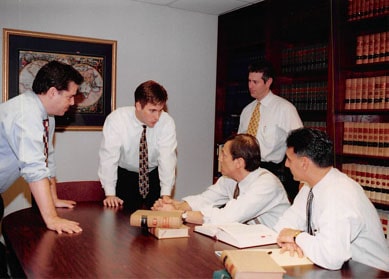
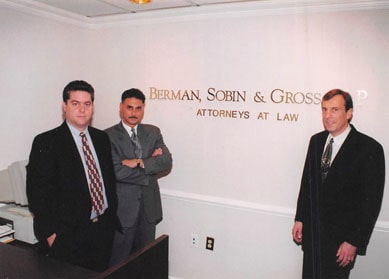
Berman | Sobin | Gross LLP is the largest workers’ compensation firm in Maryland representing injured workers, and that foundation in protecting the rights of working people extends to serious personal injury representation. The firm has handled hundreds of jury trials and appeals before Maryland’s highest courts. When a car accident claim requires going beyond an initial settlement negotiation and into litigation, that depth of courtroom experience is not incidental. Clients throughout Anne Arundel County and the broader Annapolis area have access to attorneys who have genuinely litigated difficult cases, not just settled them. If you were hurt in a collision in or around Annapolis and you want a realistic, thorough assessment of your claim, contact Berman | Sobin | Gross LLP for a confidential case analysis with one of our Annapolis car accident attorneys.