

College Park Construction Worker Injury Attorney
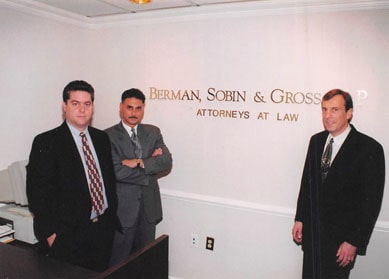
Construction sites in College Park operate at a pace that leaves little room for error. Between the ongoing development along Route 1, the steady presence of contractors near the University of Maryland campus, and the commercial and residential projects spreading through Prince George’s County, there is no shortage of work, and no shortage of hazards. When something goes wrong and a worker is seriously hurt, the question that follows is not philosophical. It is practical: what happens now, and who is responsible? A College Park construction worker injury attorney from Berman | Sobin | Gross LLP helps injured workers answer that question and pursue every benefit and avenue of recovery available under Maryland law.
Why Construction Injuries in College Park Are Legally Different from Other Workplace Injuries
Not all work injury claims look the same. A warehouse employee hurt by a forklift and a framing carpenter who falls from a roof are both hurt at work, but the legal terrain surrounding those two cases can be completely different.
Construction jobs involve layered employment relationships: general contractors, subcontractors, staffing agencies, equipment owners, property owners. A worker may technically be employed by one company while working on a site controlled by another. That structure matters enormously when deciding who owes compensation and who may bear liability beyond the workers’ compensation system.
In Maryland, workers’ compensation typically covers lost wages and medical treatment, but it does not always reach the full value of what a worker loses. When a third party, meaning someone other than your direct employer, contributed to your injury through negligence, a separate civil claim may exist. On a College Park construction site, that third party might be the general contractor, a subcontractor whose crew created the hazard, an equipment manufacturer, or even a property owner who failed to maintain safe conditions.
These parallel claims require careful handling. Pursuing one without coordinating the other can leave money on the table or create complications down the road. Berman | Sobin | Gross LLP has handled cases involving both tracks for decades, and the firm’s attorneys know how to navigate both systems simultaneously.
The Injuries That Define These Cases, and What They Actually Cost
Falls from scaffolding, ladders, and elevated platforms. Struck-by incidents from moving equipment, swinging loads, or falling tools. Electrocutions. Trench collapses. These are the categories that federal safety data points to year after year as the leading causes of construction fatalities and catastrophic injuries.
The physical cost of these injuries is only the beginning. A fractured vertebra, a traumatic brain injury, or an amputated limb does not just create a hospital bill. It creates months or years of rehabilitation, potential permanent disability, lost earning capacity, and profound disruption to a worker’s family. Medical care for serious construction injuries can extend for years, and the gap between what workers’ compensation covers and what a worker and their family actually need is often significant.
Lost wage benefits under Maryland’s workers’ compensation system are calculated as a percentage of the injured worker’s average weekly wage, subject to statutory caps. For a worker who was earning overtime, hazard pay, or multiple income streams, those caps can represent a real reduction in what the family depends on. Berman | Sobin | Gross LLP has litigated this issue directly. The firm’s appellate win in Montgomery County v. Deibler established that public safety workers receiving full salary on light duty can still recover compensation for overtime wages they were earning before their injury. That kind of understanding of wage calculation and compensation limits is exactly what construction workers need in their corner.
When the Workers’ Compensation System Is Not the Whole Story
Maryland’s workers’ compensation system is the mandatory starting point for most on-the-job injuries. It provides benefits without requiring proof of fault, and in most cases it is the exclusive remedy against a direct employer. But it was not designed to be the ceiling on what an injured worker can recover.
Third-party liability claims exist precisely because construction sites are not controlled by a single employer. If a subcontractor’s unsafe work practices caused the condition that injured you, that subcontractor may not be your employer. If defective equipment failed and caused your fall, the manufacturer may not be your employer. Neither of those parties is protected by the exclusivity provision that shields your direct employer from a civil suit.
A third-party claim can recover damages that workers’ compensation does not: pain and suffering, the full value of future lost earning capacity, and in some cases compensation for a spouse or family member’s losses. For workers with severe injuries, these additional damages can be substantial.
Identifying whether a third-party claim exists requires someone who knows construction site liability and has litigated these cases before. Berman | Sobin | Gross LLP does not shy away from complex cases that require more investigation and more resources to pursue. The firm has handled hundreds of workers’ compensation jury trials and appeals before Maryland’s highest courts, including cases where other attorneys had already declined to move forward.
Questions Injured Construction Workers in College Park Are Actually Asking
I was injured on a construction site but I am not sure who my employer is. Does that affect my claim?
It complicates it, but it does not eliminate it. Multi-employer construction sites are common in Maryland, and determining the correct employer, and any other parties who bear responsibility, is something an attorney needs to sort out quickly. The identity of your employer affects your workers’ compensation filing, while the identity of any negligent third parties affects whether a civil claim is available.
My employer told me the injury was my fault. Does that bar my workers’ compensation claim?
Generally, no. Maryland workers’ compensation is a no-fault system. An injured worker does not need to prove their employer did anything wrong in order to receive benefits. There are narrow exceptions involving intoxication or intentional self-harm, but the employer’s assertion that you caused your own injury does not disqualify your claim.
How long do I have to file after a construction site injury in Maryland?
For workers’ compensation claims, the statute of limitations in Maryland is generally two years from the date of injury or from the date the employer or insurer last paid benefits. For third-party personal injury claims, the general limitations period is three years. Missing either deadline can forfeit your rights entirely, so filing promptly matters.
What if I am undocumented? Can I still file a workers’ compensation claim in Maryland?
Maryland’s workers’ compensation statute covers workers regardless of immigration status. The key question is whether you were performing work for the employer, not your documentation status. Berman | Sobin | Gross LLP has staff fluent in Spanish and works with clients across language and background differences to ensure every client can communicate and participate fully in their case.
The insurance company made me an offer. Should I accept it?
Not before speaking with an attorney. Insurers typically move quickly with settlement offers after serious injuries, often before the full extent of a worker’s losses is known. Accepting a settlement may close out future medical benefits and all other claims. An attorney can evaluate whether the offer reflects the actual value of your losses, including long-term medical needs and any potential third-party claims.
Can I choose my own doctor under Maryland workers’ compensation?
Maryland workers’ compensation rules govern how medical care is authorized and provided. There are specific requirements around employer and insurer authorization for treatment, and disputes over the course of treatment are common. An attorney can help you navigate disputes about medical care and pursue independent medical evaluations when the authorized physician’s opinion does not accurately reflect your condition.
My injury has left me unable to return to my previous construction work. What benefits address that?
Maryland workers’ compensation provides vocational rehabilitation benefits for workers who cannot return to their previous job due to a work injury. This can include retraining for a new type of work. Berman | Sobin | Gross LLP’s attorneys secured the appellate ruling in Fikar v. Montgomery County establishing that workers receiving service-connected disability retirement are still entitled to vocational rehabilitation services, which directly benefits seriously injured workers who may have assumed their options were limited.
Reaching the Attorneys at Berman | Sobin | Gross LLP About a Construction Injury Near College Park
Berman | Sobin | Gross LLP is the largest workers’ compensation law firm in Maryland representing injured workers, with offices in Lutherville, Baltimore, Gaithersburg, and Frederick and clients throughout Prince George’s County and across the state. For 35 years, the firm’s attorneys have represented workers injured in exactly the kind of complex, multi-party construction site situations that arise in College Park and throughout the greater Washington region. One of the firm’s founders authored the definitive treatise on Maryland workers’ compensation law. The attorneys here have litigated cases at the Maryland Workers’ Compensation Commission, in the circuit courts, and before both of Maryland’s highest appellate courts. If you were hurt on a College Park construction site and want attorneys who have handled these cases at every level, contact Berman | Sobin | Gross LLP to discuss your claim with a College Park construction injury lawyer who will stay with you from the first filing through the final resolution of your case.