

College Park Workplace Injury Attorney
College Park sits at a crossroads of industries that put workers in harm’s way every day. From the loading docks and warehouses clustered along Route 1 to the construction projects reshaping the area around the University of Maryland, from the hospitality and food service businesses serving a dense student population to the municipal and county workers maintaining roads and public infrastructure, this community runs on people doing physically demanding, sometimes dangerous work. When one of those workers gets hurt, the path forward is rarely as simple as filing a form. A College Park workplace injury attorney at Berman Sobin Gross LLP can help you understand what your injury is worth, what benefits you have the right to claim, and what decisions you need to make before those rights are affected.
What Workplace Injuries in the College Park Area Actually Look Like
The types of injuries that bring College Park workers to a lawyer’s office tend to reflect the work itself. Construction workers on the many ongoing development projects near the university campus deal with falls from scaffolding, tool and equipment malfunctions, and repetitive stress injuries that build up over years of physical labor. Warehouse and distribution workers along the Route 1 corridor deal with forklift accidents, back injuries from improper lifting, and crush injuries from falling inventory. Food service and hospitality workers face burns, slip and fall injuries, and the cumulative toll of years spent on their feet.
Prince George’s County also employs a significant number of public safety workers, including firefighters, corrections officers, and law enforcement personnel who face occupational hazards that are in a category of their own. Heart and lung conditions, post-traumatic stress, and injuries sustained during the course of emergency response are recognized categories of compensable harm under Maryland law, and the legal standards that apply to public safety employees are meaningfully different from those that apply to private sector workers.
What many injured workers don’t realize until it’s too late is that the nature of the injury matters less than the decisions made in the days and weeks after it happens. Failing to report the injury to an employer within the required timeframe, accepting an early settlement offer without understanding its long-term implications, or delaying medical treatment can all compromise a valid claim.
The Gap Between What Workers’ Comp Pays and What an Injury Actually Costs
Maryland’s workers’ compensation system provides a defined set of benefits: coverage for authorized medical treatment, temporary total disability payments when a worker is completely unable to work, temporary partial disability payments when a worker returns to reduced hours or lighter duty, and permanent disability benefits when the injury leaves lasting functional limitations. In cases involving a fatal injury, surviving dependents may be entitled to death benefits.
Those categories sound comprehensive, and they can be. But there are significant gaps between what the system offers and what a serious injury actually costs a worker and their family. Workers’ compensation does not pay for pain and suffering. It does not replace the full value of a worker’s lost earning capacity over a career. Wage replacement benefits are calculated based on a percentage of the worker’s average weekly wage, capped at a statutory maximum, which means higher earners often face a steep drop in household income during recovery.
Permanent disability ratings, which determine the size of the permanent award, are often contested. The insurer will send the worker to an independent medical examination with a doctor of its choosing, and that doctor’s opinion frequently diverges sharply from the treating physician’s assessment. The difference in how that dispute gets resolved can mean tens of thousands of dollars in permanent disability benefits.
In some workplace injury cases, a third party, not the employer, is responsible for the accident. A contractor, equipment manufacturer, property owner, or other party may bear legal responsibility under a separate personal injury claim that runs parallel to the workers’ comp case and can recover damages that workers’ comp doesn’t touch. Identifying whether that option exists requires looking at the facts of the accident carefully, not just the workers’ compensation framework.
How Berman Sobin Gross LLP Approaches Cases Other Firms Decline
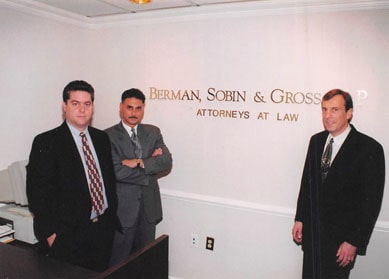
For 35 years, Berman Sobin Gross LLP has represented injured workers across Maryland, growing from a three-attorney firm to more than 20 attorneys with offices throughout the state. The firm has handled not just tens of thousands of hearings before the Maryland Workers’ Compensation Commission, but hundreds of jury trials and appeals before Maryland’s highest courts. One of the firm’s founders literally wrote the treatise on workers’ compensation in Maryland, a two-volume resource that practitioners throughout the state continue to reference.
That history matters in a practical way. When an employer’s insurer disputes a permanent disability rating, when a public safety worker’s occupational disease claim gets challenged, or when a case requires going beyond an administrative hearing and into circuit court, the firm has done it before. Attorneys at Berman Sobin Gross LLP have argued before the Court of Special Appeals and the Court of Appeals on cases that have actually changed the law in Maryland, including decisions affecting how disability presumptions apply to public safety workers, how overtime is factored into wage calculations, and what medical experts are permitted to testify about in contested cases.
If another attorney has turned down your case or told you it can’t go further than the Commission, that is worth reconsidering. Cases that look difficult on the surface often have more options than a cursory review reveals.
Questions Injured Workers in College Park Ask Before Hiring an Attorney
Does it matter that I was partially at fault for the accident?
In most workers’ compensation cases, fault is not a factor. Maryland’s workers’ comp system is a no-fault system, meaning that an injured worker is generally entitled to benefits regardless of whether the employer, a coworker, or even the worker’s own actions contributed to the accident. There are narrow exceptions, such as injuries caused by deliberate self-harm or intoxication, but those situations are uncommon.
My employer is pressuring me to return to work before I feel ready. What should I do?
This is one of the most common and consequential situations injured workers face. Returning to work before you are medically cleared can worsen your injury, affect your disability rating, and signal to the insurer that your recovery is complete when it isn’t. Any return to work should be done based on your treating physician’s guidance, not pressure from the employer or insurer. If you are being pushed in a direction that doesn’t feel right, talk to an attorney before agreeing to anything.
The employer’s insurer is asking me to give a recorded statement. Do I have to?
You are not required to give a recorded statement to the workers’ compensation insurer, and doing so without understanding the implications can create problems. Insurers use recorded statements to look for inconsistencies or statements that can be used to limit the value of your claim. Consult with an attorney first.
How long do I have to file a workers’ compensation claim in Maryland?
Maryland law requires that a workers’ compensation claim generally be filed within two years of the date of the accidental injury, or in occupational disease cases, within two years of when the worker knew or should have known the disease was work-related. Reporting the injury to the employer is a separate step with its own timeframe. Missing either deadline can bar a claim entirely.
What if I work for a Prince George’s County government agency or a state employer?
Government employees are covered under Maryland’s workers’ compensation system, but certain workers, particularly public safety employees, are entitled to additional protections and presumptions under state law. Whether you are a county corrections officer, a municipal worker, or a state employee, the rules that apply to your claim may differ from those governing private sector employment. Getting the framework right from the beginning matters.
Can I be fired for filing a workers’ compensation claim?
Maryland law prohibits employers from retaliating against employees for filing or pursuing workers’ compensation claims. If you believe you have been terminated, demoted, or otherwise penalized because of a workers’ comp claim, that is a separate legal issue worth discussing with an attorney.
What if my injury developed gradually rather than in a single accident?
Occupational diseases and repetitive stress injuries are compensable in Maryland even when there is no single identifiable accident. These cases often involve more complex medical evidence and may require demonstrating a causal link between the work performed and the condition that developed. They are also sometimes more aggressively disputed by insurers, making legal representation particularly important.
Talking to a College Park Workplace Injury Lawyer Before Making Any Decisions
The decisions that shape how a workplace injury claim resolves are often made early, before a worker has a full picture of what the injury means long-term or what the claim is actually worth. Berman Sobin Gross LLP represents workers throughout Prince George’s County and the College Park area, including employees across a wide range of industries and public sector roles. The firm has attorneys and staff members who are fluent in Spanish, and the firm is committed to making sure every client can communicate fully and clearly about their case. If you were hurt at work in the College Park area and want to understand your options, contact a College Park workplace injury lawyer at Berman Sobin Gross LLP for a confidential case analysis.