

Columbia Teachers & School Employees Injury Attorney
Teachers, paraprofessionals, custodians, cafeteria workers, and bus drivers in Columbia keep Howard County’s schools running. They also get hurt on the job at rates that rarely make headlines. A Columbia teachers and school employees injury attorney at Berman | Sobin | Gross LLP has spent 35 years representing exactly these workers, pressing claims through the Maryland Workers’ Compensation Commission and, when necessary, into the courts. This is not a sideline for the firm. It is the core of what we do.
What Actually Injures School Employees in Columbia
School injuries do not follow a single pattern. A first-grade teacher might wrench her back breaking up a fight in the hallway. A custodian at Wilde Lake High School slips on a freshly mopped floor during an early morning shift. A special education paraprofessional who physically redirects students develops a repetitive stress injury over months that no single incident explains. A school bus driver on Route 108 is rear-ended during a morning run.
Each of these situations creates a workers’ compensation claim with different documentation demands and different potential complications. The bus driver’s claim may involve a third-party vehicle liability question on top of the workers’ comp filing. The paraprofessional’s repetitive stress claim needs medical evidence tracing causation over time, not just a single incident report. The teacher injured during a student altercation may qualify for enhanced benefits depending on her employment classification.
Howard County Public School System is the employer in most of these cases. That means the claims process runs through a large, well-resourced institutional employer with its own legal representation. Workers who go through that process without an attorney often find that benefit decisions do not reflect the full scope of what Maryland law provides.
The Occupational Disease Problem That School Workers Often Miss
Most people think of workers’ compensation as covering sudden accidents. But Maryland law also covers occupational diseases, conditions that develop because of the nature of the work itself. For school employees, this category matters more than most workers realize.
Hearing loss from years of exposure to school noise environments. Respiratory conditions from prolonged exposure to cleaning chemicals or aging HVAC systems in older school buildings. Chronic musculoskeletal disorders from years of lifting students with physical disabilities. These are not always recognized as compensable at the initial claim stage. An employer’s insurer may push back hard, arguing that the condition is personal or age-related rather than work-connected.
Berman | Sobin | Gross LLP has litigated occupational disease questions at Maryland’s highest courts. The firm’s attorneys understand how to build the evidentiary record that ties a chronic condition to specific working conditions. That kind of case requires more than filling out forms. It requires a legal team willing to retain the right medical experts and press the claim to hearing if the initial determination is wrong.
Public School Employees and Benefit Calculations Worth Understanding
Maryland’s workers’ compensation system calculates benefits based on average weekly wage, the nature and permanency of the injury, and whether the worker is temporarily or permanently disabled. For school employees, wage calculations can be complicated by the academic calendar. A teacher who works ten months per year has a different calculation structure than a full-year employee. Getting that number right matters, because temporary total disability benefits and permanent partial disability awards are both derived from it.
School employees who are also public safety workers, including school resource officers, may qualify for additional statutory presumptions under Maryland law. Berman | Sobin | Gross LLP secured the ruling in Downer v. Baltimore County confirming that emergency medical technicians are public safety employees entitled to enhanced compensation benefits. The firm understands how occupational classification affects benefit entitlement and pursues every applicable protection on a client’s behalf.
Vocational rehabilitation is another benefit that injured school employees frequently overlook. A teacher whose injury prevents a return to classroom work may qualify for retraining support. The firm secured the ruling in Fikar v. Montgomery County confirming that workers receiving service-connected disability retirement can still receive vocational rehabilitation services. That precedent is directly relevant to Columbia school employees navigating what comes after a serious injury ends a teaching career.
Questions Columbia School Workers Ask About Their Claims
I reported my injury but the school district says it was my fault. Does that bar my claim?
Maryland’s workers’ compensation system is a no-fault system. Employee negligence generally does not disqualify a worker from receiving benefits. What matters is whether the injury arose out of and in the course of employment. Fault arguments from an employer or insurer at the initial claim stage are worth scrutinizing carefully with an attorney.
My injury happened gradually over years of teaching. Can I still file?
Yes. Repetitive stress injuries and occupational diseases are compensable in Maryland. The filing deadline for these claims runs from the date the worker knew or should have known that the condition was work-related, not from when the condition first developed. An attorney can help you assess where you stand on the filing window and what medical documentation will support the claim.
The school system offered me a light duty assignment. Do I have to take it?
You are generally required to accept suitable light duty work if it is offered and falls within your medical restrictions. Refusing a legitimate offer can affect your temporary disability benefits. But whether an offered assignment is actually suitable given your restrictions is a legal question. If the work exceeds what your treating physician has authorized, or places you in conditions that worsen your condition, the offer may not be suitable.
Can I choose my own doctor for a work injury?
Maryland law gives injured workers the right to select their treating physician. The insurer may also schedule you for an independent medical examination with a physician of their choosing. These IME reports often minimize injury severity or recommend an early return to full duty. Having an attorney review these reports before they affect your benefits is important.
My workers’ comp claim was denied. What now?
A denial is not a final answer. You can file an issues memo and request a hearing before the Maryland Workers’ Compensation Commission. If the Commission’s decision goes against you, there are further appeal rights through the Maryland circuit courts. Berman | Sobin | Gross LLP has handled hundreds of workers’ compensation trials and appeals, including cases before both of Maryland’s highest courts. A denied claim that has solid medical and factual support can and does get reversed.
My injury was caused by a violent student. Does that change anything about my claim?
Injuries caused by student conduct, including physical assaults, are generally compensable as work injuries. Teachers and paraprofessionals in special education settings and alternative schools face elevated risks of this kind. The claim process is the same, but the documentation of the incident matters. Contemporaneous reports, witness statements, and any prior documentation of the student’s behavioral history can all become relevant to the claim.
How long does a workers’ compensation claim typically take?
Straightforward claims with no disputes over causation or disability ratings can resolve within months. Claims that are contested, involve significant permanent disability, require vocational rehabilitation, or go to hearing take longer. The Commission’s scheduling timelines, the complexity of medical evidence, and whether appeals are necessary all affect the timeline. There is no single answer, but having an attorney managing the process consistently produces better outcomes than going through it without representation.
Working with Columbia School Employees Through the Entire Process
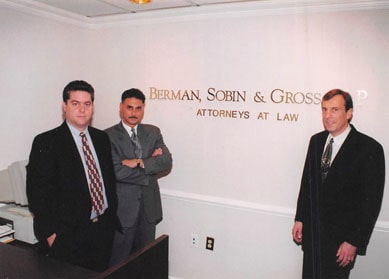
Berman | Sobin | Gross LLP is the largest workers’ compensation law firm in Maryland representing injured workers, with attorneys serving clients throughout the state, including throughout Howard County and the Columbia area. When a school employee begins working with an attorney at the firm, that attorney stays as the primary contact from the initial consultation through resolution. No handoffs to someone unfamiliar with the file at the hearing stage.
The firm also has attorneys and staff fluent in Spanish, which matters in a county as diverse as Howard, where school support staff come from a wide range of backgrounds. Communication about a workers’ compensation claim should never be limited by a language barrier.
One of the firm’s founders literally wrote the book on Maryland workers’ compensation, a two-volume treatise that continues to serve as the primary reference for attorneys and practitioners across the state. That depth of knowledge is available to every client who brings a claim to the firm, regardless of how straightforward or complex the case appears at the outset.
If a Columbia school employee’s workers’ compensation claim has been denied, undervalued, or stalled, Berman | Sobin | Gross LLP is prepared to take on the next steps. The firm takes the difficult cases, the ones other attorneys have declined to push past an administrative hearing, and pursues them to the outcome the evidence supports.
Contact Berman | Sobin | Gross LLP today for a confidential case analysis with a Maryland school employee injury attorney who knows this area of law in depth and will give your claim the attention it deserves.