

Columbia Roofer Injury Attorney
Roofing is consistently ranked among the most dangerous trades in the country, and Howard County’s steady construction activity keeps Columbia roofers on rooftops, scaffolding, and ladders throughout the year. When a fall, equipment failure, or structural collapse puts a roofer out of work, the workers’ compensation system is supposed to step in and cover the costs. In practice, it rarely works that smoothly. Columbia roofer injury attorneys at Berman | Sobin | Gross LLP have spent 35 years helping Maryland’s tradespeople cut through the obstacles that employers and insurers put between injured workers and the benefits they are owed.
What Makes Roofing Claims Different From Other Workers’ Compensation Cases
Not all workers’ compensation claims move through the system the same way. Roofing injuries tend to be more contested than the average workplace claim for several reasons that claimants should understand before they file.
First, the severity. Falls from rooftops in Columbia and the surrounding Howard County area frequently result in traumatic brain injuries, spinal cord damage, multiple fractures, and internal injuries. These are high-cost claims that insurers scrutinize closely. The higher the projected cost of a claim, the more aggressively a carrier will look for grounds to reduce or deny it.
Second, the employment structure of the roofing industry. Many roofers work through subcontracting arrangements, and some employers misclassify workers as independent contractors specifically to avoid workers’ compensation obligations. If your employer tells you that you are not covered because you were a subcontractor or were on a “1099,” that classification may not hold up legally. Maryland law looks at the actual nature of the working relationship, not just how an employer chooses to label it on paper.
Third, disputes over causation. Roofing involves repetitive stress to the knees, back, and shoulders over years of work. When a roofer develops a degenerative condition that a fall or sudden incident makes acute, insurers often argue that the condition is pre-existing and not compensable. Maryland workers’ compensation law does cover aggravations of pre-existing conditions, but making that case requires medical evidence and legal argument that most workers cannot put together without help.
The Types of Roofing Injuries That Generate the Most Contested Claims
Falls from height are the most common catastrophic event in roofing, but they are far from the only source of serious injury. Roofers in Columbia work with heavy materials, hot tar and adhesives, nail guns, power cutting equipment, and in temperatures that fluctuate significantly across Maryland’s seasons. The injury profile that results from this work is wide-ranging.
Spinal injuries from falls often require multiple surgeries, extended physical therapy, and in some cases result in permanent restrictions that prevent a roofer from returning to the trade. Traumatic brain injuries present their own evidentiary challenges because symptoms can evolve over months and employers and insurers sometimes argue that cognitive or behavioral changes are unrelated to the workplace accident.
Burns from hot roofing materials and heat-related illness during Maryland summers are underreported injury categories in the roofing trade. Roofers who suffer serious burns or heat stroke are sometimes pressured to return to work before they have fully recovered, or are told their condition does not qualify for extended benefits.
Repetitive stress injuries, including rotator cuff tears and meniscus damage, develop over time and can be dismissed by employers as ordinary wear rather than occupational conditions. Maryland law provides pathways to compensation for occupational diseases and conditions caused by the nature of the work itself, not just sudden accidents. Roofers who have been told their injuries are not work-related because there was no specific incident should not accept that conclusion without a legal evaluation of their claim.
Columbia’s Construction Environment and What It Means for Your Claim
Columbia is not a static community. The ongoing development along Routes 29 and 108, commercial projects near the Mall in Columbia, and residential construction expanding into the surrounding Howard County corridors keeps roofing contractors consistently active. That volume of construction means roofing crews are working on projects that vary considerably in safety oversight, from well-managed commercial sites with safety officers on-site to smaller residential jobs where fall protection equipment is minimal or absent.
Maryland’s Workers’ Compensation Commission handles claims from Howard County workers, and understanding how that administrative process works matters. The Commission does not operate like a court. Its proceedings have specific filing deadlines, evidentiary procedures, and hearing formats that are unfamiliar to most injured workers. When a claim is disputed, the employer and its insurer will have legal representation at any hearing. Workers who appear without counsel are at a structural disadvantage, particularly in cases involving the severity typical of roofing accidents.
Beyond the Commission, some roofing injury cases have a third-party component. If defective equipment contributed to the fall, if a general contractor created an unsafe condition on a job site, or if another subcontractor’s negligence played a role, there may be a separate civil claim available in addition to the workers’ compensation claim. These are not mutually exclusive in Maryland. An attorney who handles only one side of that equation may not be serving a roofer’s full interests.
Questions Injured Roofers in Columbia Are Actually Asking
My employer says I was an independent contractor. Does that mean I cannot file for workers’ compensation?
Not necessarily. Maryland courts and the Workers’ Compensation Commission apply a multi-factor test to determine whether a worker is truly an independent contractor or was actually functioning as an employee despite how they were classified. Many roofing employers misclassify workers to reduce overhead costs. If the employer controlled how you did your work, provided equipment, set your schedule, or integrated your labor into their regular business, you may qualify as an employee for workers’ compensation purposes regardless of what your paperwork says.
I fell off a roof and the job site was run by a general contractor, not my direct employer. Who is responsible?
Potentially both. In Maryland, if a general contractor controlled the work environment and the safety conditions that led to your injury, they may bear civil liability. Your workers’ compensation claim runs against your direct employer’s insurer, but a separate personal injury claim against the general contractor or other responsible parties may also be available. These claims require separate legal analysis but can be pursued simultaneously.
The insurance company offered me a settlement. How do I know if it is fair?
Settlement offers in the early stages of a serious roofing injury claim are almost never adequate, particularly before the full extent of a spinal injury, TBI, or chronic orthopedic condition has been established. An early offer reflects the insurer’s interest in closing the claim cheaply, not an honest assessment of your long-term medical costs and lost earning capacity. A roofer who cannot return to the trade may be looking at a fundamentally different career trajectory and needs to understand what that is worth before signing any release.
My employer is pressuring me to return to work before my doctor says I am ready. What should I do?
Return-to-work pressure is common in the roofing industry and does not override your treating physician’s medical recommendations. Returning to full roofing duties before you are medically cleared risks serious re-injury and could also affect your legal rights if you are hurt again. Your compensation benefits are tied to your medical status, and changes to those benefits are governed by Commission procedures, not your employer’s preferences.
What are permanency benefits and do they apply to my case?
Maryland workers’ compensation provides permanent partial disability benefits when a workplace injury leaves a worker with lasting functional limitations even after maximum medical improvement is reached. For roofers who suffer spinal injuries, joint damage, or other conditions that do not fully resolve, permanency benefits can be a substantial part of the total compensation. These benefits are determined by a combination of medical evidence, a rating of the affected body part or system, and application of the Commission’s statutory schedule.
Can I get workers’ compensation if the accident was partly my own fault?
Yes. Maryland’s workers’ compensation system is a no-fault system, which means that a worker’s own negligence does not bar recovery. The narrow exceptions involve intentional self-injury or intoxication, but ordinary accidents that result from a moment of inattention, fatigue, or judgment are fully compensable. This is one of the most misunderstood aspects of workers’ compensation among injured workers who are reluctant to file because they feel they contributed to their own accident.
How long do I have to file a claim after a roofing accident?
Maryland imposes deadlines for filing workers’ compensation claims, and missing them can forfeit your right to benefits. For accidental injuries, the claim must be filed with the Workers’ Compensation Commission within a specific window from the date of the accident or the date you knew or should have known that your injury was work-related. For occupational conditions that develop over time, a different standard applies. The specifics depend on the nature of the injury and the timeline of your case, which is one reason early legal consultation matters.
Representing Columbia Roofers Across the Workers’ Compensation System
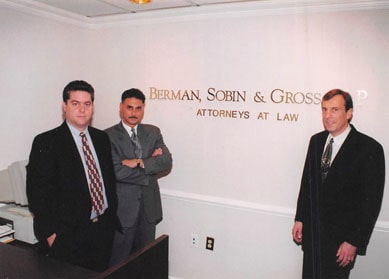
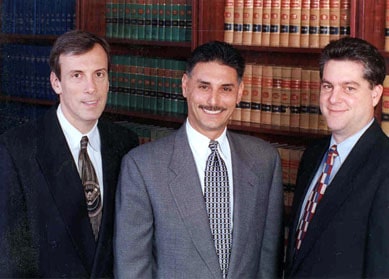
Berman | Sobin | Gross LLP is the largest workers’ compensation law firm in Maryland representing injured workers. The firm has handled tens of thousands of hearings, hundreds of jury trials, and significant appeals before Maryland’s highest courts, including cases that have changed the law for injured workers across the state. One of the firm’s founders authored the authoritative two-volume treatise on workers’ compensation in Maryland, the reference that practitioners throughout the state rely on. For roofers in Columbia dealing with serious injuries, disputed claims, or employer misclassification arguments, that depth of experience is not incidental. It shapes how claims are built, argued, and resolved at every level of the system.
The firm serves clients throughout Howard County and across Maryland from offices in Lutherville, Baltimore, Gaithersburg, and Frederick. Attorneys and staff members who are fluent in Spanish are available for clients who prefer to communicate in Spanish. When you work with the firm, one attorney stays with you as your primary contact from the beginning of your case through its resolution.
If you are a Columbia roofer who has been injured at work, contact Berman | Sobin | Gross LLP to discuss your claim with a Columbia roofing injury lawyer who understands how these cases are actually decided and what it takes to get workers the full benefits Maryland law provides.