

Columbia Transit Worker Injury Attorney
Transit work in Columbia and across Howard County carries risks that most commuters never think about. Bus operators navigating Route 30 through heavy traffic, maintenance crews working on vehicles in the Regional Transportation Center, dispatchers managing the logistics of a system that moves thousands of riders daily, these workers absorb the physical demands of keeping public transportation running. When something goes wrong and a transit employee is hurt, the workers’ compensation process in Maryland has specific dimensions that matter enormously for the outcome of a claim. A Columbia transit worker injury attorney at Berman | Sobin | Gross LLP understands those dimensions because this firm has spent 35 years building one of the deepest bodies of workers’ compensation experience in the state.
Why Transit Work Creates Its Own Category of Injury Claims
Transit employees do not fit neatly into the categories that most people associate with workplace injuries. They are not office workers, and they are not construction workers. Their injuries arise from a combination of factors that is particular to the industry: repetitive motion stress from long hours behind the wheel, sudden trauma from vehicle collisions or passenger altercations, slip and fall incidents during vehicle boarding and exit procedures, and cumulative musculoskeletal damage from poorly designed seating and vibration exposure over years of service.
Bus operators in Columbia face a documented pattern of injury that includes low back disorders, shoulder and knee damage, and stress-related cardiovascular conditions. Mechanics and maintenance workers deal with chemical exposures, equipment-related crush injuries, and the physical strain of working in confined spaces under heavy vehicles. These are not soft claims. The injuries are real, they accumulate, and they frequently affect workers’ ability to return to the same job or any comparable employment.
Maryland’s workers’ compensation system does cover transit workers, but how a claim is filed, documented, and pursued determines whether a seriously injured employee receives the full range of benefits available under the law. The gap between what an injured worker is owed and what an insurer or self-insured employer initially offers can be significant. That gap is where representation matters.
Public vs. Private Employment: How Transit Worker Status Affects Benefits in Maryland
Columbia transit workers may be employed by Howard County government through the Regional Transit Agency (RTA), by the Maryland Transit Administration, or by private contractors that operate under public transit agreements. That distinction matters in a Maryland workers’ compensation claim.
Workers employed by a county or state agency may be classified as public employees, which carries specific implications for occupational disease presumptions, particularly for workers in roles that qualify under Maryland’s public safety statutes. The attorneys at Berman | Sobin | Gross LLP have a record of successfully arguing for the application of occupational presumptions in cases that employers initially contested. The firm’s appellate victories include cases that established presumption rights for public safety employees experiencing cardiovascular conditions, defined who qualifies as a public safety employee, and addressed the handling of employer medical experts who attempt to undermine presumption-based claims. These are not abstract legal victories. They directly affect how transit workers in Maryland pursue claims for heart disease, hypertension, and related conditions that develop from years of high-stress employment.
For transit workers employed by private contractors, the analysis shifts to standard workers’ compensation proceedings before the Maryland Workers’ Compensation Commission. In either setting, how a claim is built from the beginning determines what happens at a hearing and, if necessary, before a court. Berman | Sobin | Gross LLP has handled hundreds of workers’ compensation jury trials and appeals before both of Maryland’s highest courts, which means the firm approaches every claim with an understanding of where it might ultimately need to go.
Repetitive Stress and Occupational Disease Claims for Columbia Transit Employees
Not every transit worker injury results from a single dramatic incident. Some of the most serious and career-ending conditions develop over time. Maryland workers’ compensation law covers occupational diseases and cumulative trauma conditions, but these claims require more precise documentation than a standard accident report.
A bus operator who develops chronic lumbar disc disease after years of sustained vibration and awkward posture faces a different evidentiary challenge than someone injured in a collision. The connection between the condition and the employment must be established through medical evidence, employment history, and often expert testimony. Insurers and employers regularly contest these claims, arguing that the condition is degenerative rather than occupationally caused. That argument can succeed if the claim is not built carefully.
At Berman | Sobin | Gross LLP, one of the firm’s founders literally wrote the book on Maryland workers’ compensation, a two-volume treatise that continues to serve as the primary reference in the field. The attorneys here understand the medical and legal framework for occupational disease claims and are not deterred by the complexity that comes with proving them. Transit workers with cumulative injuries deserve the same quality of representation as those with acute traumatic injuries, and the outcome of a claim depends on whether the attorney handling it is prepared to make that case at every level of the process.
Questions Transit Workers in Columbia Ask About Their Claims
What should I do immediately after a transit work injury?
Report the injury to your supervisor as soon as possible and seek medical treatment. Maryland law requires injured workers to notify their employer within 10 days of an accident, and prompt reporting protects your claim. If your injury developed gradually rather than through a single incident, report it as soon as you connect the condition to your work duties.
Can my employer retaliate against me for filing a workers’ compensation claim?
Maryland law prohibits retaliation against employees who file workers’ compensation claims. If you experience adverse employment action after filing, including termination, demotion, or reduced hours, that retaliation is itself a legal violation. An attorney can advise you on what steps to take if you believe you are experiencing retaliation.
My employer is a government agency. Does that change how I file a claim?
The filing process through the Maryland Workers’ Compensation Commission applies to most transit workers regardless of whether their employer is public or private. However, if you are a public employee, additional protections, presumptions, and benefit structures may apply. The difference in outcomes between a standard claim and one that leverages applicable public employee provisions can be substantial.
The transit authority’s insurer has offered me a settlement. Should I accept it?
You should not accept a settlement offer before speaking with an attorney. Initial settlement offers frequently do not account for future medical costs, permanent disability benefits, or vocational rehabilitation. Once a claim is settled, it is extremely difficult to reopen. An attorney can evaluate whether what is being offered reflects the actual value of your claim.
What if the injury was partly caused by a defective vehicle or equipment?
A transit worker injured because of a defective bus component, a faulty maintenance tool, or unsafe equipment may have claims against parties other than their employer. A third-party personal injury claim can proceed alongside a workers’ compensation claim and may significantly increase the total recovery available. Berman | Sobin | Gross LLP handles both areas of law and can evaluate whether a third-party claim applies to your situation.
I’ve had a prior back or knee injury. Can the employer use that to deny my claim?
Employers and insurers regularly argue that a pre-existing condition is responsible for a worker’s current symptoms. Maryland law recognizes the concept of aggravation, meaning that if your job aggravated, accelerated, or combined with a pre-existing condition to produce your current impairment, that is still compensable. The key is the medical evidence and how the claim is presented.
What benefits can I receive if I am permanently unable to return to transit work?
Maryland workers’ compensation benefits for serious injuries can include temporary total disability payments while you recover, permanent partial or permanent total disability awards based on the extent of your impairment, medical treatment costs, and vocational rehabilitation services if you need retraining for a different occupation. The specific amounts depend on your wage history, the nature of your injury, and the level of permanent impairment. An attorney can walk through what each category means for your specific situation.
Representation for Howard County Transit Workers Ready to Move Forward
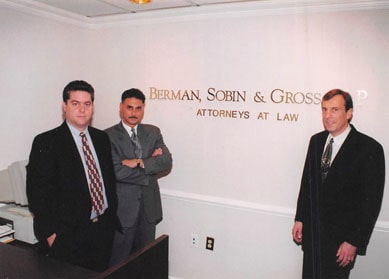
Berman | Sobin | Gross LLP has offices throughout Maryland and serves clients across Howard County, including Columbia and the surrounding communities where transit workers live and work. The firm’s size, with more than 20 attorneys and staff including Spanish-speaking members of the team, means that clients get consistent, dedicated representation without being handed off from one attorney to another. When you work with one of our attorneys, that attorney stays with your case. For a Columbia transit worker injury claim, that continuity matters because these claims take time, involve multiple proceedings, and require someone who knows your history and is prepared to carry your case wherever it needs to go. Contact Berman | Sobin | Gross LLP to have your claim evaluated by an attorney who handles these cases at every level, from the Commission through the courts.