

Columbia Warehouse Worker Injury Attorney
Warehouse work in Columbia keeps Howard County’s distribution networks moving. The Amazon fulfillment centers, wholesale distributors, cold storage facilities, and regional logistics hubs along Route 1 and the Route 29 corridor employ thousands of workers who lift, load, operate forklifts, and work alongside heavy equipment every single day. When something goes wrong in that environment, the injuries are rarely minor. A Columbia warehouse worker injury attorney at Berman | Sobin | Gross LLP understands what these workers face, what their employers are required to provide, and how to fight for full compensation when that doesn’t happen.
Why Warehouse Injuries in Columbia Present Unique Compensation Challenges
Warehouse injuries are not the same as office accidents or construction site falls, and they don’t always fit neatly into standard workers’ compensation categories. Some of the most serious warehouse injuries involve repetitive stress that builds over months, cumulative trauma to the back or shoulders from constant lifting, or hearing damage from working near industrial equipment. Those types of injuries are often disputed by employers and their insurance carriers because there is no single incident to point to on a calendar.
Columbia’s warehouse industry also has a significant contract and temporary labor component. Workers placed through staffing agencies often find themselves caught between the agency and the host employer when they’re hurt, with each side pointing at the other. That dispute can delay medical treatment and wage replacement benefits while the injured worker waits. Maryland law has specific rules about which employer is responsible when temporary or contract workers are injured, and getting that analysis right matters enormously for the outcome of the claim.
Large warehouse operators also tend to have sophisticated workers’ compensation defense teams. When a warehouse with hundreds of employees files a large number of claims, their insurer has strong financial incentives to challenge the value of each one. An injured warehouse worker handling that process alone is at a significant disadvantage from the start.
The Injuries That Actually Happen Inside Columbia’s Distribution Centers
Forklift accidents are among the most serious incidents in any warehouse setting. Howard County’s larger facilities operate dozens of powered industrial trucks simultaneously, and collisions, tip-overs, and struck-by incidents can cause catastrophic orthopedic injuries, traumatic brain injuries, and in the worst cases, fatalities. These cases often require a close look at whether the employer maintained equipment properly, whether operators were adequately trained, and whether the facility’s traffic management policies were adequate under OSHA standards.
Falls from loading docks, mezzanines, and pallet racking systems produce some of the most severe and permanent injuries in this industry. A dock-level fall can result in spinal cord injury, multiple fractures, or serious head trauma. The workers’ compensation system covers medical treatment and a portion of lost wages, but for injuries of that severity, the full scope of what a worker needs over a lifetime has to be documented carefully and presented clearly.
Back injuries from repetitive lifting are almost universal in warehouse work. The challenge with those claims is that the treating physician’s opinions on causation and disability become critical. Insurance carriers frequently send workers for independent medical examinations with doctors who regularly minimize the connection between physical labor and spinal injury. Having legal representation during that process, including at any hearing before the Maryland Workers’ Compensation Commission, gives injured workers a realistic chance of getting the treatment and benefits they actually need.
Workers in cold storage and refrigerated distribution facilities face an additional set of hazards, including slip-and-fall risks on icy surfaces and respiratory conditions that develop from prolonged exposure to extreme cold or chemicals used in industrial refrigeration systems. Occupational disease claims arising from those environments require specific documentation and the right legal framework to pursue.
What the Maryland Workers’ Compensation System Actually Covers for Warehouse Workers
Maryland workers’ compensation provides several categories of benefits that injured warehouse workers should understand before accepting anything from an employer or insurer. Medical benefits cover authorized treatment for the work injury, including surgery, physical therapy, imaging, and prescriptions. Temporary total disability benefits replace a portion of wages while a worker is completely unable to work. Temporary partial disability applies when a worker can do some work but cannot return to their full pre-injury capacity. Permanent partial disability benefits compensate for lasting impairment to a body part or function.
Vocational rehabilitation is another benefit that often goes unclaimed. When a warehouse injury leaves a worker unable to return to physical labor, Maryland law provides access to services that can help them transition into different work. The firm’s attorneys have handled cases before the Workers’ Compensation Commission where this benefit made a real difference for workers who could no longer safely return to a warehouse environment.
One area that regularly creates problems in warehouse cases is the employer’s obligation to provide modified duty. Employers sometimes offer return-to-work arrangements that are not genuinely compatible with a worker’s medical restrictions, creating pressure to accept inadequate light duty or risk benefit reductions. Understanding what constitutes a bona fide modified duty offer under Maryland law is something that matters in these cases.
What Workers in Columbia Should Know Before Filing a Claim
The notice requirement under Maryland law is one of the places where warehouse workers most often run into problems. An injured worker generally must provide written notice of a work injury to their employer within a certain time period. Many workers, especially those dealing with gradually developing injuries, either don’t know the requirement or miss it because they weren’t sure the problem was serious enough to report. Maryland law does provide some exceptions, but those exceptions have limits and often require explanation to an adjudicator.
The statute of limitations for filing a workers’ compensation claim in Maryland is also something warehouse workers need to understand. For occupational diseases and repetitive stress injuries, the clock may run from a different starting point than an acute injury, but it does run. Waiting too long can eliminate an otherwise valid claim.
Some warehouse operators in the Columbia area are self-insured, meaning they handle claims directly rather than through a traditional insurance carrier. The process looks similar on the surface, but self-insured employers have different financial incentives and sometimes different administrative procedures. Workers injured at self-insured facilities benefit from understanding that dynamic before they start dealing with the claims department.
Questions Injured Columbia Warehouse Workers Ask
My injury developed gradually from years of lifting. Can I still file a workers’ compensation claim?
Yes. Maryland workers’ compensation covers occupational diseases and cumulative trauma injuries, not just single-accident injuries. The analysis focuses on whether your work activities were a contributing cause of your condition. These claims require medical documentation connecting your specific work tasks to the injury, which is why how you frame the claim from the beginning matters.
I was placed at the warehouse through a staffing agency. Who is responsible for my workers’ compensation benefits?
Maryland law addresses this situation, but the answer depends on the specific arrangement between the agency and the host employer. In many cases, the staffing agency is the employer of record and therefore responsible for workers’ compensation coverage. However, there are circumstances where the host employer shares responsibility or where a third-party personal injury claim may also be available. Getting the right answer matters because the wrong entity being identified as the responsible party can delay or deny your benefits.
The company’s insurance carrier sent me to a doctor I didn’t choose. Do I have to accept that doctor’s opinion?
You have the right to seek an independent medical opinion, and the carrier’s selected examiner is not the final word on your condition. Many workers’ compensation hearings before the Maryland Workers’ Compensation Commission involve conflicting medical opinions, and the Commission has to weigh them. Having your own treating physician’s documentation properly presented is an important part of how these disputes get resolved.
My employer is offering me light duty that I don’t think I can actually do given my restrictions. What happens if I refuse?
Refusing a bona fide offer of modified duty can affect your wage replacement benefits. However, if the offered work genuinely exceeds your medical restrictions or places you at risk of further injury, that changes the analysis. Maryland law requires that modified duty offers be within the injured worker’s actual medical limitations. This is a situation where talking to an attorney before deciding is genuinely worthwhile.
I was hurt because a piece of equipment malfunctioned. Does that change my options?
It might. If the equipment was defective, a product liability claim against the manufacturer may be available in addition to a workers’ compensation claim. These are different legal proceedings, and a product liability recovery is not limited the way workers’ compensation benefits are. Whether that avenue exists depends on the specific facts of how the equipment failed.
Can my employer fire me for filing a workers’ compensation claim?
Maryland law prohibits retaliation against employees for exercising their workers’ compensation rights. If an employer takes adverse action against a worker for filing a claim or for testifying in a workers’ compensation proceeding, that can give rise to a separate legal claim. Whether what happened in a specific case qualifies as retaliation depends on the facts and timing.
What does it cost to hire a workers’ compensation attorney?
Workers’ compensation attorneys in Maryland are paid through a fee structure approved by the Workers’ Compensation Commission. In most cases, fees come from the benefits recovered, not out of pocket from the worker. The specifics vary by case type, but the structure is designed so that an injured worker can have legal representation without paying a retainer upfront.
Representing Injured Workers Throughout Howard County and Surrounding Areas
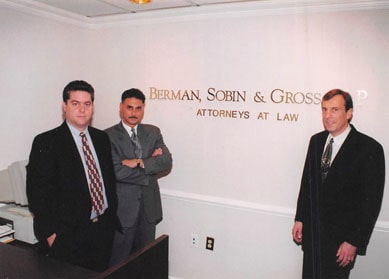
Berman | Sobin | Gross LLP is the largest workers’ compensation law firm in Maryland representing injured workers, with offices in Lutherville, Baltimore, Gaithersburg, and Frederick. Howard County workers and those employed in Columbia’s distribution corridors are well within the firm’s service area. Clients throughout the region have access to attorneys who handle complex contested claims, who have argued before both of Maryland’s highest courts, and who have never shied away from taking a difficult case to hearing when that’s what the situation required. If you’ve been injured working in a Columbia warehouse and want to understand your options, contact Berman | Sobin | Gross LLP for a confidential case analysis with one of our Columbia warehouse injury attorneys.