

Bowie Workplace Injury Attorney
Work injuries in Bowie don’t follow a predictable pattern. They happen at distribution centers along Route 301, at construction sites near the Bowie Town Center, in school buildings, on county roads, and in commercial kitchens throughout Prince George’s County. When they happen, the path forward is rarely obvious. Medical bills accumulate, employers grow distant, and the workers’ compensation system presents choices that carry real consequences. A Bowie workplace injury attorney from Berman | Sobin | Gross LLP can help you move through that system with clarity about what you’re entitled to and what’s actually at stake.
What Workplace Injuries in Prince George’s County Actually Look Like
Bowie sits at the intersection of several industries that generate a steady volume of serious work injuries. The city’s proximity to Joint Base Andrews brings federal contractors and support workers into a wide range of physically demanding environments. Retail and logistics operations along the Route 301 corridor employ thousands of workers in jobs involving lifting, equipment operation, and repetitive motion. Healthcare workers at local medical facilities face exposure risks, patient-handling injuries, and high rates of musculoskeletal strain. Educators and school staff across the Bowie area face hazards that often go unrecognized until an injury becomes undeniable.
The injuries themselves tend to cluster around a few categories. Back and spinal injuries from lifting and falls. Repetitive stress conditions in the hands, wrists, and shoulders from assembly-line and warehouse work. Traumatic brain injuries and orthopedic fractures from vehicle accidents during work hours. Burns and chemical exposures from industrial processes. Occupational diseases, including heart and respiratory conditions, that develop over years of exposure. What these injuries share is that they frequently require prolonged treatment, reduce earning capacity, and generate disputes with employers and insurers who have strong financial reasons to minimize their scope.
Where Maryland Workers’ Compensation Claims Get Complicated
The Maryland Workers’ Compensation Commission handles claims filed by injured workers across the state, including those in Prince George’s County. On paper, the process looks manageable. In practice, it produces friction at nearly every stage for workers who don’t understand where disputes typically arise.
Employer-reported injuries sometimes get characterized inaccurately. The description of how an injury occurred can be shaped by supervisors who weren’t present or who have an interest in keeping claims off the company’s record. Medical evaluations arranged by the employer or insurer are conducted by physicians who are hired repeatedly by the same insurers, which affects the opinions those physicians deliver. Disputes over whether a condition is work-related, whether treatment is medically necessary, and how much a worker’s disability affects their wage-earning capacity are all resolved through hearings at the Commission, where the quality of advocacy determines outcomes.
For public safety employees, first responders, and corrections officers in the Bowie area, there is an additional layer of complexity. Maryland law extends a statutory presumption that certain diseases, including heart disease and hypertension, are job-related for public safety employees. This presumption is enormously valuable, but employers and their medical experts routinely contest it. Berman | Sobin | Gross LLP has litigated these presumptions at the highest levels of Maryland courts, including the successful outcome in City of Frederick v. Shankle, which limited the ability of employer medical experts to challenge the scientific basis of the presumption itself.
Disability Benefits, Wage Loss, and the Calculations That Matter
Maryland’s workers’ compensation system distinguishes between several types of disability, and the distinctions have direct financial consequences. Temporary total disability applies when an injured worker cannot work at all during recovery. Temporary partial disability covers situations where a worker can perform some work but at reduced capacity or reduced hours. Permanent partial disability accounts for lasting functional limitations once a worker has reached maximum medical improvement. Permanent total disability applies in the most catastrophic cases.
The wage calculations underlying these benefits are not always straightforward. Average weekly wage is computed based on earnings over a defined period before the injury, and errors in that calculation compound over the life of a claim. Workers who regularly earn overtime, work multiple jobs, or have variable pay structures often find their benefits understated if those earnings aren’t properly documented and argued.
The Commission’s Montgomery County v. Deibler ruling, argued by attorneys at this firm, established that public safety workers receiving full salary while on light duty can still receive compensation for lost overtime wages they had been earning before the injury. That ruling reflects a broader principle that applies to many workers: what you’re owed is not simply what the employer chooses to pay you during your recovery.
Vocational rehabilitation is also part of the Maryland system when an injured worker cannot return to their prior occupation. The Fikar v. Montgomery County ruling confirmed that workers receiving service-connected disability retirement remain eligible for vocational rehabilitation services, preserving options that employers often argue don’t exist.
Questions Bowie Injury Clients Ask Most Often
Does it matter that I didn’t realize how serious the injury was right away?
Timing matters, but delayed recognition of an injury’s severity is common and does not automatically disqualify a claim. Many repetitive stress injuries, occupational diseases, and back conditions develop or worsen over time. The key is filing once you know or should know that a work-related condition affects your ability to work, and doing so promptly once that point is reached.
My employer is being cooperative right now. Do I still need an attorney?
Employer cooperation early in a claim often reflects the insurer’s strategy, not a commitment to your full recovery. Insurers frequently accept straightforward claims initially while building grounds to dispute more expensive aspects later, including permanent disability ratings, extended treatment, and wage loss calculations. Having counsel at the outset protects the record throughout the claim.
The company’s doctor says I can return to full duty, but my own doctor disagrees. What happens?
Conflicting medical opinions are among the most common disputes before the Maryland Workers’ Compensation Commission. The Commission weighs the evidence from both sides, and the credibility, qualifications, and basis of each physician’s opinion all matter. Presenting your treating physician’s findings effectively, and challenging the methodology and independence of the employer’s medical expert, is where representation makes a real difference.
Can I be fired for filing a workers’ compensation claim in Maryland?
Maryland law prohibits retaliation against employees for filing a workers’ compensation claim. If you believe adverse action was taken against you in connection with your claim, that is a separate legal issue worth discussing with an attorney, because the remedies and the procedures are distinct from the compensation claim itself.
What if the injury was partially my fault?
Maryland workers’ compensation is a no-fault system. An injured worker generally does not need to prove that the employer was negligent, and the employer cannot defeat a valid claim by arguing the worker contributed to the accident. There are narrow exceptions, such as intoxication or willful self-inflicted injury, but ordinary workplace negligence on the worker’s part does not bar recovery.
What happens if a third party, not my employer, was responsible for my injury?
If a party other than your employer, such as a subcontractor, equipment manufacturer, or a negligent driver who struck your work vehicle, contributed to your injury, you may have a separate personal injury claim in addition to your workers’ compensation claim. These parallel claims require careful coordination because recovery in one can affect the other under Maryland’s subrogation rules.
Can I choose my own doctor for treatment?
Maryland workers’ compensation law gives injured workers the right to select their own treating physician. The employer or insurer may also request that you attend an independent medical examination. These are different things, and it is worth understanding what each examination is designed to accomplish before you attend one.
Representing Bowie Workers Who Need More Than a Straightforward Claim
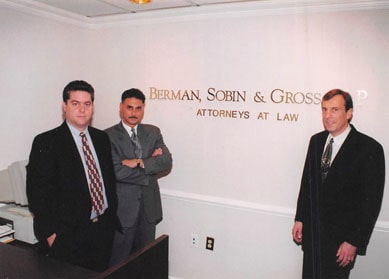
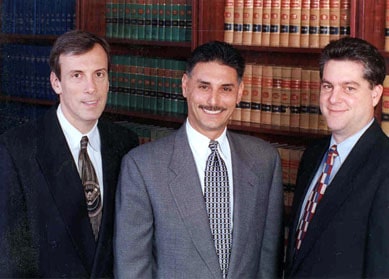
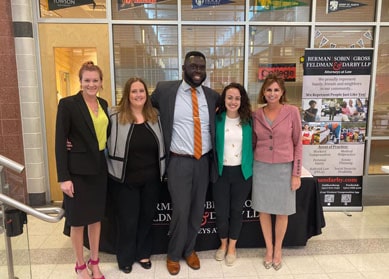
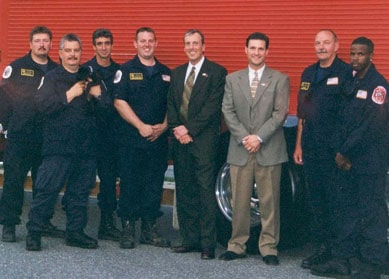
Berman | Sobin | Gross LLP is the largest workers’ compensation firm in Maryland representing injured workers, with offices in Lutherville, Baltimore, Gaithersburg, and Frederick and attorneys who regularly handle cases throughout Prince George’s County. The firm was founded more than 35 years ago, and one of its founders authored a two-volume legal treatise that remains the primary reference on Maryland workers’ compensation law. The firm represents firefighters, paramedics, EMTs, law enforcement officers, corrections officers, teachers, truck drivers, and workers across the full range of occupations that sustain communities like Bowie.
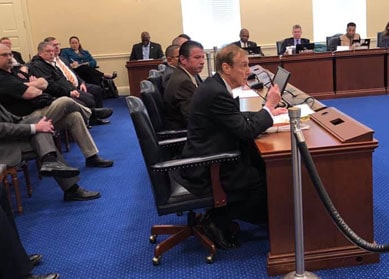
The firm does not limit its practice to claims that resolve without a fight. When cases require hearings before the Commission, appeals to the circuit courts, or jury trials, the firm’s attorneys are prepared to take that path. The appellate victories listed on this site reflect cases that other attorneys might not have pursued, and the legal standards established in those cases continue to benefit injured workers across Maryland today. Spanish-language assistance is available for clients who prefer to communicate in Spanish.
Workers in Bowie dealing with a job-related injury have access to the full resources of a firm built around this specific area of law. If your claim has been disputed, denied, or undervalued, or if you simply want to understand what you’re entitled to before you make decisions that are hard to reverse, speaking with a Bowie workplace injury lawyer at Berman | Sobin | Gross LLP is a direct and practical step toward getting accurate answers about your situation.