

Maryland Work Injury Attorney
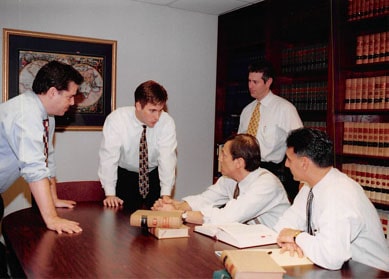
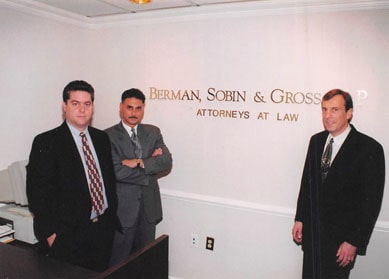
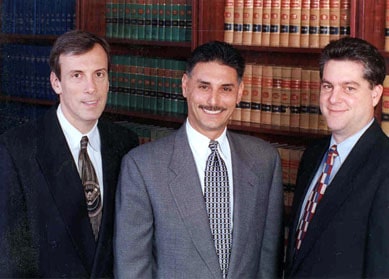
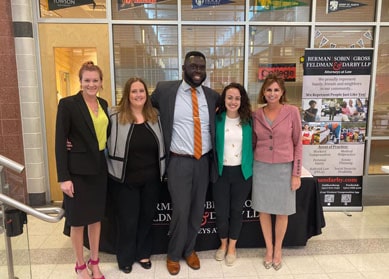
Work injuries in Maryland happen across every industry and every type of job, from construction sites and loading docks to school hallways and office buildings. The physical, financial, and emotional toll of a serious workplace injury can be immediate and lasting, but the path to recovering compensation through Maryland’s workers’ compensation system is rarely straightforward. Maryland work injury attorneys at Berman | Sobin | Gross LLP have spent 35 years representing the working people of this state, from firefighters and paramedics to truck drivers, food service workers, and school support staff. The firm has grown from three attorneys to over twenty, with offices across Maryland, because the need for serious, experienced representation in work injury cases has never been small.
What Injured Workers in Maryland Are Actually Entitled To Recover
Maryland’s workers’ compensation system is designed to provide benefits to employees who are injured on the job or who develop occupational diseases as a result of their work. Understanding the full scope of what those benefits include matters enormously, because insurance adjusters and employers have strong financial incentives to minimize what they pay out.
Wage replacement benefits are typically what injured workers focus on first. When an injury prevents an employee from returning to their usual duties, temporary total disability benefits replace a portion of the worker’s average weekly wage while they recover. If the injury results in a permanent limitation, whether total or partial, additional permanent disability benefits may be available. The dollar amounts and duration of these benefits are governed by Maryland’s statutory schedules, and understanding where a specific injury falls within those schedules requires more than a surface-level reading of the law.
Medical benefits are equally important and often more contested. The employer and insurer generally have the right to direct medical care, but that right has limits, and disputes over the adequacy of treatment or access to specialists are common. Maryland workers who are injured may also qualify for vocational rehabilitation services when their injury prevents them from returning to their prior occupation. A 2014 ruling that Berman | Sobin | Gross LLP secured in Fikar v. Montgomery County, Maryland clarified that injured workers receiving service-connected disability retirement could still access vocational rehabilitation, expanding the reach of that benefit for public employees.
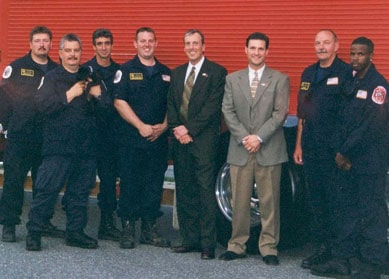
For Maryland’s public safety employees, including firefighters, EMTs, law enforcement officers, and corrections officers, enhanced presumptions apply to certain conditions like heart disease, lung disease, and hypertension. These presumptions shift the burden in ways that can be decisive for a claim. The firm’s appellate work in Montgomery County v. Pirrone confirmed that those presumptions apply even after retirement or while a worker is off duty, and Downer v. Baltimore County established that EMTs qualify for the same enhanced benefits as other public safety employees.
Where Work Injuries in Maryland Most Often Occur and Why They Become Contested
Maryland’s economy spans sectors with very different injury profiles. Construction workers on projects throughout the Baltimore metro area, along the I-270 corridor, and in the Washington suburbs face acute trauma risks including falls, equipment accidents, and injuries from heavy materials. Healthcare workers in hospitals and long-term care facilities across the state deal with repetitive strain injuries, patient handling injuries, and exposure-related conditions. Corrections officers and law enforcement personnel sustain injuries that are often cumulative and sometimes traced to a career’s worth of physical demands rather than a single incident. Teachers and school staff experience a broader range of injuries than many people expect, including assaults, slip and falls, and stress-related physical conditions.
Claims become contested for several recurring reasons. Employers and insurers often dispute whether an injury actually occurred at work, or they argue that a pre-existing condition is the real cause of the problem. Soft tissue injuries, hearing loss, mental health conditions, and occupational diseases are particularly vulnerable to these challenges because they don’t always produce visible or immediately objective evidence. Delayed-onset conditions, where a worker doesn’t feel the full effect of an injury until days or weeks after the incident, can complicate the notice and filing timeline.
A case may also become contested later in the process, after initial benefits are accepted, when the insurer disputes the extent of permanent disability or challenges the medical treatment being recommended. Workers who assumed their case was settled can find themselves back in dispute without fully understanding why or what options remain.
Questions Maryland Workers Ask About Work Injury Claims
How long do I have to file a workers’ compensation claim in Maryland?
Maryland law generally requires that a workers’ compensation claim be filed within two years of the date of the accidental injury. For occupational diseases, the deadline runs from the date the worker became disabled or first had reason to know the condition was work-related, which makes the discovery timeline critical. Missing these deadlines can permanently bar a claim, so early legal consultation matters even if symptoms seem manageable at first.
Can my employer fire me for filing a workers’ compensation claim?
Maryland law prohibits retaliation against an employee for filing a workers’ compensation claim. If an employer disciplines, demotes, or terminates a worker because of a workers’ comp claim, that worker may have a separate legal claim for wrongful discharge. The practical reality is that documenting the connection between the workers’ comp filing and the adverse employment action is often the core challenge in these cases.
What happens if the insurance company’s doctor says I’m fine to return to work?
Employer-directed independent medical examinations frequently produce opinions that favor the insurer. A physician’s conclusion that you’re ready to return to full duty does not end your claim. You have the right to contest that opinion, present conflicting medical evidence, and have the dispute resolved through the Maryland Workers’ Compensation Commission. Having an attorney who knows how to challenge these evaluations and present credible counter-evidence is often what determines the outcome.
Does workers’ compensation cover mental health conditions?
Maryland workers’ compensation can cover psychological conditions, but the threshold for establishing compensability is higher than for physical injuries. A mental condition that develops as a direct result of a physical workplace injury, or that arises from an extraordinarily unusual work-related event, may qualify. Claims based solely on workplace stress generally face steeper challenges. Each case depends heavily on the specific facts and the strength of the medical documentation.
What if my injury involved a third party, not just my employer?
Workers’ compensation is the exclusive remedy against an employer in most circumstances, but that limitation does not prevent an injured worker from pursuing a separate civil personal injury claim against a third party whose negligence contributed to the injury. A subcontractor’s equipment failure, a defective product, or a negligent driver hitting a worker while driving for work can all give rise to additional claims that run alongside the workers’ comp case.
Can I handle my own workers’ compensation claim?
Workers are not legally required to have an attorney to file a workers’ comp claim. But insurance companies have adjusters and attorneys working their cases from the start, and employers have every financial incentive to minimize what they pay. In straightforward, undisputed claims for minor injuries, self-representation may be manageable. When permanent disability is involved, when the claim is denied, or when medical causation is in dispute, attempting to navigate the Commission process without representation carries real risk to the outcome.
What does it cost to hire a workers’ compensation attorney?
Workers’ compensation attorneys in Maryland typically handle these cases on a contingency fee basis, meaning attorneys are paid a percentage of the benefits recovered rather than charging hourly. The Maryland Workers’ Compensation Commission must approve fee arrangements in workers’ comp cases. There is generally no upfront cost to retaining an attorney, and fees are subject to regulatory oversight.
When a Work Injury Case Goes Beyond the Commission
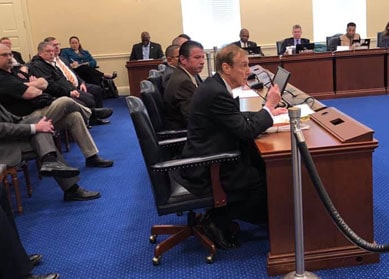
Most workers’ compensation cases in Maryland are resolved at the Commission level, through hearings before commissioners who review medical evidence, vocational evidence, and testimony. But some cases require more. Berman | Sobin | Gross LLP has handled hundreds of workers’ compensation jury trials and has taken appeals before both of Maryland’s highest courts. The firm’s founders literally wrote a treatise on Maryland workers’ compensation law that continues to serve as a reference in the field.
That appellate track record is not incidental. The firm’s courtroom work in cases like City of Frederick v. Shankle, which addressed the admissibility of employer medical expert testimony, and Montgomery County v. Cochran and Bowen, which clarified how the occupational deafness statute calculates the age deduction for hearing loss, has shaped Maryland law in ways that benefit injured workers across the state. For workers whose cases have been denied or turned away by other attorneys, Berman | Sobin | Gross LLP evaluates those claims and takes on cases that require genuine litigation resources and legal commitment.
The firm represents workers throughout Maryland, with offices in Lutherville, Baltimore, Gaithersburg, and Frederick, and handles cases across the state from Cumberland and Hagerstown in the west to Bowie, Waldorf, and the Washington suburbs in the south and east.
Talk to a Maryland Workplace Injury Lawyer About Your Claim
A work-related injury changes things quickly, and the decisions made in the first weeks of a claim can shape everything that follows. Berman | Sobin | Gross LLP has Spanish-speaking attorneys and staff, and is committed to making sure every client can communicate clearly and fully about their situation. The firm assigns one attorney to stay with a client throughout the case, so there is always a consistent point of contact who knows the details. If you have been hurt at work and need someone who will take your case seriously and pursue the full range of benefits available under Maryland law, contact Berman | Sobin | Gross LLP for a confidential case analysis with a Maryland workplace injury attorney.