

Oxon Hill Work Injury Attorney
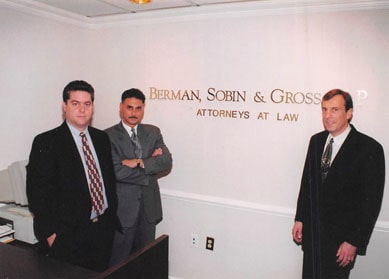
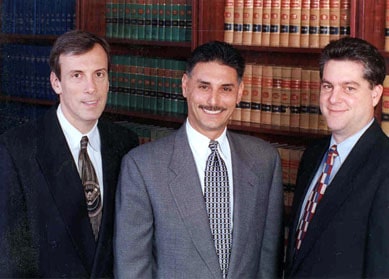
Work injuries in Oxon Hill carry weight that goes well beyond the emergency room. Workers in this part of Prince George’s County move goods through the National Harbor corridor, staff healthcare facilities, operate in construction zones along the Beltway, and keep public services running across one of Maryland’s most active suburban communities. When a job-related injury sidelines someone doing that kind of work, the financial pressure arrives fast. Maryland’s workers’ compensation system exists to provide wage replacement and medical coverage, but the path from injury to benefits is rarely as straightforward as it should be. Berman | Sobin | Gross LLP has spent 35 years representing Oxon Hill work injury claimants and workers across Prince George’s County, and the firm has the depth to handle claims that other attorneys won’t take on.
What the Work Looks Like in Oxon Hill and Why Injury Claims Arise Here
The types of injuries workers’ compensation attorneys see in Oxon Hill reflect the specific economic fabric of this part of Prince George’s County. The National Harbor waterfront and surrounding development have brought in hospitality workers, food service employees, security personnel, and transportation workers. Interstate 95, the Capital Beltway, and Route 210 make this a hub for commercial drivers and logistics workers who log high-mileage routes under real time pressure. Public sector employment, including corrections and law enforcement, is significant throughout Prince George’s County, and those workers carry distinct injury risks and distinct legal protections.
Injuries in these industries range from acute traumatic events, a fall from scaffolding, a collision on the road, a violent incident during a security shift, to repetitive stress injuries that develop over months or years. Repetitive motion injuries, hearing loss, and occupational diseases are often the most contested in the workers’ compensation system because the causal connection between the work and the condition is not as visible as a slip on a wet warehouse floor. That is precisely where legal representation matters most.
How Prince George’s County Workers’ Compensation Claims Actually Move
A workers’ compensation claim in Maryland begins with the filing of a claim with the Maryland Workers’ Compensation Commission. If the employer and its insurer accept the claim, benefits begin. If they do not, or if the parties disagree about the extent of disability or the appropriate level of benefits, a hearing is scheduled before the Commission.
Prince George’s County workers whose claims are contested will typically go before a Commission hearing in a proceeding that is less formal than a jury trial but still requires careful preparation. Medical evidence is central. Employers and insurers routinely schedule claimants for independent medical examinations with physicians they retain to evaluate the injury. The opinions produced by those exams frequently minimize the extent of disability or dispute whether the condition is work-related at all. Understanding how to challenge those opinions with the right counter-evidence is not something most injured workers can do without representation.
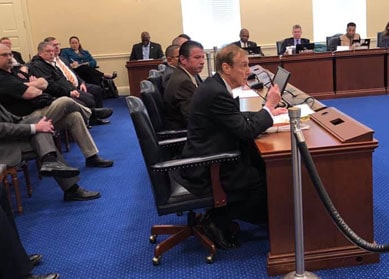
For public safety workers in Prince George’s County, including firefighters, EMTs, and law enforcement officers, the analysis involves additional legal protections under Maryland law. Certain conditions, including heart disease, hypertension, and specific cancers, carry a statutory presumption of occupational causation for public safety employees. Berman | Sobin | Gross LLP has litigated cases at the appellate level that have shaped how those presumptions apply, including successful arguments before both of Maryland’s highest courts that have expanded protections for workers in exactly these roles.
When a claim is denied or benefits are cut off after an initial acceptance, the worker has the right to appeal to the Circuit Court. From there, further appeals are possible. The firm does not stop at the Commission level when the facts and law support going further.
Compensation Categories That Often Go Undervalued
Workers who navigate their own claims frequently leave benefits unclaimed, not because they don’t qualify, but because they don’t know what to ask for. The Maryland system provides several distinct categories of compensation that apply depending on the nature of the injury and its impact on the worker’s capacity to earn a living.
Temporary total disability covers lost wages when a worker cannot return to any employment during recovery. Temporary partial disability applies when the worker can return in a reduced capacity. These categories sound straightforward, but disputes arise constantly about when a worker is medically able to return to work and in what capacity, particularly when an employer’s doctor and the treating physician disagree.
Permanent partial disability and permanent total disability involve separate evaluations and carry long-term financial significance. The calculation of permanent disability benefits involves medical ratings, statutory compensation rates, and in some cases the worker’s vocational limitations. A worker with a permanent shoulder injury who cannot return to construction work and lacks transferable skills faces a different economic picture than someone whose desk job is unaffected. That difference should be reflected in the claim, and often it isn’t without advocacy.
Vocational rehabilitation is another benefit that frequently goes unpursued. For injured workers who cannot return to their prior employment, the system provides access to rehabilitation services. Maryland appellate law, including a case Berman | Sobin | Gross LLP was directly involved in, has confirmed that workers receiving service-connected disability retirement can still access vocational rehabilitation through the workers’ compensation system.
Medical benefits cover not just initial treatment but ongoing care, including surgery, physical therapy, medication, and specialist referrals. Disputes about medical necessity and authorized treatment are common. Understanding which providers are authorized and how to seek approval for care can directly affect recovery outcomes.
Questions Workers in Oxon Hill Ask Before Filing
What if my employer says my injury isn’t work-related?
The employer’s initial position does not determine the outcome. Maryland law allows injured workers to file a claim directly with the Commission, and the dispute is resolved through the hearing process with medical and other evidence. Many contested claims are ultimately approved.
I waited a few weeks to report the injury. Does that hurt my claim?
Reporting delays can complicate a claim, but they do not automatically end it. Maryland law requires notice to the employer within a certain timeframe, but exceptions exist for situations where the worker was unaware the injury was work-related, or where the injury developed gradually over time. An attorney can evaluate whether the delay creates a problem in your specific situation and how to address it.
My employer offers light duty. Am I required to take it?
The answer depends on whether the light duty offered falls within your medically documented restrictions. If it does and you refuse without good cause, it can affect your temporary disability benefits. However, if the offered work exceeds your restrictions or requires tasks your physician has prohibited, you are not required to accept it. Public safety workers in Prince George’s County have additional protections around light duty assignments and overtime wage loss that are worth understanding before making any decision.
Can I choose my own treating physician?
Maryland’s workers’ compensation system has specific rules about authorized treating physicians. In many cases, the employer or insurer has some role in directing initial medical care. However, workers retain rights around choice of physician in certain circumstances, and there are processes for challenging inadequate care. This is one of the more practical areas where having representation early can prevent problems that are harder to fix later.
The insurance company offered me a settlement. Should I accept it?
A settlement of a workers’ compensation claim in Maryland is generally final. Before signing anything, it’s worth understanding whether the offer accounts for the full value of permanent disability, future medical expenses, and any wage loss you may face if you cannot return to your prior work. The insurer’s goal in offering a settlement is finality, not generosity. Having the offer evaluated before you agree protects you from closing a claim before you know what it is worth.
What happens if I’m injured in a work accident but someone else caused it?
Some workplace injuries involve a third party whose negligence contributed to what happened, such as a defective piece of equipment, a negligent driver who hit your work vehicle, or a contractor whose actions created an unsafe condition on your job site. In those situations, you may be able to pursue both a workers’ compensation claim and a separate civil claim against the responsible third party. The two are not mutually exclusive, though the relationship between them involves legal considerations that an attorney should walk through with you.
Do I really need an attorney if my claim seems straightforward?
Straightforward-looking claims change. An insurer may accept the claim initially and then dispute the extent of your permanent disability later. A treating physician may release you to work before you’re ready. Benefits may be modified or terminated based on a medical evaluation you weren’t fully prepared for. Having counsel from the start means someone is watching the entire process, not just the parts that have already gone wrong.
Injured on the Job in Oxon Hill? Berman | Sobin | Gross LLP Is Ready to Evaluate Your Case
Berman | Sobin | Gross LLP is Maryland’s largest workers’ compensation firm representing injured workers, with offices serving the entire state including Prince George’s County. The firm has handled tens of thousands of Commission hearings, hundreds of jury trials, and precedent-setting appeals before Maryland’s highest courts. For workers in Oxon Hill and throughout the region who need experienced representation from an Oxon Hill work injury lawyer, the attorneys at Berman | Sobin | Gross LLP are available to evaluate the claim, explain the options, and put 35 years of focused experience to work. Spanish-language assistance is available for clients who need it. Contact the firm today for a confidential case analysis.