Maryland Machine Accident Attorney
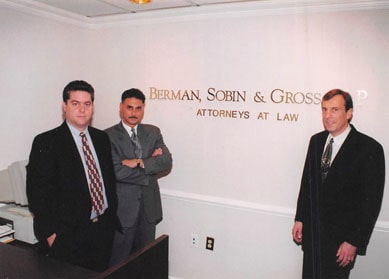
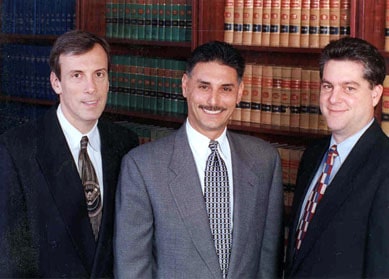
Industrial machinery tears through human tissue, bone, and nerve in ways that change lives instantly and permanently. Workers operating presses, conveyors, lathes, forklifts, packaging equipment, and countless other machines across Maryland’s manufacturing plants, warehouses, and construction sites face these risks daily. When a machine accident happens, the path forward is rarely straightforward. A single incident can generate multiple overlapping legal claims, involve several responsible parties, and require medical treatment that unfolds over years. The attorneys at Berman | Sobin | Gross LLP have spent 35 years representing the people who do the physical work that keeps Maryland running, and Maryland machine accident attorneys in our firm understand how devastating these cases are and how much depends on handling them correctly from the start.
Why Machine Injuries at Work Are Legally Different from Most Accident Claims
A worker hurt by industrial equipment occupies an unusual legal position. Workers’ compensation exists specifically to cover job-related injuries, but it is not the only avenue available after a machine accident, and it is rarely sufficient on its own when the injuries are catastrophic. Workers’ comp provides medical benefits and a portion of lost wages, but it does not compensate for pain and suffering, and it may not fully account for the long-term economic consequences of permanent disability.
What distinguishes many machine accidents from other workplace injuries is the potential to bring a separate civil claim against a party other than the employer. If a machine was defectively designed, if a component failed because of a manufacturing defect, if a safety guard was removed or disabled and the equipment manufacturer knew this was a common and dangerous practice, or if a third-party maintenance contractor introduced a hazard through negligent service, those parties can be held liable through a personal injury or product liability lawsuit. This third-party claim runs parallel to the workers’ compensation case and is governed by entirely different rules, timelines, and standards of proof.
Managing both tracks simultaneously requires legal experience with both systems. An attorney who handles only workers’ comp may not recognize the third-party liability angle. An attorney who handles only personal injury litigation may not know how to maximize the workers’ compensation benefits in a way that preserves as much of the civil recovery as possible. Berman | Sobin | Gross LLP works across both areas, which matters significantly when the facts of a machine accident support more than one path to compensation.
The Machines and Conditions That Generate the Most Serious Claims in Maryland
Maryland’s economy spans a wide range of industries where machine hazards are present. Food processing facilities in the Baltimore area and on the Eastern Shore operate high-speed slicing, grinding, and packaging equipment. Construction sites across Montgomery County, Prince George’s County, and throughout the Washington suburbs involve cranes, concrete mixers, excavators, and aerial lift equipment. Manufacturing and metal fabrication shops in Frederick, Hagerstown, and Cumberland run presses, grinders, and lathes that can remove fingers, hands, and limbs in fractions of a second. Warehouses and distribution centers in the I-95 corridor operate forklifts and conveyor systems that generate a steady volume of crush injuries and amputations each year.
The federal Occupational Safety and Health Administration maintains specific standards for machine guarding, lockout/tagout procedures, and operator safety. When those standards are violated and a worker is hurt, the OSHA violation becomes a significant piece of evidence in any legal proceeding. OSHA investigation records, citation histories for a particular employer or machine manufacturer, and incident reports from prior accidents at the same facility can all become relevant in building a case. These records exist, they are often obtainable, and experienced attorneys know how to use them.
Injuries from machine accidents tend to be among the most severe in any workplace setting. Traumatic amputations, degloving injuries, crush injuries with compartment syndrome, severe burns from hydraulic fluid or hot metal, and spinal injuries from equipment rollovers each come with extended treatment timelines, potential for permanent impairment, and lasting effects on a person’s ability to work and live independently. The legal recovery needs to reflect that reality, which means accounting for future medical costs, the loss of earning capacity over a full remaining career, and the full range of damages available under Maryland law.
Product Liability and the Manufacturer’s Role in Machine Accident Cases
When a defect in the machine itself contributes to an injury, the equipment manufacturer, the component supplier, or the entity that distributed the machine into the market may bear legal responsibility under Maryland product liability law. A machine can be defective in its original design, making it unreasonably dangerous even when used as intended. It can be defective because of something that went wrong in the manufacturing process, producing a unit that does not conform to its own specifications. Or it can carry a marketing defect, meaning it was distributed without adequate warnings or instructions about known hazards.
Pursuing a product liability claim requires early action. Physical evidence needs to be preserved before a machine is repaired, retooled, or removed from service. Witness statements and employment records need to be secured. Technical experts who can analyze the machine’s design, its guarding systems, and its failure mode need time to do thorough work. Delaying the involvement of legal counsel in a machine accident case almost always means losing access to evidence that would have been available if a lawyer had been involved earlier.
Maryland also applies a contributory negligence standard in civil cases, which means that a plaintiff found even partially at fault for an accident may be barred from recovering in a personal injury lawsuit. Employers and manufacturers frequently argue that workers failed to follow safety procedures or bypassed safety devices. Countering that argument requires detailed knowledge of the machine’s operating environment, the training the worker received, and the specific facts of how the accident happened. The attorneys at Berman | Sobin | Gross LLP have tried cases of this type before juries and have taken machine accident appeals before Maryland’s highest courts.
Questions Workers Often Have After a Machine Accident in Maryland
Can I file both a workers’ compensation claim and a lawsuit against the machine manufacturer?
Yes, and in many machine accident cases, that is exactly the right approach. Workers’ compensation covers your employer’s liability regardless of fault, while a product liability or negligence lawsuit against a third party can pursue additional categories of damages. The two claims proceed separately, though there are rules about how any civil recovery interacts with workers’ compensation benefits that have already been paid.
My employer says the accident was my fault for not following the safety protocol. Does that end my workers’ compensation claim?
No. Workers’ compensation in Maryland is a no-fault system. Your employer’s assertion that you were negligent does not disqualify you from receiving workers’ comp benefits. It may, however, become relevant if you are also pursuing a third-party civil claim, which is a separate analysis requiring careful attention to the specific facts.
The machine that hurt me had a safety guard, but supervisors frequently had workers remove it to speed up production. Does that matter?
It matters a great deal. Employer knowledge of a routinely disabled safety feature is relevant to both the workers’ compensation case and any civil claim. If the machine manufacturer was aware that its guards were commonly bypassed in the industry and did not redesign the machine or strengthen its warnings, that creates a separate basis for a product liability claim.
How long do I have to file a claim after a machine accident in Maryland?
Workers’ compensation claims must be filed within a specific window of time, and third-party civil claims are governed by Maryland’s statute of limitations, which is generally three years from the date of injury for personal injury cases. These deadlines are strict, and missing them typically means losing your right to pursue that avenue entirely. Getting legal guidance early protects those rights.
What if I can never return to the type of work I was doing before the accident?
This is one of the most important aspects of a serious machine injury case. The workers’ compensation system provides for permanent disability benefits and vocational rehabilitation, but those benefits do not always capture the full economic impact of losing the ability to perform skilled or specialized work. A civil claim against a liable third party can pursue damages for diminished earning capacity over the remainder of a working career, and it is worth understanding both avenues fully before settling either one.
Can Berman | Sobin | Gross LLP handle machine accident cases that involve complex litigation or appeals?
Yes. The firm has handled hundreds of workers’ compensation jury trials and has argued appeals before both of Maryland’s highest courts. Machine accident cases that involve contested third-party liability, disputed causation, or defense arguments based on contributory negligence are exactly the kind of cases the firm takes on. If another attorney has turned down your case or told you it is too complicated to pursue, that is worth discussing directly with this firm.
What should I do immediately after a machine accident to protect my legal position?
Report the injury to your employer in writing as soon as you are physically able. Seek medical care and be thorough and honest with treating physicians about how the injury occurred. Do not sign any release or settlement agreement from your employer’s insurer without legal review. If at all possible, document the machine’s condition, the presence or absence of safety guards, and the circumstances of the accident before anything is moved or repaired.
Representing Injured Maryland Workers From Every Corner of the State
Berman | Sobin | Gross LLP serves clients across Maryland from offices in Lutherville, Baltimore, Gaithersburg, and Frederick. Machine accident cases come to the firm from workers in manufacturing and industrial facilities throughout the Baltimore region, the Washington suburbs, Western Maryland, and the Eastern Shore. The firm also has Spanish-speaking attorneys and staff, which matters in industries where a significant portion of the workforce includes workers whose primary language is not English. Legal rights in a machine accident case do not depend on the language a worker speaks, and neither does access to experienced legal representation at this firm.
Speak With a Maryland Industrial Machine Injury Lawyer
Machine accidents rarely produce simple cases. The injuries are serious, the responsible parties may be numerous, and the legal claims that arise can run through the workers’ compensation system, the civil courts, and sometimes both simultaneously. The attorneys at Berman | Sobin | Gross LLP have the background to handle these cases at every stage, from the initial claim filing through trial and appeal if that is what a case requires. Workers across Maryland who have been hurt by industrial or manufacturing equipment are welcome to contact the firm for a confidential case analysis with a Maryland machine injury attorney.