

Maryland Workplace Back Injury Attorney
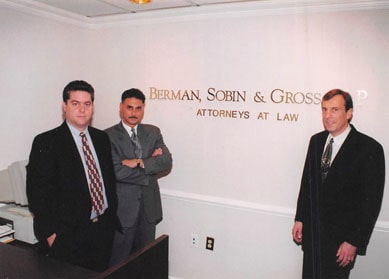
Back injuries are among the most disabling conditions that come through the Maryland workers’ compensation system. They sideline workers for weeks, months, or sometimes permanently. They generate disputes over causation, treatment approval, and permanent impairment ratings at a far higher rate than most other injury types. And they are among the most aggressively contested claims, because insurers and employers know that a serious spinal injury carries real long-term value. If you are dealing with a Maryland workplace back injury, the decisions you make early in the claims process will shape everything that follows. Berman | Sobin | Gross LLP has spent 35 years representing Maryland workers through exactly these situations, and the firm has grown to become the largest workers’ compensation practice in the state representing injured employees.
Why Back Injuries at Work Are So Commonly Disputed
A broken arm on a construction site is hard to argue with. A herniated lumbar disc is a different matter. Insurance carriers frequently challenge back injury claims on several grounds: pre-existing degeneration that they argue was already present before the work incident, questions about whether a specific event caused the injury or whether it developed gradually, and disputes over whether the recommended treatment is medically necessary. When an MRI shows degenerative changes alongside the acute injury, the carrier’s medical expert will often attribute the whole condition to normal aging. When a worker is injured over time rather than in a single incident, the carrier may argue there was no compensable event at all.
Maryland workers’ compensation law has specific frameworks for handling both acute traumatic injuries and occupational diseases, and back injuries often fall into a gray area between the two. A warehouse worker who lifts hundreds of pounds daily for years before his lumbar spine finally gives out faces a different legal path than a sanitation worker who slips on a wet road and ruptures a disc. Understanding which framework applies, and how to build the right evidentiary record, matters enormously before a claim reaches a Commissioner at the Maryland Workers’ Compensation Commission.
The Physical Reality Behind These Claims
Back injuries that arise from work cover a wide spectrum. Soft tissue strains and sprains at the lower end of that spectrum often resolve with conservative treatment and carry shorter periods of disability. But the injuries that drive the most significant claims typically involve the spinal structures themselves: herniated or bulging discs in the cervical or lumbar spine, compression fractures, nerve root damage causing radiculopathy down the arms or legs, and in the most severe cases, spinal cord injuries that produce lasting neurological deficits.
Treatment for serious spinal injuries is expensive and prolonged. Physical therapy, epidural steroid injections, spinal cord stimulators, discectomies, spinal fusions, and ongoing pain management all carry significant costs. Maryland workers’ compensation covers medical treatment when the claim is accepted, but carriers frequently contest specific procedures, require additional authorization, or dispute whether an ongoing symptom is still related to the original work injury. This is where having representation makes a concrete difference: delays in treatment approval directly affect recovery, and an attorney who knows how to move the process forward at the Commission level can protect both your health and your claim.
Permanent impairment is also a central issue in any serious back injury case. Under Maryland law, permanent partial disability ratings translate into a specific number of weeks of compensation. The rating assigned by an employer’s chosen physician almost always comes in lower than the rating a claimant’s own evaluating physician would assign. These differences are not incidental. A few percentage points of impairment can mean a difference of thousands of dollars in final compensation. Contested permanency hearings before the Commission are a routine part of serious back injury litigation, and preparation for those hearings requires medical documentation, deposition-ready expert witnesses, and attorneys who understand how Commissioners evaluate competing medical opinions.
Industries and Job Types That Drive Back Injury Claims in Maryland
Maryland’s workforce puts backs under strain across a wide range of occupations. Firefighters and paramedics carry heavy equipment, work in physically demanding environments, and often develop cumulative spinal conditions over careers that span decades. Law enforcement officers are involved in vehicle accidents, physical confrontations, and prolonged time in patrol vehicles. Corrections officers face similar risks. Nurses, nursing assistants, and other healthcare workers regularly lift and reposition patients, and lumbar injuries are among the most common work-related conditions in that field. Construction trades, transportation workers, warehouse and logistics employees, and food service workers all face significant physical demands that place the spine at risk.
Berman | Sobin | Gross LLP represents workers across all of these categories throughout Maryland, with offices in Lutherville, Baltimore, Gaithersburg, and Frederick. For public safety workers such as firefighters, EMTs, and law enforcement officers, the firm has a particular depth of experience with the statutory presumptions that apply to those employees under Maryland law, including the appellate victories the firm has secured that continue to define how those presumptions operate in practice.
Common Questions About Back Injury Workers’ Comp Claims in Maryland
My employer says my back problems are pre-existing. Does that mean my claim is finished?
Not necessarily. Maryland workers’ compensation law does not require that a work incident be the sole cause of an injury, only that the work activity contributed to or aggravated the condition. A pre-existing degenerative condition that was asymptomatic or manageable before a work incident, and then became disabling afterward, can still be a compensable claim. The medical record and timing matter significantly here, and an attorney can help you build the documentation needed to establish the work-related contribution.
I did not report my injury immediately. Can I still file a claim?
Maryland law requires that you notify your employer of a work-related injury within 10 days, though there are exceptions for good cause. Claims themselves must generally be filed within 60 days of the accident. Delays in reporting can complicate a case, but they do not automatically defeat it. If your circumstances fall outside the standard window, the analysis becomes more fact-specific and legal guidance is important.
The workers’ compensation doctor says I have reached maximum medical improvement, but I still have significant pain. What happens now?
Maximum medical improvement, or MMI, means that the treating physician believes your condition has stabilized and further recovery is unlikely. It does not mean you are fully healed. Once MMI is reached, the focus shifts to permanent impairment evaluation and any ongoing treatment for symptom management. If you disagree with the MMI determination or the impairment rating that follows, you have the right to an independent medical evaluation and to contest the findings before the Commission.
Can I choose my own doctor for a work-related back injury?
Maryland workers’ compensation law gives injured workers the right to select their treating physician from a panel maintained by the Workers’ Compensation Commission. Understanding how to exercise that right, and how the choice of treating physician affects the long-term trajectory of your claim, is something your attorney should walk through with you at the start of your case.
What if my back injury requires surgery and the carrier is refusing to authorize it?
Unauthorized denials of necessary medical treatment can be challenged before the Maryland Workers’ Compensation Commission. Your attorney can request an expedited hearing and present medical evidence supporting the necessity of the procedure. Delays in surgical care can worsen outcomes, so moving quickly on a treatment dispute is important.
My back injury has prevented me from returning to my original job. Does workers’ comp cover retraining?
Maryland workers’ compensation includes vocational rehabilitation benefits for workers whose injuries prevent them from returning to their previous employment. One of the firm’s appellate victories, Fikar v. Montgomery County, established that workers receiving service-connected disability retirement remain eligible for vocational rehabilitation services, a significant protection for public safety employees with serious spinal injuries.
What does it mean if my employer’s attorney says my claim is going to trial?
In Maryland, workers’ compensation claims can escalate beyond the Commission level into circuit court jury trials, particularly for serious permanent disability claims. Berman | Sobin | Gross LLP has handled hundreds of workers’ compensation jury trials and appeals before Maryland’s highest courts. If your case reaches that stage, having attorneys with genuine trial experience rather than purely administrative experience becomes critical.
Talk to a Maryland Back Injury Workers’ Compensation Attorney
Back injury claims in the Maryland workers’ compensation system require more than just filing paperwork and waiting. They require someone who understands the medical and legal pressure points, who can push back when a carrier disputes causation or treatment, and who will not stop at an administrative hearing if the case demands more. Berman | Sobin | Gross LLP takes the challenging cases, and backs them with 35 years of workers’ compensation experience, published legal authority, and a track record in courts and before the Commission that other Maryland firms simply cannot match. If a workplace back injury has taken you out of work or limited what you can do, contact Berman | Sobin | Gross LLP for a confidential case analysis with a Maryland workplace back injury lawyer who will give you a straightforward assessment of where your claim stands.