

Maryland Workplace PTSD Attorney
Post-traumatic stress disorder is one of the most misunderstood and undercompensated conditions in Maryland workers’ compensation. Firefighters who respond to mass casualty incidents, law enforcement officers who witness violence, EMTs who lose patients despite everything they tried, corrections officers who survive attacks inside a facility, even teachers and school workers who live through a campus crisis. These workers carry weight that does not show up on an X-ray or MRI. When that weight becomes a Maryland workplace PTSD diagnosis that prevents someone from working, the question of whether workers’ comp covers it is not academic. It is urgent. The answer is more complicated than most people realize, and getting it wrong at the beginning of a claim can cost a worker everything they are owed.
Why PTSD Claims in Maryland Workers’ Compensation Run Into Problems
Maryland workers’ compensation covers occupational diseases and accidental injuries. PTSD does not fit neatly into either category, and that creates room for employers and insurers to dispute these claims in ways they cannot easily dispute a broken bone or a torn ligament. The argument you will often see from the other side is that a mental health condition is too subjective, too difficult to tie to a specific workplace event, or that ordinary workplace stress does not qualify. Some of those arguments have legal merit. Others are simply insurance company positions dressed up to look like legal requirements.
The distinction matters. Maryland law does recognize that traumatic events at work can produce compensable psychological injuries, but the standards differ depending on whether the PTSD is tied to a single identifiable incident or developed over repeated traumatic exposures. A police officer who develops PTSD after a shooting may have a clearer path than a paramedic who experienced cumulative trauma over years of catastrophic calls. Neither claim is impossible, but they require different approaches, different evidence, and in many cases, a willingness to take the fight further than an initial administrative hearing.
For certain categories of workers, Maryland has statutory presumptions that shift the burden of proof on specific occupational diseases. Understanding whether those presumptions apply to a given worker’s situation, and how far courts have been willing to extend them, is exactly the kind of analysis that separates a well-prepared claim from one that gets denied on procedural grounds before it is even fully evaluated on the merits.
The Medical Evidence That Actually Decides These Cases
A PTSD diagnosis from a treating psychologist or psychiatrist is the foundation of any claim, but it is rarely sufficient on its own. Workers’ compensation cases in Maryland turn on whether the condition is causally connected to employment, and that connection has to be established through medical evidence that can withstand cross-examination. Insurers hire their own experts, and those experts will review the same records and reach different conclusions. The strength of your claim depends heavily on how well the medical narrative is built from the beginning.
This means the records from your treating providers need to document more than a diagnosis. They need to link the onset and severity of symptoms to specific workplace events or conditions. A treating doctor who notes “work-related stress” without specifics gives the other side room to argue. A psychiatrist whose records describe the triggering incidents, the trajectory of symptoms, and the DSM criteria being met gives a far stronger foundation. Workers who contact an attorney early in the process benefit from guidance on how to communicate with treating providers in ways that support, rather than undermine, the eventual claim.
Neuropsychological testing, independent medical examinations, vocational assessments when the worker cannot return to their prior position, all of these may become part of the case record. At Berman Sobin Gross LLP, the firm’s attorneys have handled enough of these cases to know which experts produce credible opinions that hold up before the Maryland Workers’ Compensation Commission and in court, and which ones tend to collapse under scrutiny.
First Responders and the Heightened Stakes of PTSD Claims
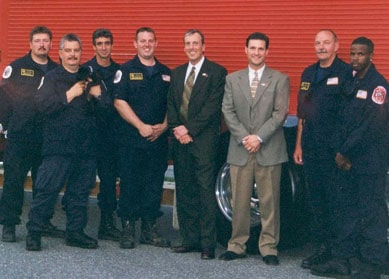
The firm has represented firefighters, paramedics, EMTs, law enforcement officers, and corrections officers for 35 years. These workers are statistically among the most vulnerable to occupational PTSD, and they also face unique obstacles when pursuing claims. There is still a culture in many first responder organizations that discourages workers from acknowledging mental health conditions, and some workers delay seeking treatment for years because of that pressure. By the time a formal claim is filed, the employer may argue that the delay in treatment undermines the causal connection to work.
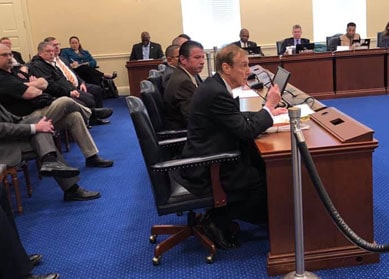
That argument can be addressed, but it requires an attorney who understands how PTSD actually develops and how to present that to a Commission judge or a jury. The firm has a track record in Maryland courts that goes well beyond the Commission level, including appellate victories that changed how occupational disease presumptions apply to public safety workers. Cases like those documented in the firm’s appellate history, including decisions that extended public safety presumptions and limited employer experts from testifying to scientifically unsound positions, reflect the kind of work that matters when a first responder PTSD claim is contested.
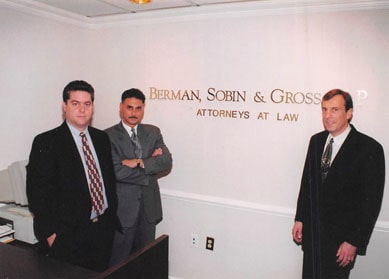
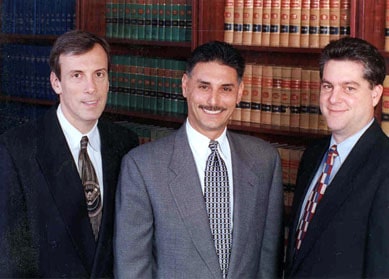
The firm is also large enough to dedicate the resources that complex claims require. Berman Sobin Gross LLP is the largest workers’ compensation firm in Maryland representing injured workers, with more than 20 attorneys and offices in Lutherville, Baltimore, Gaithersburg, and Frederick, plus the capacity to serve workers across the entire state.
What Workers Ask When They Call About a PTSD Claim
Does Maryland workers’ compensation actually cover PTSD?
Yes, but coverage is not automatic. Maryland law covers psychological injuries that arise out of and in the course of employment, including PTSD caused by traumatic workplace events. The challenge is proving causation and navigating the specific procedural requirements that apply to mental health claims. The outcome depends significantly on the facts of the individual case and how the claim is handled from the start.
What if my employer says my PTSD is just job stress and not compensable?
Ordinary job stress, on its own, is generally not covered under Maryland workers’ compensation. But PTSD is a diagnosable medical condition caused by traumatic exposure, which is legally distinct from routine occupational stress. The employer’s characterization of the claim is not the end of the inquiry. If your diagnosis meets the clinical criteria and can be connected to a qualifying workplace event or pattern of traumatic exposure, the claim may well be compensable regardless of how the employer has framed it.
Can I file a PTSD claim years after the traumatic event happened?
Maryland has specific statutes of limitations for workers’ compensation claims, and they depend on the type of claim and when the worker knew or should have known the condition was work-related. For some occupational disease claims, the clock runs from the date the worker had knowledge of the condition and its connection to work. Delay in filing is a serious issue, but it does not automatically bar a claim. Anyone in this situation should get legal advice before assuming it is too late.
Will I have to go to a hearing, or can this be resolved without one?
Some claims settle without a formal hearing before the Maryland Workers’ Compensation Commission. Others do not. PTSD claims are frequently disputed, which means a hearing is common. And if the Commission’s decision is unfavorable, the case may need to go further into the circuit courts or even appellate courts. The firm does not steer clients away from cases that require litigation. It has handled hundreds of workers’ compensation jury trials and appellate proceedings before both of Maryland’s highest courts.
What benefits could I receive if my PTSD claim is approved?
Depending on the severity of the condition and its effect on your ability to work, approved benefits may include payment for medical treatment including psychiatric care and therapy, temporary total disability payments if you cannot work during treatment, permanent partial or permanent total disability if the condition results in lasting impairment, and vocational rehabilitation services if you cannot return to your previous position. The value of a claim depends on the specific facts, the severity of impairment, and your wage history.
My attorney said my case is too hard and declined to take it. Does that mean I have no options?
Not necessarily. PTSD claims are genuinely more complex than many workers’ compensation matters, and some attorneys prefer simpler cases. Berman Sobin Gross LLP specifically takes on challenging cases that other firms have declined. If another attorney turned down your claim or said they did not want to take it past a certain stage, that is worth a second opinion from a firm that is willing and equipped to go further.
Do I have to use the same attorney throughout my case?
At Berman Sobin Gross LLP, the attorney who takes your case stays with you as your primary contact from beginning to end. You will know who represents you, and that person will be accountable to you throughout the process. The firm also has attorneys and staff who are fluent in Spanish and can work with clients without language barriers.
Talk to a Maryland Workers’ Compensation PTSD Attorney
PTSD is a real injury. It disrupts sleep, relationships, concentration, and the ability to show up for work. Workers who have spent careers protecting this state deserve the same access to compensation that any other injured worker is entitled to, and they deserve representation that will not fold the first time an insurer pushes back. If you are dealing with a workplace PTSD claim in Maryland, contact Berman Sobin Gross LLP for a confidential case analysis. The firm represents workers across Maryland and Washington, D.C., and its attorneys are ready to evaluate what your claim actually requires and give you a straight answer about where it stands. Talking to a Maryland workplace PTSD attorney costs you nothing upfront, and it may be the most important conversation you have about your future.