

Maryland Bus Driver Injury Attorney
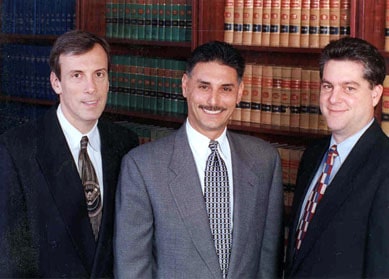
Bus drivers take on one of the most physically demanding and underappreciated jobs in Maryland. Long shifts behind the wheel, repetitive motion, abrupt stops, difficult passengers, and the constant pressure of keeping a schedule all add up. When a bus driver is hurt on the job, whether from a collision, a slip boarding a vehicle, a violent incident with a passenger, or a repetitive strain condition that built up over years, the workers’ compensation claim that follows is rarely simple. As a Maryland bus driver injury attorney, Berman | Sobin | Gross LLP has represented the working people of this state for 35 years, including the transit workers and commercial drivers who keep Maryland moving.
Why Bus Driver Injury Claims Tend to Be More Complicated Than They Look
Workers’ compensation in Maryland is supposed to provide a clear path to benefits after a workplace injury. In practice, the path is rarely that clean, and bus drivers face a particular set of obstacles that can make their claims harder to win than those of someone hurt in a more conventional workplace setting.
Employers and their insurers often dispute whether an injury happened the way the driver described it, especially when there are no witnesses other than passengers who are difficult to locate later. Surveillance footage from the vehicle may be retrieved and interpreted selectively. In accidents involving other vehicles, there may be a dispute about fault that affects how the claim is handled. And for drivers who develop chronic back, neck, or shoulder conditions over time, the employer may argue that the injury is not occupational in origin, even though years of driving on Maryland roads, dealing with vibration, awkward posture, and repetitive movements, absolutely can produce those conditions.
Drivers employed by government transit agencies face a different set of procedural requirements than those working for private carriers. Missing a deadline or filing with the wrong entity can create serious problems for an otherwise valid claim. Getting these details right from the start matters.
The Injuries Themselves: What Actually Happens to Bus Drivers on Maryland Roads
The Maryland transit network runs through some of the most congested corridors in the country. The Baltimore metro area, the I-270 and I-495 corridors in Montgomery and Prince George’s counties, and the commercial routes through Frederick and Western Maryland all put bus drivers in regular contact with distracted, aggressive, and unpredictable traffic. Rear-end collisions and sideswipe accidents are common. So are incidents where a driver brakes hard to avoid a collision and the force of that stop causes injury even when there is no actual crash.
Beyond road accidents, bus drivers are injured by falls getting in and out of vehicles, by passengers who become violent, and by lifting or moving equipment. Hearing loss from constant engine noise, chronic back conditions from years of seat vibration, and cumulative shoulder and wrist injuries from steering are all documented occupational health issues in this profession. These gradual-onset conditions are compensable under Maryland workers’ compensation law, but they require a different kind of claim strategy than an acute traumatic injury.
When the driver is injured by a third party, such as a negligent motorist who caused the accident, there may also be a personal injury claim against that driver in addition to the workers’ compensation claim. Berman | Sobin | Gross LLP handles both, and making sure those two paths work together, rather than against each other, is something that requires careful legal management from the beginning.
Public Transit Employees and the Special Rules That Apply
Bus drivers who work for the Maryland Transit Administration, the Washington Metropolitan Area Transit Authority, or county-run transit systems are public employees. That classification matters significantly in a workers’ compensation context. Maryland has specific statutory provisions for public safety employees and, in some cases, for employees in occupations tied to public services. The firm’s appellate history reflects its deep knowledge of how these distinctions play out, including victories before Maryland’s highest courts on issues that directly affect public employees’ compensation rights.
For WMATA employees, the jurisdictional picture is even more complicated because the transit authority operates under a federal interstate compact, which creates questions about which legal framework governs a particular claim. These are not technicalities that resolve themselves. A bus driver employed by WMATA who handles their claim the way a typical Maryland workers’ compensation claimant would may discover too late that different rules applied to their situation.
Berman | Sobin | Gross LLP has the background to identify these distinctions early and structure a claim accordingly. One of the firm’s founders literally wrote the treatise on Maryland workers’ compensation, the two-volume reference that Maryland practitioners rely on. That depth of knowledge is not something a generalist firm can replicate.
Answers to Questions Bus Drivers Ask About Their Injury Claims
Can I file a workers’ compensation claim even if the accident was partly my fault?
Yes. Maryland workers’ compensation is a no-fault system. Your benefits are not contingent on proving that your employer or a coworker was at fault. With very limited exceptions, a work-related injury entitles you to benefits regardless of how the accident occurred.
What if my employer says my back condition was pre-existing and not related to the job?
Pre-existing conditions do not automatically disqualify a claim. If your work as a bus driver aggravated, accelerated, or combined with a pre-existing condition to produce your current disability, Maryland law still supports a claim. These disputes typically come down to medical evidence and how well your attorney frames the occupational connection. This is one of the specific situations where experienced legal representation makes a measurable difference in outcomes.
I was injured by a passenger who attacked me. Does that count as a workers’ compensation injury?
It does. Injuries caused by third parties, including passengers, are covered by workers’ compensation when they occur during the course of employment. Depending on the circumstances, there may also be additional legal remedies available beyond the workers’ comp system.
How long do I have to report my injury and file a claim in Maryland?
In general, you should report the injury to your employer as soon as possible. Maryland law sets specific deadlines for filing a claim with the Workers’ Compensation Commission. For acute injuries, the filing window is generally measured from the date of the accident. For occupational diseases and repetitive stress conditions, the timeline may run from when you knew or should have known the condition was work-related. Missing these deadlines can jeopardize your claim entirely, which is why contacting an attorney early is important.
My employer’s insurance company offered me a settlement. Should I accept it?
Not without understanding what you are giving up. A settlement of a workers’ compensation claim in Maryland typically closes out some or all of your future benefit rights. Whether an offer is reasonable depends on the severity of your injury, your prognosis, your age, your wage history, and other factors specific to your situation. An attorney who handles workers’ compensation daily is in a far better position to evaluate that offer than you are on your own.
What if the Workers’ Compensation Commission denies my claim?
A Commission denial is not the end. You can appeal to the circuit court, and from there to Maryland’s appellate courts. Berman | Sobin | Gross LLP has handled hundreds of workers’ compensation trials and has argued appeals before both of Maryland’s highest courts. If another attorney has told you there is nothing more that can be done, it is worth getting a second opinion from a firm that has actually litigated these cases at the appellate level.
Do you represent bus drivers outside the Baltimore area?
Yes. The firm has offices in Lutherville, Baltimore, Gaithersburg, and Frederick, and represents injured workers throughout Maryland. Bus drivers on routes in Western Maryland, Southern Maryland, and the Washington suburbs are all within the firm’s geographic reach.
Talk to a Maryland Bus Driver Workers’ Compensation Attorney
Berman | Sobin | Gross LLP has spent 35 years representing the working people of Maryland, from first responders and corrections officers to the drivers and transit workers who make the state’s transportation infrastructure function. Bus drivers who are hurt on the job deserve the same level of attention and legal skill as any other injured worker, and the firm’s size, resources, and depth of workers’ compensation knowledge mean that complex, contested claims are handled here regularly, not turned away. If you were hurt driving a bus in Maryland and have questions about your rights, contact Berman | Sobin | Gross LLP for a confidential case analysis with a Maryland bus driver injury lawyer who will stay with you throughout your claim.