

Maryland Retail Worker Injury Attorney
Retail work looks straightforward from the outside, but the people who stock shelves, manage stockrooms, work loading docks, and stand at registers for eight-hour shifts face a surprising range of serious injury risks every single day. When those injuries happen, the workers’ compensation system in Maryland is supposed to provide medical coverage and wage replacement, but the path from a workplace accident to actual benefits is rarely as simple as filing a form. A Maryland retail worker injury attorney can make the difference between a claim that moves forward and one that stalls, gets disputed, or gets underpaid.
What Actually Injures Retail Workers in Maryland
The retail environment generates injuries that fall into a few distinct categories, and understanding where your injury fits matters because it shapes how the claim gets built and what evidence supports it.
Slip and fall injuries on wet stockroom floors, recently mopped store entrances, or cluttered back corridors are among the most common. These happen constantly in grocery stores, home improvement centers, department stores, and warehouse-style retailers throughout Maryland. Falls from ladders or step stools while stocking shelves produce some of the most serious outcomes, including fractures, spinal injuries, and traumatic brain injuries. Employers in the retail sector often use workers who have not been trained adequately for working at height, which matters for how the claim is evaluated.
Musculoskeletal injuries tell a different story. Workers who lift cases of merchandise, push loaded carts, or spend years performing repetitive scanning motions develop cumulative injuries to their backs, shoulders, wrists, and knees. These are called occupational diseases or repetitive trauma injuries under Maryland workers’ compensation law, and they are often contested more aggressively than acute injuries because there is no single identifiable event. Proving that the condition arose out of employment, rather than age or personal health, requires medical documentation that directly connects the diagnosis to the physical demands of the job.
Assaults and violent incidents are a genuine occupational hazard in retail, particularly for workers in loss prevention, late-night cashier roles, and stores with high foot traffic. When a worker is assaulted while performing job duties, that injury is compensable under Maryland workers’ compensation, though these claims sometimes face resistance from employers who try to frame the incident as a personal dispute rather than a work-related one.
How Retailers and Their Insurers Respond to Injury Claims
Large retail employers, particularly national chains with operations across Maryland, are sophisticated when it comes to managing workers’ compensation costs. They employ claims administrators and insurers whose job is to minimize the duration and value of claims. This does not mean every claim is denied outright, but it does mean that surveillance, independent medical examinations chosen by the insurer, and disputes over whether a job task caused a specific injury are all standard parts of the process.
One of the most common points of dispute in retail injury cases involves the scope of authorized medical treatment. An insurer may approve initial emergency care but then push back on referrals to specialists, on physical therapy recommendations, or on surgical opinions. Workers who accept early settlements without understanding the full extent of their injuries often close out their claims before they know whether they will need ongoing treatment or whether they face any permanent impairment.
Maryland law allows employers and insurers to require workers to attend an independent medical examination conducted by a physician of the insurer’s choosing. These examinations are not neutral, and the reports that come out of them frequently become the basis for reducing or terminating benefits. Having legal representation before one of these examinations happens is not a luxury. It is the kind of preparation that shapes the direction of a claim.
Permanent Impairment, Lost Wages, and What the Numbers Actually Mean
Maryland workers’ compensation benefits cover several things: medical treatment, temporary total or partial disability payments while a worker cannot return to their full duties, and permanent partial disability benefits if the injury leaves lasting impairment. For retail workers who are on their feet all day, even a moderate permanent impairment to the back, knee, or hip can end a career in that industry entirely.
Temporary disability benefits in Maryland are calculated as two-thirds of the worker’s average weekly wage, subject to state maximums. For full-time retail workers, this calculation is usually based on the wages earned in the 14 weeks before the injury. For part-time workers, seasonal employees, or workers with variable hours, the calculation becomes more complicated, and how it is done can significantly affect how much the worker receives each week.
Permanent partial disability is assessed as a percentage of impairment to a specific body part or to the body as a whole. That percentage, multiplied by the statutory number of weeks assigned to that body part under Maryland law, produces the benefit award. The percentage itself is where disagreements concentrate. An insurer’s medical expert and a treating physician often assign different percentages to the same condition, and those differences translate directly into dollars. Berman | Sobin | Gross LLP handles the full range of these disputes, from contested impairment ratings to cases that require circuit court litigation well beyond the Workers’ Compensation Commission.
Questions Retail Workers Ask About Injury Claims in Maryland
Can I still file a workers’ comp claim if my employer says the injury was my fault?
Maryland workers’ compensation is a no-fault system. Whether the injury resulted from your own mistake, a co-worker’s negligence, or unsafe conditions, you are generally still entitled to benefits as long as the injury arose out of and in the course of your employment. The no-fault structure exists specifically to avoid debates about who caused what.
My injury developed gradually from lifting and repetitive work. Does that qualify?
Yes. Maryland workers’ compensation covers occupational diseases and repetitive trauma injuries, not just single accidents. The key requirement is that the condition must be causally connected to the nature of the employment. A physician who documents the relationship between the physical demands of your job and your diagnosis is central to these claims.
What if I am a part-time retail worker or work for a staffing agency placed inside a store?
Part-time status does not disqualify you from workers’ compensation coverage in Maryland. If you were placed by a staffing agency, there may be a question about which employer’s policy covers the claim, but that issue is one that an attorney can sort out. Staffing arrangements sometimes mean there are two employers involved, and coverage obligations need to be properly identified from the start.
The store wanted me to file the injury under my personal health insurance. Is that allowed?
No. A work-related injury must be addressed through workers’ compensation coverage, not your personal health insurance. An employer who steers a worker away from filing a workers’ comp claim may be doing so to avoid a claims history that affects their insurance rates. Filing through personal health insurance instead could jeopardize your right to proper wage replacement benefits and leave you liable for costs that workers’ compensation was supposed to cover.
How long do I have to file a workers’ compensation claim in Maryland?
Under Maryland law, you generally have 60 days to provide notice of the injury to your employer and two years from the date of the accidental injury to file a claim with the Workers’ Compensation Commission. For occupational diseases, the timeline runs differently and begins when the worker knew or should have known that the disease was disabling and related to the employment. Missing these deadlines can bar a claim entirely.
Can I choose my own treating physician?
Maryland’s workers’ compensation law allows injured workers to select their own treating physician in most circumstances. Employers and insurers may attempt to direct treatment to their preferred providers, particularly in the early stages following an injury, but you are not obligated to rely solely on insurer-selected doctors for ongoing care. The choice of treating physician can significantly influence the medical evidence that supports your claim.
What happens if my employer retaliates against me for filing a claim?
Retaliation against an employee for filing a workers’ compensation claim is illegal in Maryland. Retaliation can take different forms, including termination, demotion, reduction in hours, or a hostile work environment following a claim. If you believe you are being treated differently because you filed a claim, document what is happening and speak with an attorney about your options under Maryland law.
Retail Injury Cases Across Maryland, Handled by Attorneys Who Know the System
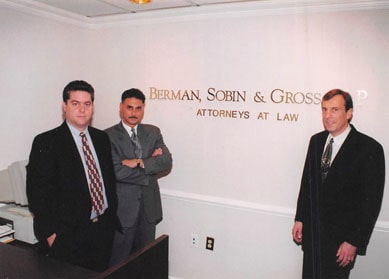
Retail operations of every kind are woven into Maryland’s economy, from the grocery chains and big-box stores concentrated in suburban corridors throughout Montgomery, Prince George’s, Baltimore, and Anne Arundel Counties, to the smaller shops, hardware stores, and distribution centers that employ workers across Frederick, Washington, and Allegany Counties. Berman | Sobin | Gross LLP represents injured workers throughout the state from offices in Lutherville, Baltimore, Gaithersburg, and Frederick. For 35 years, this firm has built its reputation on representing the workers who show up every day to do the jobs that keep Maryland running, and that includes the retail employees who are on their feet from open to close. With more than 20 attorneys and a track record that includes hundreds of workers’ compensation trials and appeals before Maryland’s highest courts, the firm brings real capacity to cases that require more than a quick settlement.
If you were hurt on the job at a retail store anywhere in Maryland and you want a straightforward assessment of where your claim stands, contact Berman | Sobin | Gross LLP. A Maryland retail worker injury lawyer at the firm will review the facts of what happened, explain what benefits you may be entitled to, and tell you honestly what the path forward looks like for your specific situation.