

Maryland Port Worker Injury Attorney
The Port of Baltimore moves more cargo than almost any other port on the East Coast. Longshoremen, crane operators, cargo handlers, mechanics, truck drivers, and maritime laborers work in conditions that carry serious physical risk every single day. When something goes wrong on the waterfront, the legal picture is rarely simple. A worker injured at a port facility may have claims under federal maritime law, state workers’ compensation, or both, and the employer’s insurer will be working quickly to limit what gets paid out. The attorneys at Berman | Sobin | Gross LLP have spent 35 years representing Maryland workers in exactly the kinds of complicated, high-stakes situations that port injuries tend to produce.
Why Port Injuries Belong in a Different Legal Category
Most workers hurt on the job in Maryland file a claim under the state workers’ compensation system. Port and maritime workers often have a more complicated set of options, and choosing the wrong path can cost a worker significant money.
Federal law governs much of what happens at working ports. The Longshore and Harbor Workers’ Compensation Act, known as the LHWCA, is a federal program that covers many dockworkers, ship loaders, crane operators, and others who work on or near navigable waters. Compensation rates, benefit structures, and the appeals process under the LHWCA differ substantially from Maryland’s state workers’ comp system. Workers covered under federal law typically receive wage replacement calculated differently, and the process for challenging a denied claim runs through a federal administrative structure rather than the Maryland Workers’ Compensation Commission.
Beyond the LHWCA, some port workers have Jones Act rights if they qualify as seamen. Others may have third-party negligence claims against vessel owners, stevedoring companies, or equipment manufacturers that are entirely separate from any workers’ compensation benefit. Whether a worker qualifies under one framework or another often depends on the specific nature of their duties and where exactly the injury occurred. Getting this wrong at the outset means potentially waiving rights worth far more than the default claim would have provided.
The Injuries That Define Work at the Port of Baltimore
The cargo terminals at Dundalk, Seagirt, and the surrounding facilities handle enormous containers, vehicles, bulk commodities, and heavy equipment. The physical environment generates a specific and serious pattern of injuries that differ from what most office or warehouse workers face.
Crane accidents cause some of the most catastrophic port injuries, whether from equipment malfunction, load failure, or worker proximity to operating machinery. Container handling operations create crush risks and fall hazards. The repetitive demands of cargo work produce degenerative conditions in backs, shoulders, and knees that build over years rather than showing up as a single acute event. Truck drivers entering and exiting port terminals face collision and pinch-point risks at the terminal gate area along Dundalk Avenue and the surrounding road infrastructure that services the terminals.
Exposure injuries are also common and frequently underreported. Workers who handle fumigated cargo, hazardous materials, or who work in ship holds may develop respiratory conditions or chemical exposures that take years to manifest. These occupational disease claims require careful documentation and medical evidence, and they are exactly the type of case that requires attorneys who take on the challenging work that other firms avoid.
Berman | Sobin | Gross LLP has a documented track record of handling occupational disease cases, including successfully advocating before Maryland’s highest courts on issues involving the scientific standards that employers try to use to block workers’ claims. The firm’s appellate record in occupational disease and exposure litigation reflects a willingness to fight claims all the way through, including cases where the path is long and technically demanding.
Third-Party Liability at Port Facilities
Workers’ compensation, whether state or federal, is generally the exclusive remedy against an employer. But port workers are frequently injured through the negligence of parties who are not their direct employer, and those parties can be sued in civil court for damages that far exceed what any compensation system provides.
A stevedoring company that negligently loads cargo could be liable for injuries to a longshoreman employed by a separate company. A vessel owner who allows unsafe conditions on a dock adjacent to their ship may owe a duty to workers injured there. Equipment manufacturers may bear product liability when a crane, forklift, or lashing tool fails. Trucking companies whose drivers create dangerous conditions at terminal entrances are another source of third-party exposure.
These third-party claims require civil litigation skills alongside workers’ compensation knowledge. The attorneys at Berman | Sobin | Gross LLP have handled not just administrative hearings but hundreds of jury trials and appellate arguments, including cases before both of Maryland’s highest courts. When a port worker’s situation involves both a compensation claim and a viable civil action, that combination requires a legal team that can manage both tracks simultaneously without either one suffering.
Questions Port Workers and Their Families Ask
Does the Maryland Workers’ Compensation Commission handle my claim, or does federal law apply?
It depends on your specific job duties and where the injury occurred. Dockworkers and others engaged in maritime loading and unloading on navigable waters are typically covered by the federal LHWCA rather than Maryland’s state system. However, some workers at port-adjacent facilities may fall under state jurisdiction. An attorney who handles both state and federal maritime compensation claims can assess which system applies and whether you have overlapping rights worth pursuing.
I was hurt by equipment that failed. Can I sue someone in addition to filing a workers’ comp claim?
Possibly, yes. If a piece of equipment was defectively designed or manufactured, the maker of that equipment is a third party separate from your employer. Product liability claims can be pursued alongside a workers’ compensation claim and can recover damages, including pain and suffering, that compensation benefits do not cover.
My employer says my condition developed over time, not from a single accident. Does that affect my claim?
Gradual onset injuries and occupational diseases are compensable under both state and federal maritime compensation systems, but they require more documentation and more aggressive pursuit than acute injury claims. Employers and their insurers frequently contest these claims on causation grounds. The right medical evidence, combined with attorneys who understand the legal standards for occupational disease, makes a substantial difference in the outcome.
I was hurt on a ship while working at the port. Do I have Jones Act rights?
The Jones Act applies to seamen, which is a specific legal status that requires a worker to spend a significant portion of their time on a vessel in navigation. Many port workers do not qualify. Some do. The distinction matters enormously because Jones Act claims allow recovery for the full range of damages in negligence, not just the structured benefits under the LHWCA. This is a threshold question worth examining carefully.
My employer’s insurer denied my claim. What happens next?
Under the LHWCA, disputed claims go through the Office of Workers’ Compensation Programs and can be heard before an Administrative Law Judge, with further appeals available. Under Maryland’s state system, disputes go before the Workers’ Compensation Commission. Berman | Sobin | Gross LLP’s attorneys have handled tens of thousands of hearings across these systems and have taken cases through the full appeals process when the initial decisions were wrong.
My spouse was killed in a port accident. What are the family’s legal options?
Both federal and state compensation systems provide death benefits for dependents of workers killed on the job. Separately, if third-party negligence contributed to the death, a wrongful death action may be available in civil court. The firm has successfully litigated cases establishing that widows and dependents of deceased workers are not barred from pursuing the benefits they are owed, including at the appellate level.
Can I still file a claim if my employer pressured me not to or told me I wasn’t covered?
Yes. An employer’s characterization of a worker’s coverage status is not the final word. Many workers are told they are independent contractors or that their position does not qualify, when in fact the legal standards say otherwise. The same applies to employer pressure to stay quiet. An attorney can evaluate the actual legal status of your employment and your entitlement to benefits regardless of what you were told.
Working with Maryland’s Largest Workers’ Compensation Firm on Your Port Injury Claim
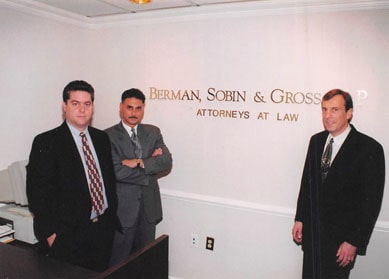
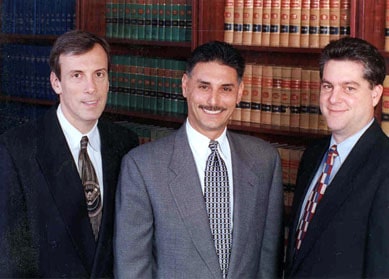
Berman | Sobin | Gross LLP is the largest workers’ compensation law firm in Maryland representing injured workers. The firm has grown from three attorneys to more than twenty, with offices in Lutherville, Baltimore, Gaithersburg, Frederick, and other locations across the state. One of the firm’s founders authored the definitive two-volume treatise on workers’ compensation in Maryland, the reference text that practitioners across the state use. The firm represents firefighters, EMTs, law enforcement officers, truck drivers, and workers across dozens of industries, and it brings the same depth of preparation to port and maritime injury cases that has produced a long record of appellate victories changing the law in ways that benefit working people.
When you work with an attorney at this firm, that attorney stays with your case from the first conversation through the final resolution. Port injury cases involving federal maritime law, third-party civil claims, or occupational disease tend to be long and contested. Having a single attorney who knows your file and your situation is not a small thing.
If you were hurt at the Port of Baltimore or at any port-adjacent facility in Maryland, contact Berman | Sobin | Gross LLP for a confidential case analysis. The firm handles the full range of complex port and maritime worker injury claims, and there is no cost to sit down and understand what your rights actually are.