

Wheaton Healthcare Worker Injury Attorney
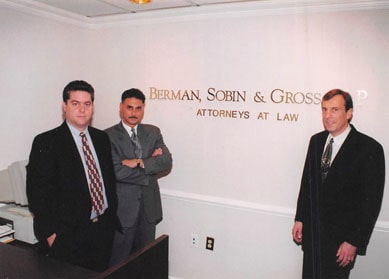
Healthcare workers across Montgomery County carry some of the most physically demanding jobs in the state. Nurses lift and reposition patients multiple times each shift. Surgical technicians stand for hours in fixed postures. Home health aides work in private residences where the environment cannot be controlled. When injuries happen in these settings, the workers’ compensation system in Maryland provides a structured path to benefits, but that path is not always straightforward. For healthcare professionals in Wheaton and the surrounding communities who are dealing with workplace injuries, Berman | Sobin | Gross LLP has represented workers in exactly these situations for over 35 years. Our attorneys understand the specific pressures that healthcare workers face, and we work to make sure that those workers receive the full benefits the law provides. If you are a Wheaton healthcare worker injury attorney search result you are reading carefully, this page will explain what actually matters in these claims.
Why Healthcare Work in Wheaton Generates a Distinct Set of Injury Claims
The healthcare sector around Wheaton and the broader Silver Spring corridor is substantial. From large hospital campuses to outpatient surgical centers, urgent care clinics, nursing facilities, and home care agencies operating throughout Montgomery County, the range of employers and work environments creates a wide variety of injury patterns. That variety matters for workers’ compensation purposes because the nature of the job shapes the nature of the claim.
Musculoskeletal injuries are the most commonly reported category among healthcare workers. Patient handling, transferring, and repositioning are responsible for a large share of back, shoulder, and knee injuries. These are often cumulative in nature rather than the result of a single dramatic accident, which can complicate the claims process. Maryland workers’ compensation covers both acute injuries and injuries that develop over time through repetitive work activity, but the evidence requirements differ between the two, and employers or their insurers frequently contest the work-related nature of gradual-onset conditions.
Needlestick injuries and bloodborne pathogen exposures create a different category of concern, one that can carry long-term medical monitoring needs and occupational disease implications. Respiratory exposures from chemical disinfectants, anesthetic agents, and other substances present in clinical environments are also compensable conditions when a causal connection to the work environment is established. Workplace violence, which disproportionately affects healthcare settings, has also generated a growing number of workers’ compensation claims in recent years.
What Maryland’s Workers’ Compensation System Actually Covers for Injured Healthcare Employees
Maryland workers’ compensation is a no-fault system. An injured worker does not need to prove that an employer was negligent to receive benefits. The question is whether the injury arose out of and in the course of employment. That standard sounds simple, but its application to healthcare workers can be contested at multiple points.
Wage replacement benefits are available when an injury causes a worker to miss time from work. Temporary total disability benefits replace a portion of lost wages while the worker is completely unable to work. Temporary partial disability benefits apply when a worker can return in a limited capacity but earns less than before the injury. Permanent partial disability benefits become relevant when a worker is left with lasting impairment after reaching maximum medical improvement. The ratings process that determines permanent disability can be a source of significant dispute, because the employer’s insurance carrier typically has its own medical examiners who perform independent evaluations.
Medical benefits cover all reasonable and necessary treatment causally related to the workplace injury. For healthcare workers, this can include surgery, physical therapy, specialist consultations, and long-term monitoring for occupational disease exposures. There is no monetary cap on medical benefits under Maryland’s workers’ compensation statute, but disputes over what treatment is necessary and authorized are common. Vocational rehabilitation is also available in circumstances where an injured worker cannot return to their previous position.
One issue that comes up specifically for healthcare workers is the potential impact of a workers’ compensation claim on professional licensure and employer relations. While these concerns are real and understandable, they should not discourage a worker from pursuing benefits they have earned. Our attorneys treat these concerns seriously and address them as part of the overall strategy for a client’s case.
How Disputes Typically Arise in Healthcare Worker Claims
Insurance carriers handling workers’ compensation claims for healthcare employers in Montgomery County are experienced at identifying grounds for denial or reduction of benefits. Several patterns appear in contested cases.
Causation disputes are extremely common in cases involving repetitive strain injuries. An employer’s insurer may argue that a back injury, for example, is the product of degenerative disease unrelated to the worker’s job duties. When an injury develops gradually, documentation of the progression and expert medical opinion become critical. The timing of when a worker first reported the injury or sought medical attention also factors into these disputes, which is one reason why prompt reporting and documentation matter from the beginning.
Scope of employment disputes arise when an injury occurs in circumstances the employer argues fall outside the normal course of work. A nurse who is injured during a required training session, a home health aide who is hurt traveling between patient visits, or a worker injured during a meal break at a facility with limited off-premises access may all face arguments about whether their injury qualifies under the statute. These situations require careful analysis of the specific employment arrangement and circumstances.
Disputes over the extent of permanent impairment often come down to competing medical evaluations. The rating assigned to a permanent partial disability determines a significant portion of the compensation a worker receives for lasting harm. Berman | Sobin | Gross LLP has the resources and relationships to obtain strong independent medical opinions when the carrier’s evaluation understates a worker’s condition.
Questions Healthcare Workers in Wheaton Ask About Injury Claims
I’ve been injured at the hospital where I work, but I’m worried about retaliation. Can I still file a claim?
Maryland law prohibits employers from retaliating against workers who file workers’ compensation claims. If a healthcare employer takes adverse action against an employee for pursuing their statutory right to benefits, that conduct can itself give rise to a legal claim. The concern about workplace repercussions is understandable, but it should be evaluated in light of the legal protections that exist, not used as a reason to forgo benefits.
My injury built up over years of patient lifting. Does that qualify for workers’ compensation?
Yes. Maryland workers’ compensation covers occupational diseases and repetitive trauma injuries, not just single-incident accidents. Documenting the cumulative nature of the work and its causal relationship to your condition is more involved than a straightforward accident claim, but these cases can and do succeed. The key is building the right medical record and, when necessary, presenting the claim effectively before the Workers’ Compensation Commission.
The employer’s insurance carrier sent me to their own doctor. Do I have to accept that doctor’s conclusions?
No. The insurer has the right to require an independent medical examination, but the opinions of that examiner are not binding and can be contested. You have the right to your own treating physician’s evaluation, and your attorney can help you obtain additional medical opinions if the carrier’s examiner reaches conclusions that do not accurately reflect your condition.
I’m a home health aide working in private residences around Wheaton. Does workers’ compensation apply to me?
Home health aides employed by agencies are generally covered under Maryland workers’ compensation. The more complex question arises when a worker is classified as an independent contractor, a classification that agencies sometimes use to limit their obligations. If you have been denied coverage based on contractor status, that determination is worth examining carefully, because the legal test for employment status does not always match how an employer labels the relationship.
What happens if I can never return to bedside nursing because of my injury?
Permanent restrictions that prevent a healthcare worker from returning to their previous position can trigger vocational rehabilitation benefits under Maryland law. An appellate decision that Berman | Sobin | Gross LLP was involved in, Fikar v. Montgomery County, established that workers receiving service-connected disability retirement can also access vocational rehabilitation services, a ruling that reinforced the scope of these benefits. When a worker’s career path is genuinely altered by a workplace injury, the full range of available benefits needs to be evaluated.
How long do I have to file a workers’ compensation claim in Maryland?
The general filing deadline for workers’ compensation claims in Maryland is two years from the date of the accident or from the date a worker knew or should have known that a condition was work-related. For occupational diseases, the timeline runs from when the worker knew or reasonably should have known of the disease and its connection to employment. Missing the deadline typically results in losing the right to benefits entirely, so early consultation with an attorney is worthwhile even if a worker is unsure about the strength of their claim.
Will I have to go to a hearing before the Workers’ Compensation Commission?
Not necessarily. Many workers’ compensation claims resolve through negotiation before a formal hearing is required. However, when a carrier disputes liability, the extent of disability, or the necessity of treatment, a hearing before the Commission may be the appropriate next step. Berman | Sobin | Gross LLP’s attorneys have handled tens of thousands of Commission hearings and have taken cases all the way through jury trials and appeals when the circumstances warranted it. Our approach matches the forum to the facts of each case.
Healthcare Workers in the Wheaton Area Deserve Straightforward Representation
The people who provide care in this community’s medical facilities, clinics, and homes accept the physical demands of that work as part of the job. They should not also have to accept uncertainty about whether their injuries will be covered when something goes wrong. Berman | Sobin | Gross LLP has built its practice around representing the workers who keep Maryland functioning, including the healthcare professionals serving communities throughout Montgomery County. When you work with our firm, one attorney stays with you throughout the case, you will know who represents you, and that attorney will be available to answer your questions as they arise. If you are a Wheaton healthcare worker dealing with an injury, contact our office for a confidential case analysis with an attorney who handles workers’ compensation claims on behalf of injured workers, not insurers.