

Waldorf Law Enforcement Officers Injury Attorney
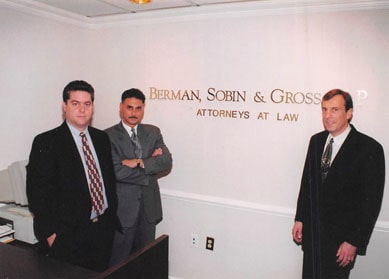
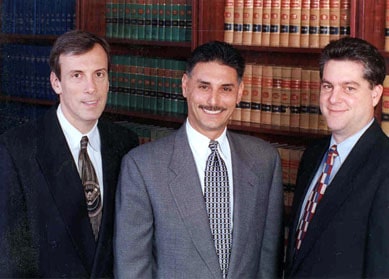
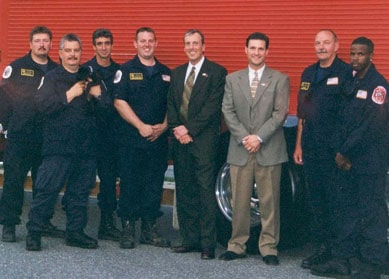
Law enforcement officers in Charles County put themselves in harm’s way every single shift. The nature of the work, from pursuits and physical altercations to vehicle accidents and long-term occupational exposures, creates injury risks that most workers never face. When a Waldorf officer is hurt on the job, the path to benefits is rarely straightforward. The workers’ compensation system has rules that apply specifically to public safety employees, and those rules carry real consequences depending on whether they are properly invoked. At Berman | Sobin | Gross LLP, representing Maryland law enforcement officers in workers’ compensation claims is core to what this firm does, not a side practice. The attorneys here have handled these cases at every level, from initial hearings before the Maryland Workers’ Compensation Commission to jury trials and arguments before Maryland’s highest courts. If you are a Waldorf law enforcement officers injury attorney client looking for a firm that will stay with your case wherever it goes, this is where that representation begins.
Why Law Enforcement Injuries in Waldorf Produce Complex Claims
Charles County has grown significantly over the past two decades, and the law enforcement demands that come with that growth have expanded accordingly. Officers with the Charles County Sheriff’s Office, Maryland State Police, and other agencies operating in and around Waldorf respond to a volume and variety of calls that create exposure to serious physical harm on a regular basis. Injuries sustained in this environment tend to be serious, cumulative, or both, and that complexity shapes how claims unfold.
A patrol officer who injures a shoulder during a struggle may face a claim that looks, on the surface, like a straightforward orthopedic case. But if that officer has a history of prior duty-related incidents, or if the shoulder gives out completely only after a series of smaller incidents over time, the employer’s insurer will often argue that the current condition is pre-existing, degenerative, or not causally connected to any single work event. These arguments require a response grounded in medical evidence and legal strategy, not just a standard claim form.
Occupational disease claims add another layer of difficulty. Maryland law provides specific presumptions for certain conditions affecting public safety employees, including heart disease, hypertension, and lung disease. These presumptions shift the burden onto the employer to disprove that the condition arose from the job. But employers contest them aggressively, sometimes with medical experts who challenge the scientific basis of the presumption itself. Berman | Sobin | Gross LLP litigated and won the case of City of Frederick v. Shankle, which established that employer medical experts who try to undermine the statutory presumption on scientific grounds cannot testify to that effect. That is the kind of precedent-level work that matters when a law enforcement officer’s occupational disease claim is on the line.
Compensation Rules That Apply Specifically to Public Safety Officers
Maryland does not treat all workers’ compensation claims the same, and the distinctions that apply to public safety employees can mean the difference between adequate benefits and a benefits package that falls far short of what an injured officer actually needs. Understanding which rules apply to a Waldorf law enforcement officer’s claim requires knowing how Maryland defines public safety employees and how the enhanced benefit structure works in practice.
Sworn law enforcement officers are generally entitled to enhanced compensation benefits under Maryland law. These enhanced benefits can include a higher percentage of wage replacement and different calculation methods for what constitutes the officer’s average weekly wage. Overtime earned on a consistent basis before an injury, for example, is typically part of the wage base that compensation should reflect. The Maryland Court of Appeals addressed this directly in Montgomery County v. Deibler, a case litigated by Berman | Sobin | Gross LLP, which confirmed that public safety workers receiving full salary on light duty can still recover compensation for the overtime wages they were regularly earning before the injury.
The presumption provisions that apply to occupational diseases are equally important. When a law enforcement officer develops a qualifying condition like hypertension or a cardiac condition, the legal presumption that it arose from the job applies even if the officer has retired or was off duty when the condition manifested. Montgomery County v. Pirrone, another case this firm litigated, established that principle clearly. These are not abstract legal technicalities. For a Waldorf officer and their family, the difference between a presumption applying or not applying can determine whether years of medical treatment and lost wages are covered.
When an Officer’s Claim Reaches a Crossroads
Many law enforcement injury claims begin simply enough. The officer reports the injury, files a claim, and receives initial medical treatment. The complexity tends to arrive later: when an Independent Medical Examination produces a report the employer uses to cut off benefits, when a treating physician cannot agree on work restrictions, when a proposed settlement does not account for the long-term consequences of the injury, or when an administrative hearing goes poorly because the officer did not have effective legal representation from the start.
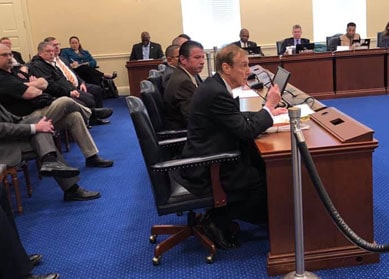
Berman | Sobin | Gross LLP does not limit its representation to cases that are easy to win at the Commission level. The firm’s attorneys have handled hundreds of workers’ compensation jury trials and appeals before both of Maryland’s appellate courts. When an officer’s claim has been denied, mishandled, or taken in the wrong direction, that is not the end of the road. It may be the point at which the right legal representation actually begins to matter most. Officers and their families who have been told that a claim cannot go further should have an independent evaluation of that position before accepting it.
The financial stakes for a law enforcement officer with a serious injury are substantial. An officer who cannot return to full duty faces potential career-ending consequences along with the physical harm. The workers’ compensation benefits that apply, including temporary total disability, permanent partial disability, and permanent total disability, each carry different calculation methods and evidentiary requirements. Vocational rehabilitation may also be available. The Fikar v. Montgomery County decision, litigated by this firm, confirmed that injured workers receiving service-connected disability retirement are not barred from also receiving vocational rehabilitation services through the workers’ compensation system.
Questions Officers in the Waldorf Area Frequently Ask
Does the presumption for heart and lung conditions apply to all law enforcement officers, or only certain agencies?
Maryland’s presumption for heart disease, hypertension, and lung disease applies to public safety employees as defined under state law. Sworn law enforcement officers generally qualify. The presumption applies regardless of whether the officer is currently employed, retired, or off duty when the condition develops, based on the precedent established in Montgomery County v. Pirrone.
What happens if the county’s Independent Medical Examination doctor says my injury is not work-related?
An Independent Medical Examination report is not the final word. It is one piece of evidence, and it can be challenged with your treating physician’s records, expert testimony, and cross-examination of the IME doctor. Berman | Sobin | Gross LLP handles cases where IME reports are used to dispute or terminate benefits and has experience addressing this issue at hearings, trial, and on appeal.
My injury happened gradually over time, not in a single incident. Can I still file a workers’ compensation claim?
Yes. Maryland workers’ compensation covers both accidental injuries from a specific incident and occupational diseases or conditions that develop over time from repeated exposure or cumulative physical demands. Documenting the connection between the work and the condition is critical, and that is where legal representation from the beginning makes a meaningful difference.
I am currently on light duty and receiving my full salary. Am I still entitled to workers’ compensation benefits?
Potentially, yes. If you were regularly earning overtime before your injury and you are no longer able to earn that overtime because of your restrictions, you may have a claim for the difference. The Montgomery County v. Deibler decision addressed this situation directly and confirmed that officers on paid light duty are not necessarily barred from receiving compensation for the loss of overtime income.
What if I was denied benefits because my employer says my condition is pre-existing?
A pre-existing condition does not automatically disqualify a claim. If your work aggravated, accelerated, or worsened a pre-existing condition, that is a compensable injury under Maryland law. The evidence question is how the work contributed, and that is a medical and legal question that requires careful development of the record.
Can I choose my own doctor for treatment?
Maryland workers’ compensation law gives employers and insurers significant influence over the choice of treating physician, particularly in the early stages of a claim. Understanding your rights around physician selection and how to work within or challenge those limitations is part of what an attorney familiar with law enforcement injury claims can address from the outset.
How long does a law enforcement workers’ compensation case typically take in Maryland?
There is no single answer. Claims that are accepted without dispute may resolve relatively quickly, while contested claims involving permanent disability, occupational disease presumptions, or appeals can extend significantly longer. The complexity of the underlying injury and the employer’s approach to the claim are the two biggest variables.
Representation for Waldorf Law Enforcement Officers Who Need Answers Now
Berman | Sobin | Gross LLP has represented Maryland law enforcement officers for 35 years, including officers in Charles County and the Waldorf area. The firm has grown to more than 20 attorneys with offices across the state, and it stands as the largest workers’ compensation law firm in Maryland representing injured workers. That scale means resources and experience that matter when a claim becomes contested at any level. When a Waldorf law enforcement injury claim demands real advocacy, whether at the Commission, in circuit court, or before Maryland’s appellate courts, the attorneys at Berman | Sobin | Gross LLP have been there before. Contact the firm today for a confidential case analysis and to speak directly with an attorney who will stay with your case from beginning to end.