

Upper Marlboro Teachers & School Employees Injury Attorney
Teachers, teaching assistants, school counselors, cafeteria workers, custodians, and bus drivers make up one of the largest working populations in Prince George’s County. They work in buildings that were not always built with safety in mind, around hundreds of students with unpredictable behavior, and in conditions that produce a steady stream of serious injuries every year. When a school employee gets hurt on the job in Upper Marlboro, the path to workers’ compensation benefits is rarely as straightforward as it should be. Berman | Sobin | Gross LLP has spent 35 years representing the working people of Maryland, including the school and education employees who keep our communities running, and the firm understands exactly what these claims require to succeed. If you are a Upper Marlboro teachers & school employees injury attorney search away from knowing your options, this page explains what actually matters for your situation.
What School Employees in Prince George’s County Actually Get Hurt Doing
A classroom is not a warehouse or a construction site, but that does not mean it is safe. The injury patterns among school employees are distinctive, and understanding them matters when building a claim.
Physical altercations with students are among the most common sources of serious injury for teachers, aides, and special education staff. A student with behavioral challenges can strike, bite, kick, or knock an employee to the floor. These incidents sometimes cause traumatic brain injuries, spinal injuries, or torn ligaments that require surgery and extended recovery. Because these events can feel like they exist in a gray area between an assault and a work incident, employers and insurers sometimes resist treating them as compensable. They are.
Slip and fall injuries are equally common. School buildings in Upper Marlboro and across Prince George’s County range in age from newly constructed to decades old. Wet hallways, uneven walkways, poorly maintained parking lots, and cluttered storerooms all create genuine hazards. Custodial staff in particular face these risks daily, but so do teachers moving between classrooms and cafeteria workers navigating kitchen floors.
Repetitive use injuries are a growing concern in education. Years of writing on boards, managing classroom technology, lifting younger students, and bending over desks produce chronic shoulder, back, wrist, and knee conditions that develop over time rather than from a single event. These occupational disease and repetitive trauma claims are handled differently under Maryland workers’ compensation law, and they require careful documentation to establish that the condition arose from the employment.
Bus drivers and transportation employees contend with traffic accidents, back conditions from long hours in the seat, and the physical demands of assisting students with disabilities on and off vehicles. Their claims sometimes involve third-party liability in addition to workers’ compensation, which opens up additional avenues for recovery.
Why School Employee Claims Run Into Resistance
Prince George’s County Public Schools is a large employer with its own institutional interests. When a school employee files a workers’ compensation claim, the employer and its insurer have every reason to scrutinize that claim closely. That scrutiny is not always fair, and it does not always reflect the reality of the injury.
One pattern that appears frequently in school employee claims is the dispute over causation. A teacher who has worked in the same school building for fifteen years and develops a back condition will often hear the argument that the condition is degenerative and unrelated to work. In many cases, that argument is wrong. Maryland workers’ compensation covers conditions that are aggravated or accelerated by work, not just those caused entirely by a single workplace event.
Another source of conflict is the insurer’s choice of medical provider. Injured school employees may be directed toward physicians who consistently downplay injury severity or return workers to full duty before they are medically ready. The injured employee has the right to seek their own medical evaluation, and having an attorney involved early helps ensure that medical evidence is developed fully and independently.
Claims involving student-on-employee violence can run into a different kind of resistance, where administrators characterize the event as something the employee should have anticipated or managed differently. That framing is not a legal defense to a workers’ compensation claim, and it should not be allowed to discourage an injured employee from pursuing the benefits they have earned.
Permanent Impairment and Long-Term Benefits for Injured Educators
Workers’ compensation in Maryland covers more than the immediate cost of medical treatment and lost wages while an employee is out of work. For school employees who sustain serious injuries, the longer-term benefits can be just as important.
Permanent partial disability benefits become available when a work injury results in lasting functional limitations. A teacher who undergoes shoulder surgery and regains only partial range of motion, or a bus driver with permanent nerve damage following a vehicle accident, may be entitled to a scheduled award or an unscheduled body award based on the nature and extent of the impairment. The calculation of these awards is complex, and the amounts available vary significantly depending on how the claim is presented and supported.
Vocational rehabilitation is another benefit that injured school employees sometimes overlook. If an injury makes it genuinely impossible to return to the same position, Maryland law provides access to services designed to help injured workers transition into other employment. Berman | Sobin | Gross LLP has successfully litigated cases before Maryland’s highest courts on this very issue, establishing precedent that injured workers receiving disability retirement can still access vocational rehabilitation services.
For school employees who retire on a service-connected disability or separate from employment while their claim is pending, the intersection of pension benefits and workers’ compensation becomes particularly important to manage carefully. These situations call for attorneys who handle complex, multi-benefit scenarios rather than routine administrative filings.
Questions School Employees Ask Before Filing a Claim
Does it matter that I did not report the injury to my principal on the day it happened?
Maryland law requires an injured worker to notify the employer within ten days of a work accident. Failure to give timely notice can affect a claim, although there are exceptions when the employer had actual knowledge of the injury or when there was a reasonable explanation for the delay. If some time has passed, consult with an attorney before assuming the claim is forfeited.
My injury developed gradually over years of teaching. Can I still file a workers’ compensation claim?
Yes. Maryland workers’ compensation covers occupational diseases and repetitive trauma conditions, not only sudden accidents. The legal standard and procedural requirements differ from an acute injury claim, so it is worth getting specific guidance on how to file and what documentation to gather.
A student attacked me at school. Is that covered under workers’ compensation?
In nearly all circumstances, yes. An assault by a student qualifies as a workplace injury under Maryland workers’ compensation law. The fact that the perpetrator was a minor or a person with a disability does not change that analysis.
The county directed me to a specific workers’ comp doctor. Do I have to treat with that provider?
Maryland workers’ compensation law gives injured workers the right to select their own treating physician after an initial evaluation. An attorney can clarify the rules that apply to your specific claim and help you avoid arrangements that limit your access to objective medical care.
I am a paraprofessional, not a certificated teacher. Am I covered the same way?
Yes. Workers’ compensation coverage in Maryland extends to all employees regardless of job title, certification status, or whether the position is full-time or part-time. Teaching assistants, paraprofessionals, and support staff have the same legal right to file a claim as classroom teachers.
Can I be fired for filing a workers’ compensation claim?
Maryland law prohibits retaliation against employees who file workers’ compensation claims. If you experience adverse employment action after reporting an injury or filing a claim, that creates a separate legal issue that should be addressed promptly.
How long do I have to file a workers’ compensation claim in Maryland?
The general filing deadline with the Workers’ Compensation Commission is two years from the date of the accident or, in occupational disease cases, two years from the date the employee knew or should have known the condition was work-related. Missing this deadline can permanently bar a claim, which is one reason early consultation matters.
Representing School Employees Across Upper Marlboro and Prince George’s County
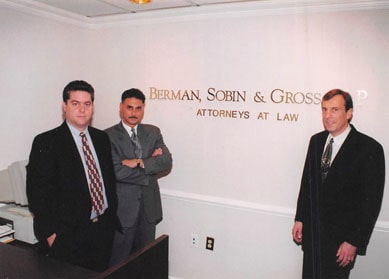
Prince George’s County is home to one of the largest public school systems in the United States, with dozens of schools spread across Upper Marlboro, Largo, Bowie, Laurel, Hyattsville, and surrounding communities. Berman | Sobin | Gross LLP has offices throughout Maryland and serves injured school employees across the county and the state. The firm is the largest workers’ compensation firm in Maryland representing injured workers, with the depth of resources to handle claims that range from straightforward lost-time cases to complex litigation before the Workers’ Compensation Commission and Maryland’s appellate courts. When attorneys elsewhere decline a difficult claim or stop at the administrative level, Berman | Sobin | Gross LLP is prepared to take the case further.
Speak with a School Employee Injury Lawyer Serving Upper Marlboro
School employees who have been hurt at work deserve a clear account of their legal rights and what their claim is actually worth, not a quick reassurance that everything will work out. Berman | Sobin | Gross LLP provides a confidential case analysis to injured workers, including teachers and school support personnel throughout Prince George’s County. The firm’s attorneys stay with clients throughout their case, from the initial filing through hearings and, when necessary, into the courts. Contact Berman | Sobin | Gross LLP to speak with a school and education worker injury attorney serving Upper Marlboro and the surrounding communities about your situation.