

Upper Marlboro Factory Worker Injury Attorney
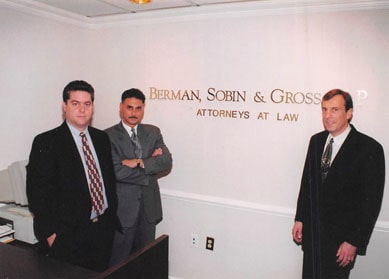
Factory work in Prince George’s County is physically demanding, and the consequences of a workplace accident can unfold fast. A machine malfunction, a chemical exposure, a fall from a platform, a crush injury at a conveyor line: these incidents send workers to emergency rooms, leave them unable to return to their jobs, and create financial pressure that builds with every week of missed pay. Berman | Sobin | Gross LLP has spent 35 years representing Maryland workers in exactly these situations. If you are a factory worker in Upper Marlboro dealing with a work-related injury, understanding how the workers’ compensation system applies to your specific circumstances is the first thing that matters.
What Factory Injuries in Prince George’s County Actually Look Like
Upper Marlboro sits at the center of a county with significant manufacturing, warehouse, and industrial activity. Workers at production facilities, processing plants, food manufacturing operations, and distribution centers face risks that differ meaningfully from office workers or even construction crews. The machinery involved is often heavier, faster, and less forgiving. The chemical environments can create cumulative harm that doesn’t show up on a single day’s incident report.
The most serious factory injuries in this region tend to involve machinery entanglement, repetitive motion injuries that develop over months or years, falls from elevated platforms or mezzanines, forklift and material handling accidents, chemical burns or respiratory damage from industrial solvents and compounds, and injuries caused by defective or poorly maintained equipment. Some of these are sudden traumatic events. Others, like occupational hearing loss from chronic noise exposure or lung damage from airborne particulates, build slowly and are just as disabling.
Both categories are compensable under Maryland workers’ compensation law, but they require different approaches to proving the claim, documenting the harm, and building a record that will hold up under scrutiny.
Why Factory Injury Claims Get Challenged More Often Than Workers Expect
Employers and their insurers contest factory injury claims at a high rate, and the reasons are predictable. If the injury developed gradually, the employer may argue it isn’t work-related. If there was a gap between the incident and reporting it, that gap becomes a target. If the worker received prior medical treatment for any condition that touches the same body part, the insurer will attempt to classify the injury as pre-existing.
Production environments also create documentation challenges that work against injured workers. Accident reports filled out by supervisors may minimize the severity of what happened. Surveillance footage may be selectively preserved. Witnesses who still work at the facility may be reluctant to give statements that contradict what management has said.
Repetitive stress claims face particular skepticism. When a worker develops carpal tunnel syndrome, a rotator cuff tear, or chronic back injury through years of repetitive motion in a factory setting, the employer often argues the condition could have developed outside of work. Countering that argument requires a detailed occupational history, medical opinions tied specifically to job tasks, and often a review of the physical demands of the specific workstation.
Berman | Sobin | Gross LLP has handled workers’ compensation cases that required exactly this kind of investigation and preparation. The firm’s attorneys have tried hundreds of workers’ compensation cases before the Maryland Workers’ Compensation Commission and in the courts, including cases that other attorneys declined to take because the path to recovery looked complicated.
What Maryland Workers’ Compensation Covers for Injured Factory Employees
Workers’ compensation in Maryland is a no-fault system, which means you don’t need to prove your employer acted recklessly to receive benefits. What you do need to establish is that the injury arose out of and in the course of your employment. For factory workers, that connection is usually clear when a traumatic accident occurs, but it requires more careful documentation when the injury is occupational in nature.
The core benefits available include payment of medical expenses related to the injury, temporary total disability payments when you cannot work at all, temporary partial disability when you can work in a reduced capacity, and permanent disability awards when the injury causes lasting physical impairment. If your injury requires you to change careers entirely because you can no longer perform your factory duties, vocational rehabilitation services may also be available.
Medical benefits cover authorized treatment, which means the employer and insurer have the right to direct care, at least initially. Understanding how to manage authorized versus independent medical opinions is critical in factory injury cases, where the employer’s chosen physician may take a position that minimizes the severity or work-relatedness of your condition.
Permanent disability awards are determined by the Commission based on evidence of impairment, and they represent one of the most contested aspects of workers’ compensation for seriously injured factory workers. The difference between a 15 percent permanent partial disability award and a 35 percent award can represent years of financial difference for an injured worker.
When a Third Party May Also Be Responsible for What Happened
Workers’ compensation is not always the only avenue for an injured factory worker. When the injury was caused or contributed to by someone other than the employer, a separate personal injury claim may be available alongside the workers’ comp claim.
In factory settings, this comes up regularly. Equipment manufacturers may be liable if a machine was defective in its design or lacked adequate safety guards. A maintenance contractor may be responsible if equipment was serviced improperly. A staffing agency may share liability depending on how the employment relationship was structured. A delivery driver who caused a loading dock accident could expose their employer to a separate claim.
These third-party claims operate entirely outside the workers’ compensation system. They can result in compensation for pain and suffering, full lost wages rather than the capped benefits under workers’ comp, and other damages that the Commission cannot award. Identifying whether a third-party claim exists requires a careful look at how the accident happened and who was involved.
Berman | Sobin | Gross LLP handles both workers’ compensation and personal injury matters, which means the firm can evaluate whether a factory worker’s situation involves one claim or two.
Questions Upper Marlboro Factory Workers Ask About Their Injury Claims
How long do I have to report a factory injury in Maryland?
Maryland law requires you to notify your employer of a work injury within ten days of when it occurs or when you discover it. For occupational diseases that develop gradually, the clock runs from when you knew or should have known that the condition was related to your work. Missing this deadline can affect your right to benefits, so reporting promptly matters even if you think the injury might resolve on its own.
What if my employer says my injury was caused by something I did outside of work?
This is a common argument in factory injury cases, especially for musculoskeletal injuries. The workers’ compensation system allows an employer or insurer to raise this defense, but it is rebuttable. Medical opinions from physicians who have reviewed your actual job duties, along with an accurate occupational history, are often what determines the outcome of this dispute.
Can I choose my own doctor after a factory accident?
Under Maryland workers’ compensation, the employer and insurer have the right to direct initial medical care. However, you have the right to request a change in treating physician, and you can obtain an independent medical examination from a doctor of your own choosing. The opinions generated by those independent examinations become part of your case record.
What if my employer retaliates against me for filing a workers’ comp claim?
Maryland law prohibits employers from retaliating against workers who file workers’ compensation claims. If you experience termination, demotion, schedule changes, or other adverse actions connected to your claim, those actions may give rise to a separate legal claim. Document everything carefully and bring those facts to your attorney’s attention.
What happens if the Commission’s decision doesn’t reflect what my injury is actually worth?
Commission decisions can be appealed. If you receive an award that does not accurately reflect the extent of your permanent impairment or the nature of your disability, you have the right to appeal to the circuit court, and in some cases to Maryland’s appellate courts. Berman | Sobin | Gross LLP has handled cases all the way through both of Maryland’s highest courts and understands the appeal process from the inside.
Does it matter that I was a temporary or contract worker at the factory?
Your employment status affects which employer is responsible for your workers’ compensation coverage, but it generally does not strip you of the right to claim benefits. Temporary and contract workers are typically covered under Maryland law. Who exactly pays the claim, and whether the staffing agency or the host employer bears responsibility, is a fact-specific question worth examining carefully.
What if I was partially at fault for the accident?
Workers’ compensation in Maryland is a no-fault system. Your own role in how the accident occurred does not bar you from receiving benefits. The focus is on whether the injury happened in the scope of employment, not on comparative blame.
Talking to a Factory Injury Lawyer Serving Upper Marlboro
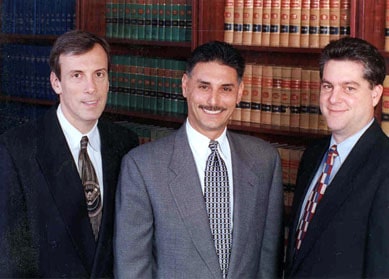
Berman | Sobin | Gross LLP is the largest workers’ compensation firm in Maryland representing injured workers, with offices across the state and a track record built on decades of hearings, trials, and appellate arguments. One of the firm’s founders literally wrote the definitive treatise on Maryland workers’ compensation law, and the firm’s attorneys have shaped the law itself through landmark Commission and court decisions. For a factory worker in Upper Marlboro dealing with an injury claim, that depth of experience means you are working with attorneys who know every argument the other side will raise before it comes. Contact Berman | Sobin | Gross LLP to have your claim evaluated by a factory worker injury attorney serving Upper Marlboro and Prince George’s County.