

Silver Spring HVAC Worker Injury Attorney
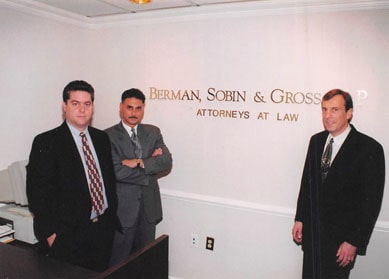
HVAC technicians in Silver Spring work in conditions that most people never think about: crawlspaces under commercial buildings along Georgia Avenue, rooftop units on high-rises near the transit center, boiler rooms in the older apartment complexes scattered throughout the county. The physical demands are relentless, and the hazards are real. Falls from ladders and rooftops, refrigerant exposure, electrical contact, heat stress, and repetitive strain from years of maneuvering heavy equipment through tight spaces all create injury risks that are woven into the daily reality of this trade. When an HVAC worker in Silver Spring is hurt on the job, the workers’ compensation system becomes the path to medical care and wage replacement, but that path is rarely as straightforward as it should be. Berman Sobin Gross LLP has spent over 35 years representing Maryland’s tradespeople and working men and women in exactly these situations, and the attorneys here know what it takes to build and defend a workers’ compensation claim when an employer or insurer is pushing back.
What Actually Injures HVAC Workers in the Silver Spring Area
Montgomery County’s commercial and residential mix creates a wide variety of job sites for heating and cooling technicians. A crew might start the morning servicing rooftop packaged units on a retail strip near Wheaton, spend the afternoon replacing ductwork in a basement mechanical room in a downtown Silver Spring high-rise, and finish the day troubleshooting a residential system in a cramped attic in Four Corners. Each environment carries its own injury profile.
Falls are the most serious category. Rooftop work requires navigating equipment, drainage structures, and uneven surfaces, often while carrying tools and components. Ladder accidents happen when equipment is not properly secured or when a surface gives way without warning. In Montgomery County’s aging commercial building stock, structural surprises on rooftops and in mechanical rooms are not uncommon. A fall that results in a fractured heel, a spinal compression injury, or a traumatic brain injury can end a career or require years of treatment.
Refrigerant exposure is another real hazard that does not always produce immediate, obvious symptoms. Certain refrigerants can cause cardiac sensitization, respiratory damage, or frostbite-level chemical burns. Workers handling older equipment that still contains phased-out compounds face a different risk profile than those working with newer systems, and the long-term health consequences of repeated low-level exposure are still being studied. When an HVAC technician develops a respiratory condition or a cardiac problem after years in the trade, establishing the occupational connection is often contested by employers and their insurers.
Repetitive motion injuries to the shoulders, wrists, elbows, and knees are pervasive in this trade. Torquing fittings, maneuvering ductwork, and spending hours in awkward positions while servicing equipment in confined spaces adds up. These injuries tend to develop gradually, which creates complications under Maryland’s workers’ compensation rules regarding the date of injury and timely notice. Electrical burns and shock injuries occur during equipment installation and repair. Heat-related illness is a factor for workers doing summer rooftop work without adequate rest or hydration protocols. Each of these injury types requires a different approach when building a claim.
Why HVAC Injury Claims Draw Resistance from Insurers
Workers’ compensation carriers look for reasons to limit what they pay. In HVAC cases, several factors make claims especially vulnerable to challenge. Gradual-onset injuries like repetitive strain or occupational hearing loss from years around loud mechanical equipment give insurers an argument that the condition predates the employment or developed off the job. When a technician has worked for multiple contractors over a career, as is common in this industry, determining which employer’s carrier is responsible becomes a dispute in itself.
Pre-existing conditions are a major battleground. An HVAC worker who had a previous shoulder surgery or a prior back issue will almost always see that history weaponized by a defense medical examiner hired by the employer’s insurer. The defense position is typically that the current symptoms are a continuation of a pre-existing problem rather than a work-related aggravation. Maryland law does recognize aggravation of pre-existing conditions as a compensable injury, but demonstrating that requires evidence and often medical testimony that goes beyond what a worker can assemble alone.
Independent contractor misclassification is another issue that surfaces regularly in the HVAC trades. Some employers structure their workforce to avoid workers’ compensation coverage obligations, labeling workers as independent contractors who are functionally employees under Maryland’s legal standards. If you were hurt on a job site and told you are not covered because you are a contractor, that classification is worth examining carefully. The legal standards for determining employment status in the workers’ compensation context are fact-specific and do not always align with how a business arranges its paperwork.
What Berman Sobin Gross LLP Actually Does in These Cases
The attorneys at this firm do not limit their representation to straightforward claims where liability is obvious and the employer’s insurer is cooperative. The firm was built around the harder cases, and HVAC injury claims frequently fall into that category. When a carrier disputes causation, the firm works with medical evidence to establish the occupational connection to a specific injury or condition. When a defense medical examiner produces a report that contradicts the treating physician, the attorneys here know how to challenge it and understand the standards Maryland courts apply to expert testimony in these disputes.
For claims that require it, the firm takes cases beyond the Workers’ Compensation Commission and into the courts. The attorneys at Berman Sobin Gross LLP have handled hundreds of jury trials and appeals in workers’ compensation matters, including cases before Maryland’s highest courts. One of the firm’s founders authored the authoritative two-volume treatise on Maryland workers’ compensation that practicing attorneys across the state still reference. That depth of legal knowledge is not background decoration; it directly informs how the firm approaches contested claims.
Injured HVAC workers in Silver Spring and throughout Montgomery County benefit from the firm’s geographic reach across Maryland. With offices in Gaithersburg, Lutherville, Baltimore, and Frederick, the attorneys are positioned to work with clients in the areas where they live and work. Spanish-speaking staff and attorneys are available for clients who prefer to communicate in Spanish, which matters in a trade with a significant bilingual workforce.
Questions HVAC Workers in Silver Spring Ask About Injured-Worker Claims
How long do I have to file a workers’ compensation claim in Maryland after an HVAC injury?
Maryland law generally requires a workers’ compensation claim to be filed within two years of the date of injury or the date the worker knew or should have known the condition was related to work. For gradual injuries like repetitive strain or occupational disease, the clock typically starts from when the worker became aware of the connection, not from when symptoms first appeared. Waiting too long can create serious problems, so getting legal guidance early is important.
My employer says I am an independent contractor and not covered. What can I do?
Employment status for workers’ compensation purposes in Maryland is determined by the actual working relationship, not just how the employer labels it. Factors like who controls how the work is done, who supplies tools and equipment, and whether the work is integral to the employer’s business all matter. Many workers labeled as independent contractors are entitled to workers’ compensation coverage under Maryland law.
The insurance company sent me to a doctor who says my injury is not work-related. What happens now?
The opinion of an insurer’s hired medical examiner is not the final word. Maryland workers’ compensation claims involve contested medical evidence regularly, and claimants have the right to present their own treating physician’s opinion and to challenge defense examiner testimony. An attorney can evaluate both opinions and advise on how to proceed before the Commission.
Can I receive workers’ comp benefits if I had a prior injury to the same body part?
Yes. A work injury that aggravates or accelerates a pre-existing condition is compensable under Maryland workers’ compensation law. The prior condition does not disqualify a claim; it may affect how benefits are calculated in some circumstances, but a work-related aggravation is a recognized basis for a valid claim.
What benefits can an injured HVAC worker actually recover through workers’ comp in Maryland?
Maryland workers’ compensation benefits include payment for all medical treatment related to the work injury, temporary total disability payments while you are unable to work, temporary partial disability payments if you return to lighter duties at reduced pay, and permanent disability awards if the injury results in lasting impairment. Vocational rehabilitation may also be available if you cannot return to HVAC work.
What if the injury was caused partly by faulty equipment or a subcontractor’s negligence?
Workers’ compensation covers injuries regardless of fault, but when a third party, such as an equipment manufacturer or another contractor on a job site, contributed to the injury, a separate civil claim against that third party may be possible alongside the workers’ compensation claim. These situations require careful analysis of all liable parties and available legal remedies.
Do I need an attorney if my employer accepts my claim right away?
Even when an initial claim is accepted, disputes frequently arise later over the extent of disability, the adequacy of medical treatment, return-to-work decisions, or permanent impairment ratings. Having legal representation from the beginning means those issues are handled correctly when they arise, rather than trying to course-correct after a misstep in the claim process.
Representing Injured HVAC Workers Throughout the Silver Spring Area
Berman Sobin Gross LLP serves injured workers across Montgomery County and the broader Washington-area Maryland market, including Silver Spring and the communities nearby. The firm’s Gaithersburg office makes it accessible to workers throughout the county, and the attorneys regularly handle claims arising from job sites throughout the region. For any Silver Spring HVAC worker injury attorney matter, the firm offers a confidential case analysis at no cost to evaluate the claim and explain what options are available. The attorneys here have represented tens of thousands of injured workers over 35 years, and they bring that experience to bear on every case they take, including the ones other firms have turned away.