

Salisbury Commercial Driver Injury Attorney
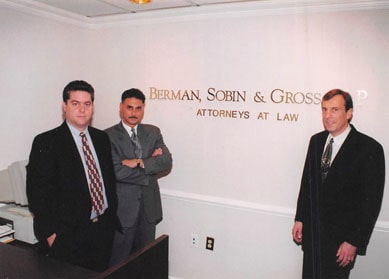
Commercial drivers on Maryland’s Eastern Shore put in long hours on routes that connect Salisbury to the port in Baltimore, the poultry processing facilities along Route 50, the agricultural supply chains running through Wicomico and Worcester counties, and the freight corridors heading north and south on US-13. When a truck driver, delivery worker, or other commercial vehicle operator gets hurt on the job in or around Salisbury, the injury claim that follows is rarely straightforward. A Salisbury commercial driver injury attorney at Berman | Sobin | Gross LLP understands that these workers face a claims system built for employers and insurers, not for the people who actually get hurt.
Why Commercial Driver Injuries in the Salisbury Area Create Complicated Claims
Salisbury sits at the center of a regional economy that depends heavily on commercial transportation. Perdue Farms, Mountaire Farms, and a network of agricultural co-ops generate constant truck traffic. The Port of Salisbury on the Wicomico River moves cargo. Regional distribution centers and food service operations run fleets of delivery vehicles. Construction along Route 50 and the US-13 corridor keeps heavy equipment operators and dump truck drivers on tight schedules under physical strain.
Injuries that happen in and around commercial vehicles tend to be serious. Loading dock accidents, falls from cab heights, repetitive stress injuries from long-haul vibration, and crush injuries from cargo shifts all produce the kind of damage that can sideline a driver for months or permanently. What makes these cases genuinely complicated is the question of which employer or insurer bears responsibility, and whether multiple parties share liability for what happened. A driver employed by a carrier is often working under a broker arrangement, hauling cargo for a shipper, operating on roads maintained by state or local government, and using equipment maintained by a third party. Each of those relationships can become relevant when piecing together why the injury happened.
Maryland’s workers’ compensation system covers most on-the-job injuries for employees, but commercial drivers often face classification disputes. Carriers and logistics companies frequently classify drivers as independent contractors to avoid workers’ compensation obligations. That classification is not always legally accurate, and challenging it requires someone who knows how Maryland law draws the line between employees and contractors.
The Injury Types That Actually Define These Claims
There is no single profile of a commercial driver injury claim. The nature of the work produces a wide range of conditions, and how a claim is valued depends significantly on what the injury actually is and how it affects the driver’s ability to keep working.
Spinal injuries are common among long-haul drivers, partly because of sustained vibration and poor ergonomics in the cab, and partly because accidents at highway speed or loading dock collisions transmit enormous force to the body. Herniated discs, fractured vertebrae, and spinal cord damage can result in permanent restrictions that end a driving career regardless of how well a worker recovers functionally. When those permanent restrictions exist, the workers’ compensation system has specific provisions for permanent partial and permanent total disability, and getting those ratings right matters enormously to a driver’s long-term financial security.
Shoulder and rotator cuff injuries frequently develop among drivers who spend hours maneuvering heavy steering wheels or who regularly unload freight by hand. These injuries often require surgery, extended rehabilitation, and a period of total disability before a worker knows whether they will regain full function. Employers and their insurance carriers often push workers back to light duty before they are truly ready, and that pressure can affect both the injury recovery and the claim value.
Occupational hearing loss is a legitimate and often overlooked claim among commercial drivers who spend years in cab environments with diesel engine noise and inadequate hearing protection. Maryland law has specific provisions for occupational deafness claims, and Berman | Sobin | Gross LLP has actually changed that law, winning the appellate case of Montgomery County v. Cochran and Bowen, which clarified how the age deduction for hearing loss is calculated from the last date of injurious exposure rather than the date of an audiogram. That kind of depth in Maryland workers’ compensation law is not something every firm brings to a hearing.
When a Workers’ Compensation Claim Is Not the Whole Picture
Maryland workers’ compensation covers medical treatment and wage replacement for most injured workers, but it does not cover everything a commercial driver may have lost. Workers’ compensation does not compensate for pain and suffering, and the wage replacement formulas often fall short of what a driver was actually earning when overtime, per diem pay, and performance bonuses are factored in.
In some Salisbury-area commercial driver injuries, there is a third-party claim alongside the workers’ compensation case. If the driver was hurt because of a defective truck component, an improperly loaded shipment prepared by a third-party shipper, a negligent driver operating another vehicle, or hazardous road conditions created by a contractor on a construction project, those parties may carry direct civil liability separate from the employer’s workers’ compensation obligation. Pursuing both claims simultaneously, and doing so without accidentally harming one while pursuing the other, requires coordination that matters a great deal to the final outcome.
Berman | Sobin | Gross LLP handles both workers’ compensation claims and personal injury cases, which means the firm can look at a commercial driver injury from both angles at once rather than leaving one side of the case unaddressed.
Questions Salisbury Commercial Drivers Ask About Their Injury Claims
Does it matter that my employer says I am an independent contractor?
Not necessarily. Maryland courts look at the actual working relationship, not just the label on a contract. If the employer controls how, when, and where you work, provides the vehicle and equipment, and sets your routes and schedule, you may qualify as an employee for workers’ compensation purposes even if your paperwork says otherwise. This is worth examining carefully before assuming a claim is not available.
I was hurt in Salisbury but my carrier is based out of state. Does Maryland law still apply?
Maryland workers’ compensation jurisdiction applies when an injury occurs within the state, when the employment contract was made in Maryland, or when the worker is regularly employed in Maryland. Many interstate drivers have Maryland claims available to them even when the employer is headquartered elsewhere. The analysis depends on the specific facts of the employment arrangement.
My injury developed gradually over years of driving. Can I still file a claim?
Yes. Maryland workers’ compensation covers occupational diseases and conditions that develop from repeated work exposures, not just single traumatic accidents. For gradually developing conditions, the filing deadlines run from when the worker knew or reasonably should have known that the condition was work-related. Getting that date established correctly is an important part of protecting the claim.
The insurance company sent me to their own doctor. Do I have to accept that doctor’s opinion?
No. You have the right to present medical evidence from your own treating physicians and, when necessary, from independent medical experts. An insurance-selected physician examining you for litigation purposes has no obligation to advocate for your health or your claim. Employers and carriers use these examinations to limit claim value, and that opinion can and should be challenged when it does not reflect the actual medical picture.
What if my employer is pressuring me to return to work before I am medically cleared?
Returning to work before you are ready can harm both your physical recovery and your claim. If your treating physician has not released you to return to your prior duties, that medical opinion carries legal weight. Pressure from an employer does not change your medical status, and a premature return that worsens your condition can complicate future claims for the same injury.
How long do workers’ compensation cases for commercial drivers typically take in Maryland?
It depends on the complexity of the injury, whether there are disputes about compensability or classification, and how far the case needs to go in the system. Straightforward claims with clear liability and a cooperative insurer resolve faster than cases involving disputed contractor status, multiple employers, or serious permanent disabilities that require full litigation. Cases that need to go beyond the Workers’ Compensation Commission to circuit court or appellate review can take considerably longer, but that path is sometimes necessary to achieve a fair result.
Can I afford legal representation when I am already out of work with an injury?
Berman | Sobin | Gross LLP handles workers’ compensation claims on a contingency fee basis, meaning attorney fees come from the recovery rather than out of pocket. A worker who has already lost wages due to injury should not have to pay money upfront to get proper representation.
Injured Commercial Drivers on the Eastern Shore Deserve Full Representation
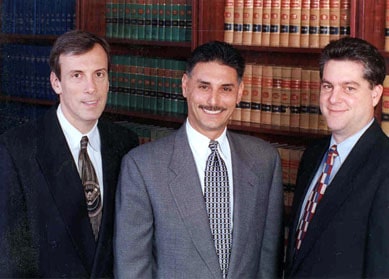
Berman | Sobin | Gross LLP has spent 35 years representing Maryland workers in exactly these situations, growing from a three-attorney firm to more than 20 attorneys with offices throughout the state. The firm has handled tens of thousands of hearings and hundreds of workers’ compensation jury trials, including appeals before both of Maryland’s highest courts. When an insurer refuses to pay, when an employer misclassifies a driver to avoid liability, or when a claim requires going beyond the Workers’ Compensation Commission into circuit court, this firm has the resources and the established record to see it through. Spanish-speaking staff and attorneys are available for clients who need representation without a language barrier. For Salisbury commercial truck driver injury claims and the full range of circumstances that can follow a serious work injury on the Eastern Shore, Berman | Sobin | Gross LLP is ready to evaluate your situation and help you understand what your claim is actually worth.