

Salisbury Delivery Driver Injury Attorney
Delivery drivers in Salisbury and across the Eastern Shore keep goods moving through one of Maryland’s busiest regional corridors, working long hours on routes that run through downtown Salisbury, along US-13, out to Wicomico and Somerset counties, and onto the Delmarva Peninsula’s network of rural roads. The job looks straightforward from the outside. In practice, it involves loading and unloading heavy cargo, navigating commercial traffic and tight residential streets, working in all weather, and spending hours at the wheel under schedule pressure that rarely lets up. When something goes wrong, whether a back gives out from repetitive lifting, a vehicle collision happens mid-route, or a fall occurs during a delivery, the question of who owes you compensation is not always simple. A Salisbury delivery driver injury attorney at Berman | Sobin | Gross LLP can help you understand what you are owed and pursue it.
The Specific Hazards That Put Salisbury Delivery Drivers at Risk
Delivery work in this region carries a distinct set of physical demands. Drivers making commercial runs along the Route 13 corridor, servicing the industrial areas near the Port of Salisbury, or covering sprawling rural routes across Wicomico County load and unload cargo that can easily weigh hundreds of pounds per shift. Repetitive strain injuries to the back, shoulders, and knees are common and often accumulate over months before a worker recognizes them as work-related conditions.
Road conditions add another layer. The Eastern Shore sees significant commercial truck traffic, and smaller delivery vehicles operating alongside tractor-trailers on Route 50 or the bypass routes around Salisbury face real collision risk. A rear-end impact, a sideswipe from a merging truck, or a rollover on a rural county road can produce injuries that require surgery and months of rehabilitation.
Slip and fall injuries during the delivery itself are also a significant category. Steps, wet loading docks, uneven surfaces in commercial properties, and icy walkways during winter create hazardous conditions that are often the responsibility of the property owner, not just the employer. Sorting out who bears liability in those situations is one of the first things an attorney works through.
Workers’ Compensation Versus Third-Party Claims: Why the Difference Matters Enormously
Most delivery drivers injured on the job in Maryland have a workers’ compensation claim as their primary avenue for benefits. Maryland’s workers’ compensation system provides medical treatment, wage replacement, and compensation for permanent disability without requiring a driver to prove fault. The employer’s workers’ compensation insurance covers the claim, and the injured worker does not have to show that anyone was negligent. That is the baseline protection Maryland law provides.
But delivery drivers are frequently injured by someone other than their employer. When a collision is caused by another driver, the at-fault driver’s liability insurance becomes a separate source of compensation entirely. When a defective vehicle component fails and causes an accident, the manufacturer or distributor of that component may be liable. When a property owner’s negligence caused a fall during a delivery stop, that owner may owe damages beyond what workers’ compensation covers.
These third-party claims run alongside a workers’ compensation claim, not instead of it. That matters because workers’ compensation has real limits: it does not compensate for pain and suffering, and wage replacement is typically capped at a percentage of the state’s average weekly wage. A third-party personal injury claim can recover those additional categories of damages. Missing the third-party claim, or failing to identify that one exists, means leaving significant compensation on the table. This is one of the core reasons to work with attorneys who handle both workers’ compensation and personal injury, which is precisely what Berman | Sobin | Gross LLP does across both areas of practice.
Independent Contractor Status and the Coverage Question
A growing number of delivery drivers in Maryland work for companies that classify them as independent contractors rather than employees. This classification directly affects workers’ compensation eligibility, since Maryland’s workers’ comp system generally covers employees, not independent contractors. Some companies lean heavily on contractor classification as a cost-saving measure, even when the actual working relationship looks a great deal like employment.
Maryland law looks at the substance of the relationship, not just the label a company puts on it. Factors like how much control the company exerts over the driver’s schedule, routes, and equipment, whether the driver can work for other companies, and whether the work is part of the company’s core operations all bear on the classification question. Drivers who have been told they are not covered because they are contractors should not simply accept that answer without having the question evaluated by an attorney.
Where workers’ compensation coverage is genuinely unavailable, the route to compensation shifts entirely to third-party claims and potentially claims against the company itself depending on how the injury occurred. The analysis is fact-specific and worth doing carefully.
Questions Delivery Drivers in Salisbury Often Ask After a Work Injury
Does it matter that the injury happened away from the employer’s facility?
No. Maryland workers’ compensation covers injuries that arise out of and in the course of employment. For delivery drivers, the job site is essentially everywhere the route takes them. An injury during a delivery stop, a collision on the road between stops, or an accident at a customer’s loading dock all fall within the scope of work-related injuries. The employer’s facility is not the boundary of coverage.
I was in a vehicle accident and another driver was at fault. Do I still file workers’ comp?
Yes, and you may also have a third-party claim against the at-fault driver. Both can proceed simultaneously. Maryland allows injured workers to pursue workers’ compensation benefits while also bringing a personal injury claim against a negligent third party. There are lien and reimbursement rules that govern how those proceeds interact, which is one reason having an attorney manage both claims matters.
What if my employer says the injury was my own fault?
Workers’ compensation in Maryland is a no-fault system for employees. Your employer’s claim that you were careless or contributed to your own injury does not, by itself, bar your workers’ compensation claim. Employer defenses in workers’ comp cases are limited, and an experienced workers’ compensation attorney can evaluate whether any defense being raised actually applies to your situation.
How long do I have to report a work injury in Maryland?
Maryland generally requires that an injured worker report the injury to their employer promptly, and the deadline to file a claim with the Workers’ Compensation Commission is ten days for notice to the employer in most cases, with exceptions for occupational disease and circumstances where the employee did not recognize the injury as work-related. Do not assume that time pressure is not a factor. The earlier an attorney reviews the situation, the better position the claim is in.
Can I choose my own doctor for treatment?
Maryland workers’ compensation allows injured workers to select their own treating physician rather than being confined to employer-designated providers. This is a meaningful protection. The treating physician’s opinions on causation, work restrictions, and the extent of permanent disability carry significant weight in how a claim resolves.
What if I drive for multiple companies or have an unusual employment arrangement?
The coverage question becomes more complicated when a driver works across multiple platforms or has layered contractual relationships. Each relationship requires separate analysis. Attorneys who regularly handle workers’ compensation and personal injury claims for delivery and transportation workers are familiar with these arrangements and can work through which avenues of recovery actually apply.
Do I need an attorney if the claim seems straightforward?
Insurers process and settle claims routinely, and some resolve cleanly. But a settlement that closes a workers’ compensation claim also forecloses future medical and wage benefits related to that injury. A driver with a back injury, for instance, may need additional treatment or surgical intervention years later. Accepting a settlement without understanding its implications is a risk that can be difficult to undo. Having an attorney review the claim before any resolution is reached costs nothing upfront and may prevent a decision that looks reasonable today from causing serious harm down the road.
Injured While Making Deliveries in Salisbury? Berman | Sobin | Gross LLP Is Ready to Evaluate Your Claim
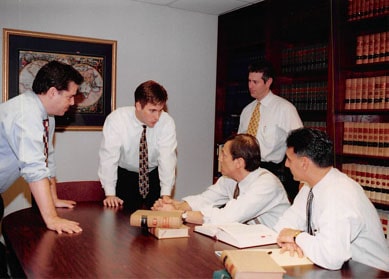
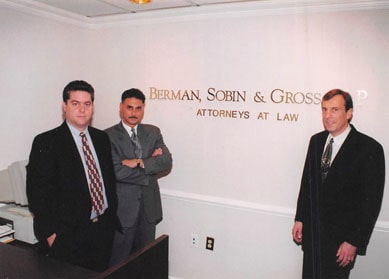
Berman | Sobin | Gross LLP has represented injured workers across Maryland for 35 years. The firm has grown from three attorneys to more than 20, with offices spread throughout the state, and it remains the largest workers’ compensation law firm in Maryland representing injured workers. The attorneys here have handled tens of thousands of hearings, hundreds of workers’ compensation jury trials, and appeals before both of Maryland’s highest courts. When a claim requires pushing past an administrative hearing and into the courts, this firm does not step back. Delivery drivers in Salisbury dealing with the aftermath of a work-related injury can reach Berman | Sobin | Gross LLP to have their situation evaluated at no cost. You will speak with an attorney who will stay with your case rather than hand it off, and who can identify every avenue of recovery available to a Salisbury delivery driver hurt on the job.