

Salisbury Janitorial Worker Injury Attorney
Janitorial workers on Maryland’s Eastern Shore carry physical burdens that most people never think about. Mopping floors in commercial kitchens, handling industrial cleaning chemicals in office towers, working late-night shifts in hospitals and schools where wet floors and heavy equipment are constant realities. When a worker in that position gets hurt, the question is never whether the injury was serious. The question is whether they know how to get what they are owed. A Salisbury janitorial worker injury attorney at Berman | Sobin | Gross LLP can help workers across Wicomico County and the surrounding region understand exactly what Maryland’s workers’ compensation system provides and fight for every benefit they are entitled to receive.
What Actually Hurts Janitorial Workers in Salisbury Facilities
The injury patterns that show up in workers’ compensation claims for custodial and janitorial staff are not random. They follow the work. Salisbury’s economy includes a significant healthcare sector centered on Peninsula Regional Medical Center, university facilities at Salisbury University, hotels and conference venues, schools, and large retail spaces. Janitorial workers move through all of these environments, often during off-peak hours when there is no one nearby to notice a fall or respond to a sudden injury.
Slip and fall injuries are among the most common. Cleaning by definition involves wet surfaces, and when a worker is the one creating those surfaces, there is a built-in risk. But the injury doesn’t have to be dramatic to be serious. A knee that twists on a slick floor can result in a torn ligament. A lower back that takes on one too many heavy trash bins can give out in a way that keeps a worker off their feet for months.
Chemical exposure is a different category of harm and one that is frequently underestimated. Industrial-grade cleaning products, mold remediation chemicals, and disinfectants used in medical facilities can cause respiratory damage, skin conditions, and in some cases neurological effects with extended exposure. Workers who report symptoms gradually may be told the problem is unrelated to work. That is not always correct, and it is worth having an attorney evaluate the actual exposure history.
Repetitive motion injuries also accumulate over years of work. Carpal tunnel syndrome from constant scrubbing, shoulder injuries from mopping and reaching, knee degeneration from working on hard floors without adequate equipment. These claims require careful documentation because the injury did not happen on a single identifiable day, which gives employers and insurers room to dispute whether the work caused the condition.
Why Janitorial Workers Face Specific Challenges When They File Claims
Custodial workers are frequently employed through staffing agencies or contracted cleaning companies rather than directly by the facility they clean. That structure creates real ambiguity about which employer is responsible for a workers’ compensation claim. The staffing agency may point to the facility. The facility may say they are not the employer of record. Meanwhile, the worker is waiting for medical treatment and losing income.
There is also the issue of subcontracting. Some large Salisbury commercial buildings use layered subcontracting arrangements where the cleaning work is several steps removed from the building owner. Maryland’s workers’ compensation laws address this through provisions about statutory employers, which can bring the general contractor or building owner into the compensation picture. But workers generally do not know these rules exist, which means they may accept a denial from the direct employer without realizing there are other avenues to pursue.
Part-time and overnight scheduling creates another complication. Workers who are injured during a shift that is not well-documented, in a facility with limited supervision at 2 a.m., may face credibility challenges when they file a claim. The employer or insurer may argue the injury happened elsewhere, or that there were no witnesses, or that the worker delayed in reporting. Delays in reporting often happen not out of carelessness but because janitorial workers frequently fear losing their job if they speak up. Maryland law has reporting requirements, but there are also protections for injured workers, and an attorney familiar with how the Maryland Workers’ Compensation Commission handles these disputes can make a significant difference.
What Compensation Maryland Law Actually Provides
Maryland workers’ compensation covers medical expenses related to the work injury, including doctor visits, diagnostic imaging, surgery if needed, and physical therapy or rehabilitation. Workers who miss time from work because of an injury are entitled to temporary total disability payments, which replace a portion of their lost wages while they are unable to work. For injuries that result in permanent impairment, a separate category of benefits applies based on the nature and severity of the impairment as assessed through medical evaluation.
Permanent partial disability benefits in Maryland are calculated based on the body part affected and the degree of functional loss. A back injury that leaves a worker with lasting limitations is evaluated differently than a hand injury that affects grip strength. Workers who cannot return to their previous job and need training for different work may be entitled to vocational rehabilitation services. The case Fikar v. Montgomery County, which Berman | Sobin | Gross LLP handled, established that injured workers receiving service-connected disability retirement can still access vocational rehabilitation, which reflects the kind of specific legal precedent that matters when fighting for a full range of benefits.
Occupational disease claims, relevant for janitorial workers who develop conditions from long-term chemical exposure, are handled through a different process than single-incident injuries. The connection between exposure and diagnosis must be established through medical evidence, and the timeline for filing differs from standard injury claims. These claims are worth pursuing even when they seem complicated, because the benefits available are the same.
What Salisbury Area Workers Should Know About the Claims Process
Does the employer’s insurance company have to pay my medical bills directly?
When a workers’ compensation claim is accepted, the employer’s insurance carrier is responsible for authorized medical treatment. However, disputes over which providers are authorized and whether specific treatment is necessary are common. Workers should keep records of all communications about medical approvals and denials, and an attorney can help challenge unreasonable treatment denials before the Maryland Workers’ Compensation Commission.
I work for a cleaning contractor, not the building I was hurt in. Who pays my claim?
Your direct employer’s insurance is typically the first place a claim is filed. However, if the contractor does not have adequate coverage or disputes employment status, Maryland law may allow a claim against the general contractor or facility owner as a statutory employer. This is a fact-specific issue that depends on the structure of the contracts involved, and it is something Berman | Sobin | Gross LLP’s attorneys analyze carefully for workers in these arrangements.
What if I was injured partly because of a hazardous product a third party manufactured?
Workers’ compensation is not the only potential source of recovery when an injury involves a defective product. A cleaning chemical that causes respiratory harm due to a manufacturer’s defect, for example, may support a separate civil claim outside the workers’ comp system. Both avenues can sometimes be pursued simultaneously.
How do I handle it if my employer says my injury was pre-existing?
Pre-existing condition arguments are one of the most common tactics used to reduce or deny workers’ compensation claims. Maryland law does not require that the work be the sole cause of an injury, only that it be a contributing cause. If your job aggravated or accelerated a prior condition, you may still have a valid claim. Medical evidence and the right legal framing matter significantly in these situations.
Can I be fired for filing a workers’ compensation claim in Maryland?
Maryland law prohibits retaliation against workers who file workers’ compensation claims. If an employer takes adverse action against a worker because they filed, that may support a separate legal claim. Workers who experience sudden schedule changes, termination, or other negative treatment after filing should document what happened and when.
What does it cost to hire Berman | Sobin | Gross LLP for a workers’ compensation case?
Workers’ compensation attorneys in Maryland are paid through a contingency fee arrangement regulated by the Maryland Workers’ Compensation Commission. That means there is no upfront cost to the worker, and attorney fees come from the benefits recovered, subject to Commission approval. Workers do not need to have money to get representation.
Should I give a recorded statement to the insurance company?
Workers are generally not required to give recorded statements to the employer’s insurance carrier before speaking with an attorney. Statements given early in the process, before the full extent of an injury is known, can create problems later in the claim. Consulting with an attorney first is a reasonable step before agreeing to any formal interview with an insurer.
Representing Injured Janitorial Workers Across the Eastern Shore
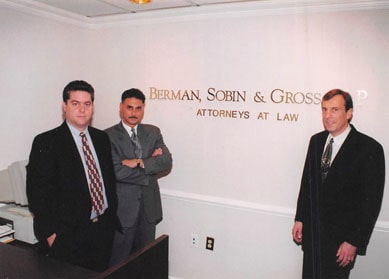
Berman | Sobin | Gross LLP has spent 35 years representing workers throughout Maryland, growing from three attorneys to more than twenty with offices across the state. The firm handles workers’ compensation cases of every level of complexity, including cases that other attorneys have declined to pursue. One of the firm’s founders authored the leading treatise on workers’ compensation in Maryland, and the firm has argued and won cases that changed the law for working people across the state. Spanish-speaking staff and attorneys are available for clients who communicate in Spanish. For janitorial workers in Salisbury, Wicomico County, and the broader Eastern Shore region who have been hurt on the job and are not sure where to begin, Berman | Sobin | Gross LLP is ready to evaluate the claim and explain the options clearly.
Talk to a Janitorial Injury Lawyer Serving Salisbury
Janitorial work is physically demanding, often done in difficult conditions, and the workers who do it deserve full access to the benefits Maryland law provides when they are hurt. A janitorial injury attorney serving Salisbury and the Eastern Shore can review the details of what happened, identify all potential sources of recovery, and handle the commission proceedings and negotiations with insurers that workers should not have to manage alone. Contact Berman | Sobin | Gross LLP for a confidential case analysis.