

Salisbury Warehouse Worker Injury Attorney
Warehouse work on the Lower Eastern Shore is physically demanding in ways that office-based safety statistics rarely capture. Workers at Salisbury’s distribution centers, cold storage facilities, and freight operations spend shifts lifting, stacking, operating forklifts, and moving on concrete floors that do not forgive mistakes. When something goes wrong, the injuries are often serious: crushed hands, torn spines, fractured legs, head trauma from falling loads. A Salisbury warehouse worker injury attorney from Berman | Sobin | Gross LLP can help you understand what you are actually owed under Maryland workers’ compensation law and make sure you receive it.
The Specific Hazards Salisbury Warehouse Workers Face
Warehouse environments generate a distinct category of workplace injury. The risks are not subtle. Forklifts and pallet jacks share tight aisles with workers on foot. Shelving systems reach significant heights, and falling merchandise is a documented cause of traumatic brain injury and spinal cord damage. Loading dock accidents, where a vehicle shifts unexpectedly or a worker misjudges a ledge, can result in falls that end careers.
Cold storage facilities in Wicomico County add another layer. Workers in freezer environments deal with icy surfaces and reduced dexterity, which changes the risk profile substantially compared to a standard warehouse. Repetitive strain injuries develop over months of the same lifting motions and are often dismissed early as minor complaints before they become chronic conditions requiring surgery.
The Salisbury area also hosts regional distribution operations tied to agriculture, poultry processing, and retail supply chains. Workers in those facilities face equipment-specific hazards that differ from general warehousing. Belt conveyors, compactors, and baling equipment are involved in some of the most severe injuries Maryland workers’ compensation attorneys see. When machinery is involved, the injury is rarely minor.
What Warehouse Injury Claims Look Like in Practice
Maryland workers’ compensation covers most employees injured on the job, regardless of fault. But “covered” does not mean the process is automatic or straightforward. Employers and their insurers have financial incentives to challenge claims, delay authorizations for treatment, and minimize permanent impairment ratings. Warehouse workers who accept early settlements without legal guidance frequently discover later that they settled for far less than their injuries warranted.
Common issues that arise in warehouse injury claims include disputes over whether an injury was truly work-related, whether a pre-existing condition was aggravated by workplace conditions, and whether an employer’s preferred medical provider gave an accurate assessment of the worker’s limitations. These are not administrative technicalities. They directly affect how much medical care you receive and whether you can pay your bills while you recover.
Maryland workers’ compensation claims go through the Workers’ Compensation Commission. Hearings are held, evidence is presented, and decisions are made that can be appealed into the circuit courts if the outcome is wrong. Berman | Sobin | Gross LLP has handled hundreds of workers’ compensation jury trials and has taken appeals before both of Maryland’s highest courts. Firms that handle only the easy cases do not build that record.
Some warehouse injuries also involve third-party liability. If defective equipment caused the injury, if a contractor on the premises created the unsafe condition, or if a negligent delivery driver caused the accident, a separate personal injury claim may exist alongside the workers’ compensation case. Identifying that possibility early matters because it changes the value of your overall recovery significantly.
Why the Eastern Shore Creates Its Own Set of Complications
Workers on the Lower Eastern Shore are geographically separated from the bulk of Maryland’s legal and medical resources. The distance to specialist physicians, to Commission hearing locations, and to experienced workers’ compensation counsel creates real barriers that affect outcomes. Workers who accept whatever the employer’s insurer offers often do so simply because they do not know another path exists.
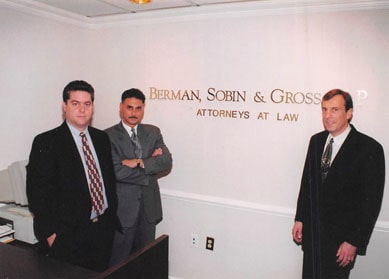
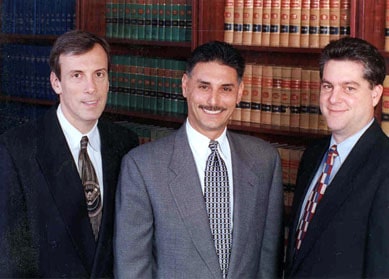
Berman | Sobin | Gross LLP has grown from three attorneys in one office to more than twenty attorneys with offices throughout Maryland. That reach matters for Eastern Shore clients. The firm has the capacity to pursue claims that require expert medical testimony, vocational rehabilitation disputes, or full litigation without asking clients to absorb those costs upfront.
The firm also has Spanish-speaking attorneys and staff, which reflects the reality of who works in Wicomico County’s warehouses and agricultural supply chain facilities. Language should never be the reason a worker cannot access full representation.
Questions Salisbury Warehouse Workers Ask After Getting Hurt
Can my employer fire me for filing a workers’ compensation claim?
Maryland law prohibits retaliation against employees who file workers’ compensation claims. If you are terminated or demoted after reporting an injury or filing a claim, that retaliation may give rise to additional legal claims separate from the workers’ comp case itself.
My employer says I was using equipment wrong and caused my own injury. Does that bar my claim?
No. Maryland workers’ compensation is a no-fault system. You do not have to prove your employer was negligent, and your employer cannot defeat your claim simply by arguing you contributed to the accident. Very narrow exceptions exist for intentional self-injury or intoxication, but ordinary workplace mistakes do not disqualify you.
The company doctor cleared me to return to work, but I still have pain. What do I do?
Employer-directed physicians have a documented history of releasing workers before they are genuinely ready. You have the right to request an independent medical examination through the Workers’ Compensation Commission. An attorney can help you understand how to challenge a premature return-to-work determination and what that challenge involves procedurally.
I have a pre-existing back condition. Will that prevent me from receiving benefits?
Not necessarily. Maryland workers’ compensation covers aggravations of pre-existing conditions when the work activity made the condition worse. The key question is whether your job duties contributed to the worsening. This is often where insurers push back hardest, which makes having legal representation particularly important.
How long do I have to file a workers’ compensation claim in Maryland?
Generally, you must file within two years of the date of injury or the date you knew or should have known the injury was work-related. For occupational diseases that develop gradually, such as repetitive stress injuries to the back or wrists, the timeline runs from the point you became aware of the connection to your job. Missing this window can eliminate your claim entirely.
Can I receive both workers’ compensation benefits and pursue a lawsuit against the equipment manufacturer?
Yes. Workers’ compensation and a third-party product liability claim are separate legal tracks. If defective warehouse equipment caused your injury, you may have claims against the manufacturer, distributor, or maintenance contractor while simultaneously receiving workers’ compensation benefits. The recoveries are handled differently and there are offset rules, but both paths can be pursued.
What benefits am I actually entitled to if I cannot work while recovering?
Maryland workers’ compensation provides temporary total disability payments while you are completely unable to work, temporary partial disability if you can work in a limited capacity, medical treatment related to the injury, and permanent disability benefits if you have lasting impairment. The calculation of permanent disability benefits is often contested and is one of the main reasons workers benefit from legal representation before accepting any settlement.
Salisbury Warehouse Injury Representation from Berman | Sobin | Gross LLP
Berman | Sobin | Gross LLP has represented injured workers across Maryland for 35 years. One of the firm’s founders authored the leading treatise on Maryland workers’ compensation law, a resource used by attorneys and courts throughout the state. That background is relevant to warehouse injury cases because the technical and medical arguments that determine outcomes require lawyers who have spent careers on these issues, not attorneys who handle workers’ comp as a secondary practice.
The firm takes on cases that other attorneys decline, including cases that require expert witnesses, extended litigation, or appeals beyond the Commission level. If you have been told your claim is too complicated or too difficult to pursue, that assessment may simply reflect what another firm was willing to invest, not what your case is actually worth.
If you were hurt working in a Salisbury warehouse and you are trying to figure out what your options are, contact Berman | Sobin | Gross LLP for a confidential case analysis. A Salisbury warehouse worker injury lawyer at the firm will evaluate your claim honestly and tell you what the realistic path forward looks like for your specific situation.