

Rockville Home Health Aide Injury Attorney
Home health aides in Rockville and across Montgomery County perform some of the most physically demanding work in the healthcare sector, yet they are often among the least protected when injuries occur. Lifting and repositioning patients, working in private homes with no institutional safety infrastructure, managing clients who may be combative or cognitively impaired, and traveling between assignments on congested roads like Route 355 and Veirs Mill Road all create genuine injury exposure every single day. A Rockville home health aide injury attorney at Berman | Sobin | Gross LLP understands the specific ways this work breaks down bodies, and we understand the workers’ compensation system well enough to know where these claims get contested and why.
Why Home Health Aide Injuries in Montgomery County Follow Predictable Patterns
The injury patterns for home health aides are not random. They concentrate around a handful of recurring circumstances that experienced workers’ compensation practitioners recognize immediately. Patient transfer injuries, particularly those involving residents who cannot bear their own weight, are among the most common causes of back, shoulder, and knee damage. Unlike hospital settings with ceiling lifts and trained teams, home environments frequently require aides to perform transfers alone, with improvised equipment or none at all.
Slip and fall hazards inside clients’ homes represent another major category. The employer has no control over the condition of a client’s floors, staircases, or entryways. Ice on a pathway in the Rockville or Gaithersburg suburbs during winter months, a loose rug, or a poorly lit hallway can translate into fractures and soft tissue injuries that take months to heal. These injuries are fully compensable under Maryland’s workers’ compensation system, but employers and their insurers sometimes dispute whether the aide was acting within the scope of employment at the moment of injury, particularly when the incident happens at the beginning or end of a shift at a client’s home.
Violence from clients is a documented and serious occupational hazard. Individuals with dementia, traumatic brain injuries, or psychiatric conditions can strike, bite, or scratch caregivers without warning. Maryland’s workers’ compensation statutes do not exclude injuries caused by client aggression, but insurers may attempt to characterize these incidents as outside normal job duties or to minimize the resulting physical and psychological trauma. Berman | Sobin | Gross LLP has handled the full range of these claims and knows how these disputes are framed and how to respond to them.
The Employment Classification Problem That Affects Home Health Aides Specifically
One of the more serious complications in home health aide injury claims is the question of employment classification. Some agencies classify their aides as independent contractors rather than employees, which can affect access to workers’ compensation benefits. Maryland law does not automatically accept the label an employer assigns. Courts and the Workers’ Compensation Commission apply a multi-factor analysis to determine whether a worker is genuinely independent or is, in substance, an employee entitled to statutory benefits.
Aides who receive assignments through an agency, follow agency protocols, use agency-required documentation, and have their schedules managed by agency coordinators often have strong arguments for employee status regardless of how their contracts are written. If you were told you were an independent contractor and have been injured on the job, that classification deserves scrutiny before any assumption is made that workers’ compensation benefits are unavailable to you.
Beyond workers’ compensation, some home health aide injuries may give rise to separate civil claims. If a home health aide is injured in a traffic accident while traveling between client homes, a third-party auto liability claim against the at-fault driver may run alongside a workers’ compensation claim. Berman | Sobin | Gross LLP handles both, and the interaction between those two recovery streams requires careful coordination to maximize total recovery without creating offset problems under Maryland law.
What the Workers’ Compensation Process Actually Looks Like for These Claims
Filing a workers’ compensation claim in Maryland begins with notifying your employer of the injury, ideally in writing and as soon as possible after the incident. After a claim is filed with the Maryland Workers’ Compensation Commission, the employer’s insurer will investigate and either accept the claim, accept it with limitations, or deny it. For home health aide claims, common grounds for denial include disputes about whether the injury occurred in the scope of employment, whether pre-existing conditions account for the worker’s current symptoms, or whether the medical treatment being sought is causally related to the work incident.
The Commission resolves disputed claims through a hearing process. Berman | Sobin | Gross LLP’s attorneys have appeared in tens of thousands of hearings before the Commission and have taken hundreds of cases into the Maryland circuit courts on appeal. In Montgomery County, where home health employment is substantial given the concentration of medical facilities, assisted living communities, and aging residential population, these claims come before the Commission with regularity. Having attorneys who know this terrain, who know the medical and vocational issues that arise in long-term care worker injuries, and who are not deterred by cases that require genuine preparation makes a material difference in outcomes.
Benefits available through a successful workers’ compensation claim include coverage of all reasonable and necessary medical treatment, temporary total or partial disability payments during recovery, permanent disability awards where injuries result in lasting impairment, and vocational rehabilitation services if the injury prevents a return to home health work. The permanent disability evaluation process in Maryland involves medical evidence from treating physicians and, often, independent medical examiners hired by the insurer. Berman | Sobin | Gross LLP works with clients to ensure their medical documentation accurately reflects the full scope of their impairment.
Answers to the Questions Home Health Aides Ask Most Often About Injury Claims
My employer says I am an independent contractor. Does that mean I cannot file a workers’ compensation claim?
Not necessarily. Maryland applies a legal test to determine actual employment status, not just the label in a contract. If the agency controlled your schedule, assigned clients, required you to follow specific procedures, and integrated your work into their operations, there is a credible argument for employee status. This is worth examining with an attorney before accepting a denial based on contractor classification.
I was injured at a client’s home, not my employer’s facility. Does that change anything?
No. Maryland workers’ compensation covers injuries that occur in the course and scope of employment regardless of physical location. Home health aides performing their job duties at a client’s residence are in the scope of employment. The location of the injury does not disqualify a claim.
The insurer sent me to a doctor I did not choose. Do I have to accept that doctor’s findings?
No. You have rights to your own medical evaluation, and the opinions of an insurer-chosen examiner are not automatically controlling. Disputed medical opinions are adjudicated through the Commission’s hearing process, and your attorney can present contrary medical evidence. This is one of the most contested areas in workers’ compensation claims across all industries.
I have a pre-existing back condition. Will that prevent me from recovering benefits for a new work injury?
Maryland law recognizes aggravation of pre-existing conditions as a compensable work injury. The legal question is whether the work incident worsened or accelerated a pre-existing condition, not whether the worker had a clean medical history. Insurers often emphasize pre-existing conditions to minimize claims, but an accurate medical and legal analysis frequently supports recovery even in those situations.
What if I was injured driving between client homes?
Injuries that occur while traveling between work assignments during a shift are generally compensable under Maryland workers’ compensation. The key distinction is between commuting to and from work, which is typically excluded, and driving between job sites as part of the workday, which is within scope. Additionally, if a third party caused the accident, there may be a separate personal injury claim in addition to the workers’ compensation claim.
How long do I have to file a workers’ compensation claim in Maryland?
Maryland requires that most workers’ compensation claims be filed within two years of the date of injury or, for occupational diseases, two years from when the employee discovered or should have discovered the connection between the condition and employment. Missing this deadline can result in permanent loss of the right to benefits, so prompt action matters.
Can I lose my job for filing a workers’ compensation claim?
Maryland law prohibits retaliation against employees for filing workers’ compensation claims. If you believe you have been terminated or otherwise penalized because you filed or intend to file a claim, that is a separate legal violation with its own remedies. Document any adverse employment actions and discuss them with your attorney as part of the overall claim.
Berman | Sobin | Gross LLP Represents Home Health Aides Throughout the Rockville Area
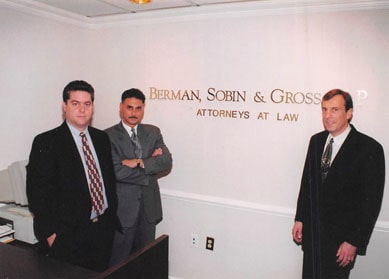
Berman | Sobin | Gross LLP is the largest workers’ compensation firm in Maryland representing injured workers, with offices in Lutherville, Baltimore, Gaithersburg, and Frederick. The firm has spent 35 years building the kind of litigation record that makes a difference in contested claims, including appellate victories that changed the law for Maryland workers. If you are a home health aide who has been injured in Rockville or anywhere in Montgomery County, the attorneys at Berman | Sobin | Gross LLP are available to evaluate your situation and help you understand what your claim is actually worth. Our attorneys and staff include Spanish-speaking team members, and we are prepared to work with clients across the full range of backgrounds that make up Montgomery County’s workforce. A Rockville home health aide injury attorney from our firm will stay with you as your point of contact from the initial evaluation through the resolution of your claim.