

Parkville Security Guard Injury Attorney
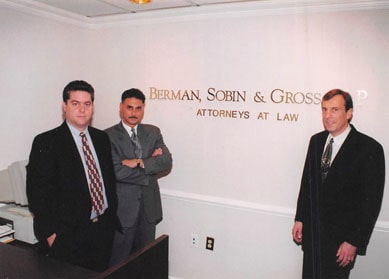
Security work in Parkville and the surrounding Baltimore County area looks different from the outside than it does from the inside. Guards stationed at retail centers along Harford Road, residential complexes near White Marsh, warehouses, hospitals, and event venues do far more than stand at a door. They respond to altercations, restrain individuals, work overnight shifts alone, and absorb the physical toll of a job that rarely appears on anyone’s list of high-risk occupations until something goes wrong. When a security officer is hurt on the job, the path to workers’ compensation benefits is often less straightforward than it should be. A Parkville security guard injury attorney at Berman | Sobin | Gross LLP can help you understand what you are owed and push back when an employer or insurer tries to minimize what happened.
Why Security Guard Injuries in Parkville Tend to Generate Coverage Disputes
Security officers occupy a complicated position in the employment landscape. A significant portion of guards in the Baltimore County area are employed not by the businesses where they work but by staffing agencies or private security contractors. This layered employment structure creates immediate questions about which employer’s workers’ compensation policy applies, whether the guard qualifies as a statutory employee of the premises owner, and whether there are third-party liability claims that run parallel to a workers’ comp filing.
Insurers representing security contractors have well-developed strategies for disputing claims that involve altercations or use of force. They sometimes argue that an injury arose from an employee’s deviation from post orders or that the guard assumed the risk of confrontation as an ordinary condition of employment. These arguments have limits under Maryland law, but they take time and preparation to defeat. The physical nature of security work also means that cumulative injuries, like shoulder deterioration from repeated restraint holds or spinal problems from standing for twelve-hour shifts, are common, and insurers are particularly aggressive about disputing the work-relatedness of conditions that develop gradually.
Guards who work at health care facilities, transit hubs, or public sector buildings in or near Parkville may have additional layers of coverage or benefit structures worth examining. The analysis changes depending on who employed the guard, what type of facility they worked at, and how the injury actually occurred.
The Injuries That Show Up Most Often in This Work
The physical demands of security work produce a recognizable set of injuries. Assault-related injuries rank among the most serious. Guards who intervene in fights, attempt to detain individuals, or respond to active disturbances can suffer fractures, head trauma, lacerations, and injuries to the neck and back that require surgery and extended recovery. Maryland workers’ compensation covers medical treatment and lost wages for these injuries, but the process of documenting the event, obtaining witness accounts, and establishing that the guard was acting within the scope of employment requires immediate attention.
Slip and fall injuries are also prevalent. Security patrols cover large areas, often in facilities that are not well maintained overnight, and guards working exterior patrols in Baltimore County winters face real fall hazards. Repetitive stress injuries affecting wrists, knees, and shoulders accumulate over years of active patrol and physical response work. Occupational hearing loss is another concern for guards stationed near loading docks, entertainment venues, or industrial facilities where noise exposure is constant.
For guards who are also licensed as armed security officers, a line-of-duty injury can intersect with licensing issues, disability benefit questions, and in some cases civil liability that requires separate legal analysis from the workers’ compensation claim itself.
What Berman | Sobin | Gross LLP Brings to Security Guard Claims
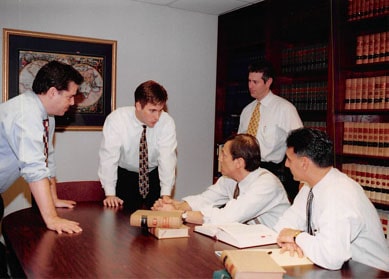
Berman | Sobin | Gross LLP has spent 35 years representing injured workers across Maryland, and the firm has grown to more than 20 attorneys handling claims throughout Baltimore County and the state. The firm represents not just security officers but the full range of workers who accept physical risk as a condition of employment, including firefighters, EMTs, corrections officers, and law enforcement personnel. That depth of experience with physically demanding, high-risk occupations translates directly to how the firm evaluates and builds security guard injury claims.
One of the firm’s founders wrote a two-volume treatise that continues to serve as the authoritative reference on Maryland workers’ compensation law. Attorneys here have handled hundreds of jury trials and appeals before Maryland’s highest courts. When an insurer knows that a firm is prepared to take a disputed case through the Maryland Workers’ Compensation Commission and into the circuit courts if necessary, the dynamic in that claim is different from the start. Berman | Sobin | Gross LLP does not turn away difficult cases or cases that other attorneys have declined to take beyond an administrative hearing.
The firm also has Spanish-speaking attorneys and staff, which matters in Parkville and throughout Baltimore County where many security officers come from communities where language access to legal services is not always available.
Answers to Questions Security Guards in Parkville Actually Ask
Can I file a workers’ compensation claim if I was hurt while physically detaining someone?
Yes. Restraint and detention are core functions of security work, and injuries that occur during those activities are generally compensable under Maryland workers’ compensation. An employer cannot deny a claim simply because physical force was involved. The relevant question is whether you were acting within your employment duties at the time of the injury.
I work for a staffing agency that placed me at a client site. Who is responsible for my workers’ comp?
The answer depends on the specific employment arrangement. In many cases, the staffing agency is the employer of record and carries the workers’ compensation policy. However, Maryland law recognizes the concept of a statutory employer, which can extend coverage obligations to the client business under certain conditions. Both relationships should be examined, and an attorney can help determine which insurer is on the hook and whether additional claims are available.
The insurer is saying my back injury is pre-existing and not work-related. What can I do?
Pre-existing condition arguments are among the most common tactics used to deny or minimize claims. Under Maryland law, a work-related event that aggravates, accelerates, or combines with a pre-existing condition to produce a disability is still compensable. Medical documentation that distinguishes the work injury from any prior condition is critical, and that documentation is best assembled with legal guidance from the outset.
My employer fired me after I filed a claim. Is that legal?
Maryland law prohibits retaliation against employees for filing workers’ compensation claims. If the timing and circumstances of a termination suggest the firing was connected to a claim filing, that raises separate legal issues worth discussing with an attorney.
What benefits can a security guard claim after a serious assault on the job?
Depending on the nature and severity of the injury, benefits can include payment of all authorized medical treatment, temporary total disability payments while you cannot work, temporary partial disability payments if you return to a lower-paying position during recovery, and permanent disability benefits if the injury leaves lasting impairment. Vocational rehabilitation may also be available if you cannot return to security work.
How long do I have to report an injury and file a claim in Maryland?
You should report a work injury to your employer as soon as possible, and no later than 10 days under Maryland law for most injuries. Claims must generally be filed with the Maryland Workers’ Compensation Commission within two years of the injury or within two years of the last payment of benefits. For occupational diseases or cumulative injuries that develop over time, different filing windows may apply, and those timelines can be complicated. Do not wait to get the process started.
What if I was hurt by a customer or a third party, not by a coworker or work equipment?
An injury caused by a third party, such as a customer who assaults a security guard, can support both a workers’ compensation claim and a separate personal injury lawsuit against the person responsible for the attack. These two tracks can run simultaneously, and recovering through one does not necessarily bar recovery through the other, though there are coordination rules that apply. This is exactly the type of overlapping situation where having an attorney from the beginning makes a real difference.
Injured Security Officers in Parkville Have a Direct Line to Attorneys Who Take These Claims Seriously
Security work in the Parkville area does not get the attention it deserves when it comes to workplace injury law. The risks are real, the employment arrangements are often complicated, and the insurers involved are not passive. Berman | Sobin | Gross LLP has offices in Lutherville, Baltimore, Gaithersburg, and Frederick, and serves injured workers throughout Baltimore County and across Maryland. If you were hurt working security and are dealing with a disputed claim, a denied claim, or simply an employer that is not communicating clearly about your benefits, a Parkville security guard injury lawyer from this firm can review your situation and tell you where you stand.