
Owings Mills Communication Workers Injury Attorney
Communication workers in Owings Mills carry real physical risk into every shift. Technicians climbing poles or working in confined equipment vaults, cable installers navigating tight crawl spaces and attic runs, wireless infrastructure crews working at height on towers and rooftops — the industry looks clean on paper and is anything but in practice. When a worker in this field gets hurt, the workers’ compensation claim that follows rarely resolves itself. Disputes over whether an injury was truly work-related, whether a condition qualifies as occupational versus pre-existing, and what level of permanent impairment applies are common in communication sector claims. Owings Mills communication workers injury attorney representation from Berman | Sobin | Gross LLP means you have a firm with 35 years of Maryland workers’ compensation experience standing behind your claim from the first filing through any hearing or appeal that follows.
What Sets Communication Industry Claims Apart from Other Workers’ Comp Cases
Workers’ compensation in Maryland covers all occupational injuries, but not every industry generates the same category of disputes. Communication workers face a specific pattern of injury types that tend to produce more complicated claims than, say, a straightforward fracture from a single, witnessed incident in a warehouse.
Repetitive strain injuries are endemic to this field. Splicing cables, pulling wire through conduit, and working in confined overhead positions for hours at a stretch produce cumulative trauma to the hands, wrists, elbows, neck, and shoulders. Maryland law does cover these injuries, but proving that a repetitive stress condition arose from your specific job duties rather than personal activities or prior conditions is not automatic. Employers and their insurers routinely contest causation in these cases, and the medical opinions they offer tend to minimize the occupational connection.
Hearing loss is another issue that communication workers deal with more than most. Sustained exposure to high-decibel noise from equipment, generators, and certain installation environments can produce measurable, permanent hearing damage over time. Maryland has specific provisions for occupational hearing loss claims, and the way the statute calculates compensation involves technicalities around the timing of audiometric testing and last date of exposure that genuinely affect the value of a claim. The firm’s appellate record includes work on exactly these issues, with Berman | Sobin | Gross LLP having argued before Maryland’s highest courts on occupational hearing loss calculation disputes that changed how the statute is applied statewide.
Fall injuries from ladders, aerial work platforms, and rooftop installations are also common in this industry. These tend to be more straightforward in terms of causation, but they frequently involve severe orthopedic injuries with long recovery timelines and lasting functional limitations. The battle in those claims shifts to the extent of permanent disability and what vocational future the worker can realistically have.
The Role the Baltimore County and Baltimore City Court Systems Play
Workers’ compensation claims in Maryland are administered through the Workers’ Compensation Commission, but they do not always stay there. For communication workers in Owings Mills, disputes that go unresolved at the Commission level can be appealed into the Circuit Court for Baltimore County, which handles jurisdiction for much of the Owings Mills area. From there, the Maryland Court of Special Appeals and Court of Appeals are both available in appropriate circumstances.
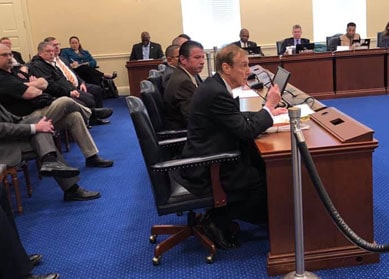
Berman | Sobin | Gross LLP has handled hundreds of workers’ compensation jury trials and has argued appeals before both of Maryland’s highest courts. For a communication worker facing a contested claim, this appellate record matters. Insurers know which law firms will push a case past the Commission and which ones will not. The firm’s reputation for taking difficult claims through the full range of available proceedings is part of how it gets results that other firms do not.
Owings Mills sits in a corridor where a significant number of telecommunications and cable infrastructure employers operate, and where regional offices for several national communication companies maintain field operations teams. Workers based out of facilities near Routes 795, 140, and the I-695 interchange who suffer on-the-job injuries will typically have their Commission matters heard in Baltimore, making familiarity with that system directly relevant to their claim.
When an Employer or Insurer Disputes Your Injury
Contested workers’ compensation claims in the communication industry follow predictable patterns. The employer’s insurer orders an independent medical examination by a physician it selects. That doctor, whose practice depends substantially on work from employers and carriers, produces a report questioning whether the injury is occupational in nature, minimizing the degree of permanent impairment, or opining that you have reached maximum medical improvement sooner than your own treating physicians believe. The claim is then denied or an inadequate settlement figure is offered.
This is not an unusual set of facts. It is the ordinary course of a disputed communication workers’ compensation claim, and navigating it requires more than just filing paperwork. One of Berman | Sobin | Gross LLP’s founding attorneys literally wrote the two-volume treatise that Maryland practitioners use as the authoritative reference on workers’ compensation in the state. When the firm challenges a defense medical opinion or contests a premature finding of maximum medical improvement, it does so from a position of substantive authority that matters in hearings and in court.
If you have already received a denial, or if another attorney has declined to pursue your claim past the administrative stage, that is not the end of the road. The firm regularly takes on cases that other attorneys have passed on, including those that clearly require Commission hearings and subsequent court proceedings to resolve.
Answers to Questions Owings Mills Communication Workers Ask Most
Can I file a workers’ compensation claim if my injury developed gradually rather than from a single incident?
Yes. Maryland workers’ compensation law covers both acute injuries from a specific event and conditions that develop over time from repeated occupational exposure. Cumulative trauma injuries, repetitive stress disorders, and occupational diseases all qualify. The key is establishing that your work duties were a significant contributing cause, which requires medical documentation and often expert testimony about the relationship between your specific job tasks and your condition.
My employer says my hearing loss is just age-related. How does Maryland law handle that?
Maryland’s occupational deafness statute does include an age-based deduction, but the way that deduction is calculated and the date from which it is measured have been the subject of significant litigation. Courts have clarified that certain calculations must be made from the last date of injurious noise exposure, not the date of an audiogram. An attorney familiar with this specific area of workers’ comp law can evaluate whether the age deduction being applied to your claim is legally correct.
What if a piece of defective equipment caused my injury on the job?
Workers’ compensation covers work injuries regardless of fault, but if defective equipment was manufactured or distributed by a third party unrelated to your employer, you may also have a separate product liability or personal injury claim against that manufacturer or distributor. These claims run parallel to, not instead of, your workers’ comp claim. Berman | Sobin | Gross LLP handles both workers’ compensation and personal injury matters and can evaluate whether both avenues apply to your situation.
I am back at work on light duty but earning less than before. Am I entitled to any compensation for that wage difference?
Maryland workers’ compensation includes provisions for wage loss benefits when an injured worker returns to light duty at a reduced rate of pay. The benefit calculations depend on the specific circumstances of your injury and your pre-injury earnings. Cases involving workers who regularly earned overtime before an injury require particular attention, because the lost overtime component of your wages is a recognized element of wage-loss calculations under Maryland law.
What if my employer pressures me not to file a claim or threatens retaliation?
Retaliation against an employee for filing a workers’ compensation claim is prohibited under Maryland law. If you have experienced adverse employment action following an injury report or a workers’ comp filing, that is a separate legal issue from your underlying claim and should be addressed directly. An attorney can advise you on both the workers’ compensation process and any retaliation-related rights you may have.
How long does a workers’ compensation claim typically take to resolve in Maryland?
Straightforward claims with limited medical complexity can resolve within months. Disputed claims, particularly those involving permanent disability ratings, complex occupational disease questions, or employer challenges to causation, often take considerably longer and may require Commission hearings, medical depositions, and sometimes court proceedings. The timeline depends heavily on how aggressively the employer’s insurer is contesting the claim and how thoroughly the medical record has been developed.
Does Berman | Sobin | Gross LLP represent workers who speak Spanish?
Yes. The firm has attorneys and staff members who are fluent in Spanish and work directly with Spanish-speaking clients throughout their cases. Language access should never be a barrier to pursuing a valid workers’ compensation claim, and the firm makes sure it is not.
Talk to a Communication Workers’ Injury Lawyer Serving Owings Mills
Berman | Sobin | Gross LLP has spent 35 years representing the working people of Maryland, from Baltimore and its surrounding communities to offices across the state. The firm is the largest workers’ compensation law firm in Maryland representing injured workers, and it has the depth of experience and resources to handle complex communication industry claims from initial filing through trial and appeal. For a communication worker in the Owings Mills area dealing with a denied claim, a disputed injury, or a settlement offer that does not reflect the full scope of what was lost, a conversation with an Owings Mills communication workers injury attorney at this firm is the place to start.