

Owings Mills Hospital Employee Injury Attorney
Hospital work in Owings Mills carries physical demands and occupational hazards that most people outside the healthcare industry never fully appreciate. Nurses, surgical technicians, patient care aides, housekeeping staff, dietary workers, and security personnel all face real injury risk every shift. When that risk becomes reality, the workers’ compensation process in Maryland can be far more complicated than injured healthcare employees expect. The attorneys at Berman | Sobin | Gross LLP have spent 35 years representing workers throughout Maryland, including hospital employees across the Baltimore County and Greater Baltimore region, in claims that range from straightforward to fiercely contested.
Why Hospital Work in Owings Mills Produces Some of Maryland’s Most Complex Injury Claims
The healthcare environment creates injury patterns that don’t always fit neatly into how insurers and employers prefer to categorize workers’ compensation claims. A patient care technician who develops a herniated disc after years of patient transfers may have difficulty pinpointing a single incident. A nurse who contracts a bloodborne pathogen or suffers a needlestick injury faces an occupational exposure claim that requires its own procedural track. An emergency room technician assaulted by a patient while restraining them faces questions about whether the employer took adequate precautions, which can affect both the workers’ comp claim and potential third-party liability.
Large hospital systems in the Owings Mills area operate under self-insurance programs or use carriers with significant resources dedicated to managing claim costs. That means the opposing side in your claim typically has experienced adjusters and medical reviewers whose job is to limit what your case is worth. The hospital’s occupational health department may conduct an initial evaluation, but that examination serves the employer’s interests, not yours. Getting an independent medical evaluation and understanding how Maryland’s Workers’ Compensation Commission weighs competing medical opinions can be the difference between a claim that produces meaningful benefits and one that stalls at denial.
The Injuries That Come Up Most Often for Owings Mills Healthcare Workers
Patient handling remains the single largest source of serious injury among hospital workers in Maryland. Lifting, repositioning, and ambulating patients places continuous strain on lumbar discs, shoulders, and knees. Even in facilities with mechanical lift equipment, the equipment is not always available when it is needed, and time pressure in a clinical setting encourages shortcuts. A single transfer with a bariatric patient, or a sudden lunge to catch a falling patient, can produce a tear, fracture, or disc injury that requires surgery and months of rehabilitation.
Slip and fall injuries are common in clinical environments where wet floors, spilled fluids, and rapid foot traffic converge. Needlestick and sharps injuries create occupational disease concerns that unfold over weeks or months. Repetitive motion injuries among pharmacy workers, lab technicians, and surgical staff develop gradually, which means the date of injury, a critical element in any Maryland workers’ compensation filing, often becomes a point of dispute. Workplace violence injuries, increasingly common in emergency and inpatient psychiatric settings, may involve both workers’ comp and personal injury claims depending on the facts.
Each of these injury types has specific evidentiary and procedural requirements. A claim for a gradual-onset repetitive injury requires documentation connecting your work tasks to the diagnosed condition. An occupational disease claim follows different rules than a traumatic accident claim under Maryland law. Getting the initial filing right, and building the medical record to support the theory of the claim, matters at every stage, including any appeal to the circuit court if the Commission’s award needs to be challenged.
What Hospital Employers and Their Insurers Typically Dispute
The most common defense in hospital employee injury cases is that the injury either did not arise out of the employment or did not occur in the course of employment. For healthcare workers, this can translate into arguments that a back injury was pre-existing, that a slip occurred during a personal errand rather than a work task, or that a psychological condition following a workplace assault is not compensable under Maryland law. These are not frivolous defenses from the employer’s perspective; they reflect strategies that sometimes succeed when injured workers appear without legal representation at Commission hearings.
Disputes over average weekly wage are also common for hospital employees who work irregular schedules, hold per-diem positions, or regularly pick up overtime shifts. Because Maryland workers’ compensation benefits are calculated as a percentage of the average weekly wage, how that figure is determined has a direct impact on what temporary total disability, temporary partial disability, and permanent partial disability payments actually look like. Hospital employees who worked substantial overtime before an injury can lose significant benefit value if the wage calculation is not challenged properly.
Vocational rehabilitation, light duty offers, and return-to-work disputes also arise frequently in healthcare settings. If your employer offers you a light duty position that you are physically unable to perform, that offer can affect your benefits unless it is properly addressed. If the light duty position does not exist in any meaningful sense, your attorney can challenge it at the Commission level.
Questions Hospital Workers in Owings Mills Ask About Their Claims
Do I have to use the hospital’s occupational health clinic for my treatment?
Maryland workers’ compensation law gives employers and insurers some authority over initial medical treatment, but injured workers have the right to seek evaluation and treatment from physicians of their choice in many circumstances. The specifics depend on the nature of your employer’s medical panel arrangement and when you are in the claims process. An attorney can advise you on how to preserve your treatment choices without inadvertently forfeiting benefits.
What happens if I am injured by a patient who becomes violent?
Workers’ compensation covers the injury itself, regardless of whether a patient or visitor was the source. In some situations, a separate personal injury claim against a third party may also be available, depending on whether a third party bears responsibility for the dangerous condition or the patient’s actions. These cases require careful analysis to identify all potential sources of recovery without jeopardizing the workers’ comp claim.
I have a pre-existing back condition. Does that mean my claim will be denied?
No. Maryland workers’ compensation law recognizes that a work injury can aggravate, accelerate, or combine with a pre-existing condition and still be compensable. The key is establishing that the work event or work activity made the condition worse than it would have been otherwise. Medical documentation and expert opinion both play important roles in making that showing.
Can my employer retaliate against me for filing a workers’ compensation claim?
Retaliation against an employee for filing a workers’ compensation claim is prohibited under Maryland law. If you experience adverse employment action after filing, that conduct may give rise to a separate legal claim. Documenting the timeline of events carefully is important if you believe retaliation is occurring.
How long do I have to report my injury and file a claim?
Maryland requires injured workers to notify their employer promptly and to file a claim with the Workers’ Compensation Commission within a specific time frame that varies depending on the nature of the injury. Delays can create procedural problems that are difficult to overcome. Consulting an attorney early, even before formal filing, is the most reliable way to make sure no deadlines are missed.
What if the Commission denies my claim or awards less than I believe I am entitled to?
Commission decisions can be appealed to the circuit court, and from there to Maryland’s appellate courts if necessary. Berman | Sobin | Gross LLP has handled hundreds of workers’ compensation jury trials and has appeared before both of Maryland’s highest courts. Appeals require different preparation and legal argumentation than administrative hearings, and having attorneys who are experienced at every level of the process matters when a claim needs to go further than the Commission.
I was told my injury is not serious enough to need an attorney. Is that true?
Employer representatives and insurers have an interest in resolving claims quickly and at minimal cost. An evaluation from an attorney who represents injured workers, not employers, will give you a clearer picture of what your claim is actually worth and whether the offer or resolution being proposed is fair relative to Maryland law and the specific facts of your situation.
Representing Owings Mills Hospital Employees Across the Full Scope of Their Claims
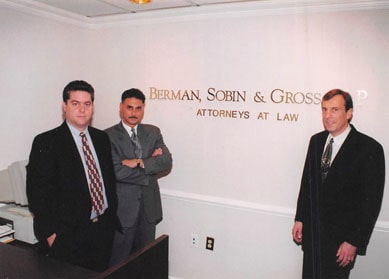
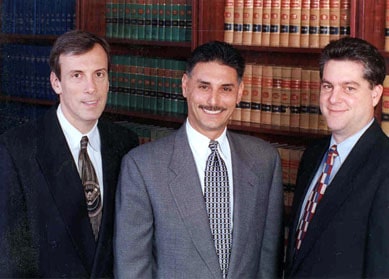
Berman | Sobin | Gross LLP is the largest workers’ compensation firm in Maryland representing injured workers. The firm’s attorneys have handled tens of thousands of Commission hearings, and the depth of that experience means the firm understands how Baltimore County claims are litigated in practice, not just in theory. One of the firm’s founders authored the definitive two-volume treatise on workers’ compensation in Maryland, a resource that continues to be relied on by practitioners throughout the state. That level of institutional knowledge shapes how the firm builds and argues claims at every stage, from the initial filing through hearings, appeals, and circuit court proceedings when necessary. For hospital employees in Owings Mills dealing with the aftermath of a work injury, that foundation matters.
When you connect with Berman | Sobin | Gross LLP, the attorney assigned to your case stays with you throughout the process. There is no handing off to a paralegal or junior staff member as your hearing approaches. The firm also has attorneys and staff members fluent in Spanish, so language is not a barrier for any client who needs that assistance. To speak with an Owings Mills hospital employee injury attorney about your specific situation, contact the firm’s offices in Lutherville, Baltimore, Gaithersburg, or Frederick for a confidential case analysis.