

Odenton Construction Worker Injury Attorney
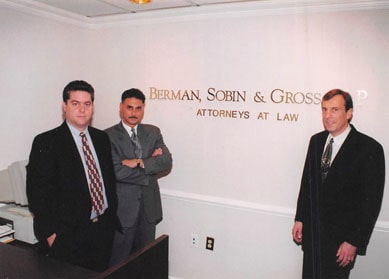
Construction is one of the most physically demanding and genuinely dangerous industries in Maryland. Workers on Odenton job sites deal with heavy equipment, unstable scaffolding, high-voltage electrical systems, trenching and excavation work, and shifting ground conditions near the major development corridors running through Anne Arundel County. When something goes wrong on one of these sites, the consequences are rarely minor. Broken bones, traumatic brain injuries, crush injuries, spinal damage, and severe burns are the kinds of outcomes that send construction workers to trauma centers, not urgent care clinics. If you have been hurt on a construction site in or around Odenton, you need to understand what workers’ compensation in Maryland actually covers for your type of injury, and whether a third-party claim may be available alongside it. The attorneys at Berman | Sobin | Gross LLP have been representing Maryland’s injured workers for 35 years, and that representation includes the full range of construction injuries that come through the workers’ compensation system.
Why Odenton Construction Sites Generate Complex Injury Claims
Odenton sits in a part of Anne Arundel County that has seen sustained commercial and residential development for years, driven in part by proximity to Fort Meade and the Route 32 and Route 3 corridors. That kind of sustained construction activity means a higher concentration of active job sites, more subcontractor layering, and more complex employer relationships than you might see in a quieter market. That complexity matters legally, because one of the first questions in any construction injury claim is who exactly is responsible, and the answer is rarely as simple as pointing to one employer.
On a typical Odenton construction project, a general contractor oversees the overall site and typically employs multiple subcontractors who bring in their own crews. A roofer working for a subcontractor may have almost no direct relationship with the general contractor, and yet the general contractor controls site conditions, sets safety protocols, and decides which equipment gets used and maintained. When a fall from scaffolding or a trench collapse injures a subcontractor’s employee, the liability picture involves multiple parties, and workers’ compensation from the direct employer may be only one piece of what an injured worker is entitled to pursue.
Maryland law allows injured workers to file a workers’ compensation claim through their employer while separately pursuing a personal injury claim against a third party whose negligence contributed to the injury. For construction workers, third parties often include general contractors, property owners, equipment manufacturers, or other subcontractors on the same site. These two claims run parallel to each other, not in conflict, and the combined recovery available through both is almost always greater than what workers’ compensation alone provides. Getting that dual path right from the beginning requires attorneys who understand both the Maryland Workers’ Compensation Commission process and civil litigation, because the decisions made early in a claim affect what options remain available later.
The Most Serious Injuries Odenton Construction Workers Face
Falls from elevation are the leading cause of fatal construction injuries nationally, and Maryland is no exception. Scaffolding collapses, unsecured ladders, unguarded floor openings, and falls from rooftops or structural steel all produce injuries that are catastrophic rather than merely serious. A worker who falls from 15 or 20 feet may survive but face multiple surgeries, a long and uncertain rehabilitation process, and the very real possibility that returning to the same type of physical work is no longer an option. Workers’ compensation provides wage replacement and medical benefits, but those benefits have limits that may not reflect what a construction worker with a severe injury will actually face over the course of a lifetime.
Struck-by injuries from falling tools or equipment, collapsing walls, and swinging loads on cranes represent another major category. Electrocution injuries on construction sites with inadequate lockout/tagout procedures can cause cardiac damage, neurological injury, and severe burns that require years of medical treatment. Trench collapses, which remain disturbingly common even on regulated job sites, can produce crush injuries to the chest and abdomen, asphyxiation, and traumatic injuries across multiple organ systems simultaneously. Each of these injury types generates a different set of medical and legal considerations, and each requires an attorney who understands how workers’ compensation evaluates permanent disability for that specific kind of harm.
One area where injured construction workers consistently run into problems is the assessment of permanent partial disability. When a worker’s injury does not result in total incapacity but leaves lasting functional limitations, the workers’ compensation system assigns a disability rating that determines ongoing benefits. Those ratings are contested. Employers and their insurers retain medical experts to evaluate injured workers, and those evaluations frequently produce ratings that understate what the worker is actually living with. Having legal representation at this stage is not a formality. The rating that gets accepted becomes the foundation for the benefit calculation, and a low rating accepted without challenge can shortchange a worker significantly over time.
Decisions That Shape the Outcome of a Construction Injury Claim
One of the first decisions an injured construction worker makes, often before consulting any attorney, is how to report the injury. Maryland requires injured workers to notify their employer promptly, and delays in reporting can complicate a claim even when the injury is genuine and serious. But reporting the injury is only the starting point. The next decisions, including what medical care to pursue, how to respond to an insurance adjuster’s initial contact, and whether to accept any early settlement discussions, carry significant consequences that are not obvious to someone who has not worked with these claims before.
Workers’ compensation insurers are not adversaries in the way that opposing parties in litigation are, but they are also not neutral administrators of benefits. They have financial incentives to close claims efficiently and to limit the extent of permanent disability recognized under a claim. An injured worker who communicates extensively with an insurer before consulting an attorney may inadvertently frame their injury in ways that narrow their recognized limitations. This is not about being combative with the insurer. It is about understanding that the information shared early in a claim becomes part of the record that later evaluations and benefit calculations are built on.
The decision about whether to pursue a third-party claim alongside the workers’ compensation claim is perhaps the most consequential one, because Maryland law imposes time limits on civil personal injury claims that run independently of the workers’ compensation timeline. Missing the opportunity to identify potentially responsible third parties and preserve that civil claim can permanently close off a significant avenue of recovery. For construction workers whose injuries come from site conditions controlled by someone other than their direct employer, or from equipment that malfunctioned in ways that suggest a defect, that civil claim may ultimately produce more recovery than the workers’ compensation benefits alone.
Answers to Questions Odenton Construction Workers Actually Ask
Can I receive workers’ compensation benefits even if I was working as an independent contractor on the site?
The classification of a worker as an independent contractor does not automatically disqualify them from workers’ compensation coverage in Maryland. Whether a worker is truly an independent contractor or has been misclassified depends on a legal analysis of the actual work relationship, including who controlled the work, who provided equipment, and how the work was structured. Construction industry misclassification is common, and workers who have been told they are contractors should not assume they lack coverage without having that determination reviewed by an attorney.
What happens to my workers’ compensation benefits if I settle a third-party personal injury claim?
Maryland law provides that if an injured worker recovers from a third party, the workers’ compensation insurer is entitled to a portion of that recovery to offset the benefits it has paid. This is called a subrogation interest. The mechanics of how subrogation works in a construction injury case, including how negotiating that lien affects the net outcome for the worker, are something an attorney handles as part of coordinating both claims. It does not mean the two paths cancel each other out; it means they need to be managed together.
The general contractor told me I should file my claim through their insurer rather than my direct employer’s insurer. Who is right?
This situation arises in construction cases because of how Maryland handles workers’ compensation liability when a subcontractor’s employee is injured on a general contractor’s project. Maryland law imposes secondary liability on general contractors for workers’ compensation when a subcontractor fails to carry coverage. The correct carrier depends on the specific facts of how the work was arranged, and sorting it out requires someone with knowledge of how multi-employer construction sites are treated under Maryland’s workers’ compensation statutes.
My employer’s doctor says I can return to work but I still have significant pain and limitations. What can I do?
You are not required to accept the opinion of a physician selected or retained by your employer’s insurer as the final word on your condition or your ability to work. Maryland workers’ compensation law provides mechanisms to contest medical determinations, including presenting opinions from your own treating physicians. An independent evaluation from a physician of your choosing can be a critical counterpoint to an employer-retained opinion, particularly when the discrepancy between what the insurer’s doctor says and what you are actually experiencing is significant.
Does it matter that the injury happened on a federally contracted job site near Fort Meade?
It can matter significantly. Injuries that occur on federal property or in connection with federally contracted work may trigger different coverage frameworks, including the Longshore and Harbor Workers’ Compensation Act or other federal statutes depending on the work and the employer’s contracts. Determining which compensation system covers a particular injury is an early question that shapes the entire strategy for pursuing benefits. This is an area where workers cannot afford to assume the standard Maryland state workers’ compensation process applies without verifying it first.
How long does a construction injury workers’ compensation claim typically take to resolve?
There is no uniform timeline. Straightforward claims with clear causation and complete recovery may resolve in months. Claims involving serious permanent injuries, disputes over disability ratings, or parallel third-party civil litigation routinely extend considerably longer. The Workers’ Compensation Commission has its own hearing schedule, and contested claims go through a process of filings, hearings, and potential appeals before the Commission and the courts. A case that needs to go further through the system is not necessarily a failing; sometimes it is what reaching the right outcome requires.
Is there a deadline for filing a workers’ compensation claim after a construction accident in Maryland?
Maryland law generally requires a workers’ compensation claim to be filed within 60 days of the accident, though there are provisions that can extend this in certain circumstances, including situations where the injury was not immediately apparent. The civil statute of limitations for a personal injury claim against a third party is generally three years from the date of the injury. These deadlines are not flexible, and waiting to seek legal advice delays the point at which an attorney can begin protecting the claim.
Connecting With a Construction Injury Attorney Who Knows This Work
Berman | Sobin | Gross LLP has built its practice on the kinds of claims that other firms sometimes pass over: complex construction cases with disputed liability, serious permanent injuries, and multi-party fact patterns that require real litigation experience to resolve. One of the firm’s founders literally authored the leading treatise on workers’ compensation in Maryland, a resource that continues to guide practitioners throughout the state. The firm’s attorneys have handled hundreds of workers’ compensation jury trials and argued before Maryland’s highest courts on issues that changed the law for injured workers going forward. For an Odenton construction worker who needs someone to handle both the workers’ compensation claim and a potential civil claim against a negligent third party, Berman | Sobin | Gross LLP represents the full range of what that kind of case requires. The firm serves clients throughout Anne Arundel County and across Maryland from offices in Lutherville, Baltimore, Gaithersburg, and Frederick. Contact Berman | Sobin | Gross LLP to have your claim evaluated by an Odenton construction injury attorney who will stay with you through every stage of the process.