

Laurel Firefighters, Paramedics & EMTs Injury Attorney
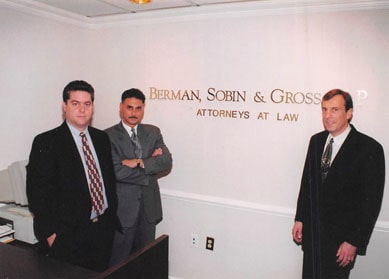
Firefighters, paramedics, and EMTs in Laurel run toward the situations that send everyone else in the opposite direction. That reality shows up in injury statistics, in long-term health outcomes, and in the complexity of the workers’ compensation claims that follow. When a Prince George’s County firefighter or an EMT working out of the Laurel area suffers a serious injury or develops an occupational disease, the path to benefits is not always straightforward. Berman | Sobin | Gross LLP’s Laurel firefighters, paramedics and EMTs injury attorneys have spent 35 years representing exactly these workers across Maryland, and the firm understands both the physical demands of this work and the legal fights that often follow.
What Makes Injury Claims for Laurel’s First Responders Legally Different
Maryland law treats public safety employees differently than most other workers when it comes to workers’ compensation. Certain injuries and illnesses carry a presumption that they are job-related, which shifts the burden from the injured worker to the employer. Heart disease, lung disease, hypertension, and certain cancers fall within that presumption for firefighters and other public safety personnel under Maryland statute.
That presumption sounds significant, and it is. But employers and their insurers regularly challenge it. They hire their own medical experts to dispute the connection between the illness and the job. The firm’s appellate record includes City of Frederick v. Shankle, a case in which attorneys at Berman | Sobin | Gross LLP successfully argued that employer medical experts who claim the public safety occupational disease presumption is not scientifically sound should not be permitted to testify. That ruling matters directly to first responders across the state, including those serving in and around Laurel.
EMTs have their own recognized status under Maryland law. In Downer v. Baltimore County, the firm established that emergency medical technicians are public safety employees entitled to the same enhanced compensation benefits as other public safety workers. If you are an EMT and have been told your benefits are limited to standard workers’ compensation, that position may not hold up.
The Injuries That Show Up Most Often in These Claims
Firefighting and emergency medical work produce a specific injury profile. Acute trauma from structure fires, vehicle accidents during emergency response, and physical exertion injuries during rescue operations are common. So are the slower-developing conditions that build over years: hearing loss from repeated noise exposure, respiratory disease from smoke inhalation, and cardiovascular conditions tied to the physical and psychological stress of the job.
Laurel sits at the edge of both Prince George’s County and Howard County, with significant highway infrastructure including Route 1, the Baltimore-Washington Parkway, and Interstate 95 running through and around the area. First responders here handle vehicle accidents on some of the most heavily traveled corridors in the state. Traumatic injuries from those scenes, as well as from fire suppression work in a mix of residential and commercial properties, represent a significant portion of claims.
Occupational cancer claims are increasing among firefighters nationally, and Maryland law includes cancer within the presumption framework for eligible public safety employees. These claims tend to be heavily contested and require careful legal handling from the start.
The firm has handled claims involving all of these conditions, including cases that required going beyond the Workers’ Compensation Commission and into jury trials or appeals before Maryland’s appellate courts.
Retirement, Light Duty, and Overtime: Benefits Questions That Come Up After an Injury
First responders often face a specific set of financial complications that other injured workers do not. Some are placed on light duty and continue drawing a salary, which can create confusion about whether they are still entitled to compensation for lost wages. In Montgomery County v. Deibler, Berman | Sobin | Gross LLP established that public safety workers receiving full salary on light duty can still receive compensation for overtime wages they had been regularly earning prior to their injury. For firefighters and paramedics whose income includes substantial overtime, this distinction is significant.
Others are moved toward disability retirement following a serious injury. There is a common assumption that receiving service-connected disability retirement ends eligibility for vocational rehabilitation services. The firm addressed that in Fikar v. Montgomery County, Maryland, establishing that injured workers receiving service-connected disability retirement remain eligible for vocational rehabilitation.
The interaction between workers’ compensation benefits, pension or retirement systems, and disability programs is genuinely complicated. How a claim is handled early in the process can affect what is available later. That is one reason why having counsel from the outset tends to produce better outcomes than trying to navigate the initial stages alone and bringing in an attorney only after something goes wrong.
Answers to Questions Laurel First Responders Ask About Their Claims
I was injured while responding to an emergency call. Does it matter that I was outside my usual district?
Generally, Maryland workers’ compensation coverage follows the employment relationship, not the geographic location of the incident. If you were acting within the scope of your employment when injured, the location of the call or the jurisdiction you entered typically does not affect your right to file a claim. Specific facts matter, and it is worth discussing the details of your situation with an attorney.
My employer says my heart condition is not related to my work. What does the presumption actually require?
The presumption under Maryland law means your employer bears the burden of rebutting the job-related connection, not that you automatically receive benefits. Employers will often introduce medical experts to challenge the presumption. As established in City of Frederick v. Shankle, those experts face limits on what testimony they can offer. The presumption is meaningful, but it does not eliminate the fight. Having an attorney who knows how to defend the presumption under challenge is what makes the difference in these cases.
I retired from the fire department. Can I still file a claim for an occupational disease?
Yes, in many circumstances. The presumption for heart, lung, and hypertension conditions was established to apply to public safety workers even after retirement, as confirmed in Montgomery County v. Pirrone. Occupational disease claims have their own rules around timing, and the window to file is not unlimited, so speaking with an attorney promptly is advisable.
How is hearing loss calculated for firefighters under the occupational deafness statute?
This was addressed in Montgomery County v. Cochran and Bowen, where Berman | Sobin | Gross LLP clarified that the age deduction for hearing loss is calculated from the last date of injurious noise exposure, not from the date of the audiogram. This distinction can materially affect the value of an occupational deafness claim.
Another attorney told me my case was not worth pursuing. Should I accept that?
Not necessarily. Berman | Sobin | Gross LLP specifically takes on cases that other firms have declined or determined are too complex. The firm has handled hundreds of jury trials and appeals before Maryland’s highest courts. If your claim was turned down or an attorney told you it could not go further than an administrative hearing, it is worth getting a second evaluation.
My department’s insurance carrier wants me to see their doctor. Do I have to go?
Independent medical examinations requested by the employer or insurer are a standard part of the workers’ compensation process in Maryland. However, how you prepare for that examination and how the results are used can significantly affect your claim. An attorney can explain what to expect and how to respond if the insurer’s physician’s findings conflict with your treating physician’s opinion.
Are my dependents protected if I am killed in the line of duty?
Maryland workers’ compensation law includes death benefits for dependents of workers killed in the course of their employment. The firm’s case history includes work on behalf of widows and dependents of deceased injured workers. In Collins v. Montgomery County, Berman | Sobin | Gross LLP established that widows and dependents of deceased injured workers are not barred from pursuing benefits. These cases are among the most important the firm handles.
Berman | Sobin | Gross LLP’s Work for Laurel Area First Responders
Berman | Sobin | Gross LLP is the largest workers’ compensation law firm in Maryland representing injured workers, with offices throughout the state and attorneys and staff who are fluent in Spanish. When a client comes to the firm, one attorney stays with that client as the primary point of contact throughout the case. The firm’s founders helped shape Maryland workers’ compensation law, including through a two-volume treatise that remains a primary reference for practitioners statewide. That background means the attorneys here do not simply process claims. They litigate them when litigation is required.
For Laurel firefighters, paramedics, and EMTs who need a workers’ compensation attorney familiar with the specific legal protections Maryland affords public safety employees, Berman | Sobin | Gross LLP offers the depth of experience these cases demand. Contact the firm to discuss your claim and get a clear assessment of where you stand.