

Laurel Retail Worker Injury Attorney
Retail work looks straightforward from the outside. Stock the shelves, assist customers, run the register. What customers rarely see is the physical toll the job takes: the hours on concrete floors, the heavy lifting done without proper equipment, the spills that management did not address quickly enough, the parking lots where workers walk to and from their cars in the dark. When something goes wrong in a Laurel retail environment, the injury is real, the lost wages are real, and the path forward through Maryland’s workers’ compensation system is anything but simple. Berman Sobin Gross LLP’s Laurel retail worker injury attorneys have spent 35 years representing the working people of Maryland, and that includes the thousands of employees who keep Laurel’s shopping centers, grocery stores, warehouses, and big-box retailers running every day.
The Injuries That Retail Work Actually Produces in Laurel
Retail injuries are not all dramatic. Many of the most serious ones build up gradually or happen in ordinary moments that nobody anticipated. A stock associate twists a knee stepping off an unstable ladder in a crowded back room. A cashier develops carpal tunnel after years of repetitive scanning motions. A grocery worker slips on a wet floor near the loading dock that has been a known problem for months. A loss prevention employee is assaulted confronting a shoplifter.
Laurel has a dense concentration of retail employment. The Laurel Towne Centre, the shopping corridors along Route 1, and the warehouse and distribution operations along the I-95 corridor all generate significant foot traffic, employee headcount, and corresponding injury risk. Workers in these environments deal with lifting injuries to the back, shoulders, and neck; repetitive strain conditions that worsen over time; falls from heights or on level surfaces; and injuries caused by defective equipment like forklifts, pallet jacks, and commercial carts.
The injury matters. But equally important is how it was documented, when it was reported, and whether the employer had notice of the underlying hazard. These details become decisive when a workers’ compensation claim is contested, which is more common than most retail employees expect.
What Retail Employers and Their Insurers Do When You File a Claim
Large retail operations are not passive participants in the workers’ compensation process. National chains and regional grocery employers carry insurance policies managed by adjusters whose job is to limit claim payouts. They may dispute whether your injury happened at work, argue that a pre-existing condition is responsible for your symptoms, or authorize limited medical treatment that falls short of what your physician recommends.
Some injured retail workers are offered quick settlements that sound generous until they understand what rights they are signing away. Others are sent to company-selected doctors whose opinions conveniently minimize the extent of the injury. Workers who do not understand how Maryland’s workers’ compensation system works are the ones most likely to accept inadequate outcomes.
Maryland’s workers’ compensation law does provide meaningful protections. Injured workers are entitled to medical treatment for their compensable injury, temporary total disability benefits if they cannot work, and permanent disability benefits if the injury leaves lasting effects. But entitlement on paper and what you actually receive are two different things. Getting what you are owed typically requires knowing when to push back and how.
Reporting Timelines and Why Retail Workers Sometimes Wait Too Long
One of the most common problems in retail injury claims is delay. Retail culture often discourages reporting. Workers fear shift reductions, managerial friction, or being labeled a problem employee. Some workers report the injury but are told informally by a supervisor to “wait and see” before filing anything official. Others assume a minor-seeming injury will resolve on its own, then discover weeks later that it has not.
Maryland law requires notice to an employer within a specific timeframe, and filing a claim with the Workers’ Compensation Commission has its own deadlines. Missing these windows can eliminate your ability to recover benefits entirely, regardless of how serious your injury is or how clearly it was caused by your job.
Repetitive stress injuries and occupational conditions add another layer of complexity, because the date of injury for these claims is not always obvious. A worker who developed a chronic shoulder condition from years of overhead stocking may not know what “date” to report, and getting that wrong can be costly. These are exactly the situations where having a workers’ compensation attorney from the start changes the outcome.
Questions Laurel Retail Workers Ask About Their Injury Claims
I did not tell my employer about my injury right away. Have I lost my right to file a claim?
Not necessarily, but time matters. Maryland law has notice and filing requirements that must be satisfied. The sooner you act after realizing your injury is work-related, the better your position. An attorney can assess whether any exceptions apply to your specific situation and help you file correctly.
My employer sent me to their doctor and the doctor said I can go back to work. Do I have to?
An employer-selected medical provider’s opinion is not the final word. You have the right to seek an independent medical evaluation, and discrepancies between medical opinions are routinely addressed through the Maryland Workers’ Compensation Commission. If your own physician disagrees with the employer’s doctor, that matters and should be documented.
I work part-time at a Laurel retailer. Am I covered by workers’ compensation?
Part-time status does not disqualify you from Maryland workers’ compensation coverage. Most employees, regardless of hours, are covered under their employer’s workers’ compensation insurance. Your benefits would be calculated based on your average weekly wages, which for part-time workers may reflect your actual earnings at the time of injury.
The injury happened because of a broken piece of equipment the store had not repaired. Does that matter?
It matters in how strongly your claim can be documented, and it may matter beyond the workers’ compensation system as well. If a third party, such as an equipment manufacturer or a maintenance contractor, contributed to the unsafe condition, there may be an avenue for a separate civil claim alongside your workers’ compensation benefits. These situations warrant careful evaluation.
My employer is saying my back problems are pre-existing and not from this job. How do I handle that?
Pre-existing condition arguments are common in retail injury cases, particularly for back and joint injuries. Maryland law allows compensation for aggravation of a pre-existing condition if the work activity contributed to the worsening of that condition. Medical evidence and the specific circumstances of how your injury occurred are central to rebutting these arguments.
What benefits can I receive if I cannot return to my retail job because of my injury?
Workers who cannot return to their previous position may be entitled to temporary total disability benefits during recovery, permanent partial disability benefits if the injury leaves lasting functional loss, and potentially vocational rehabilitation services to help transition to other work. The specific benefits depend on your injury and its effects on your ability to work.
What if my employer retaliates against me for filing a workers’ compensation claim?
Retaliation for filing a workers’ compensation claim is prohibited under Maryland law. If you experience adverse employment actions after filing, including termination, demotion, or schedule manipulation, those actions can be challenged separately from your underlying injury claim.
Working with Berman Sobin Gross LLP on Your Retail Injury Claim
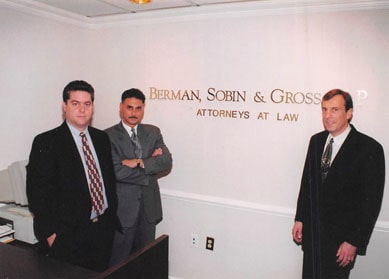
Berman Sobin Gross LLP is the largest workers’ compensation law firm in Maryland representing injured workers. With offices in Lutherville, Baltimore, Gaithersburg, and Frederick, the firm has the reach and resources to serve clients throughout Prince George’s County, including Laurel and the surrounding communities.
The firm has handled not just administrative hearings before the Workers’ Compensation Commission but also workers’ compensation jury trials and appeals before Maryland’s highest courts. One of the firm’s founders authored a two-volume treatise that continues to serve as the authoritative reference on Maryland workers’ compensation law. That depth of knowledge matters when your claim is contested and an insurer is pushing back hard.
Attorneys at this firm stay with their clients from the initial claim through resolution. You will know who your attorney is, and that attorney will know your case. For Spanish-speaking clients, the firm has attorneys and staff members who communicate fluently in Spanish, removing any barrier to full participation in your case.
Retail workers in Laurel do not always get the credit they deserve for the physical demands of their jobs. Berman Sobin Gross LLP has spent 35 years making sure injured workers throughout Maryland receive the benefits and support they have earned.
Speak with a Laurel Workers’ Compensation Attorney for Retail Employees
A retail injury can upend your income, your recovery, and your family’s stability faster than most people anticipate. The decisions you make in the first weeks after an injury, from how you report it to which medical providers you see to whether you accept an early offer, can shape the entire outcome of your claim. Berman Sobin Gross LLP offers confidential case analyses for injured retail workers in Laurel and throughout Maryland. Reach out to a workers’ compensation attorney for Laurel retail employees to get a straightforward assessment of where your claim stands and what your options are.