

Laurel Transit Worker Injury Attorney
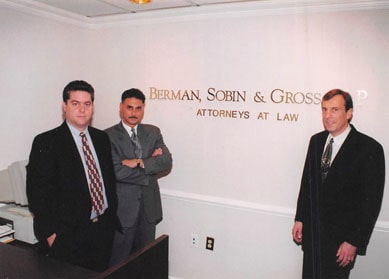
Transit work in Laurel puts people directly in the path of serious harm every shift. Bus operators navigating Route 1 and the Beltway corridors, maintenance crews working the MTA facilities, dispatchers, fare collectors, and track workers all face injury risks that most office workers never encounter. When something goes wrong, the workers’ compensation system in Maryland is supposed to catch you. But transit employers and their insurers are not passive participants in that process. A Laurel transit worker injury attorney at Berman | Sobin | Gross LLP has spent 35 years representing exactly these workers, from the bus yards to the hearing room.
What Makes Transit Injuries Different From Other Workers’ Comp Claims
The injury patterns in transit work are genuinely distinct, and they matter when building a claim. A warehouse worker who lifts a heavy box and injures their back has a straightforward exposure story. Transit workers deal with cumulative exposures, unpredictable passenger interactions, vehicle collisions during commercial operation, and long hours in constrained seated positions that wear down the spine over years. None of these fit neatly into the “one incident, one injury date” model that insurers prefer.
Repetitive stress injuries, occupational hearing loss from engine noise, respiratory conditions from diesel exhaust, and soft tissue damage from constant vibration are all real occupational consequences of transit work. Maryland law recognizes occupational disease claims, but they require careful documentation linking the medical condition to the specific work environment. That connection does not build itself. A claim file that lacks the right medical evidence, submitted without support, is easy to minimize or deny.
There is also the question of passenger-related assaults. Bus operators in the Prince George’s County and Laurel area have faced violent incidents that result in genuine physical injury and lasting psychological harm. Workers’ compensation in Maryland does cover mental injury resulting from a physical assault at work, but documenting those claims requires knowing what to gather and when. Missing steps in the early stages of a claim can cost workers benefits they are fully entitled to receive.
The Presumption Laws That Apply to Some Transit Workers
Maryland has enacted a set of statutory presumptions that shift the burden of proof in workers’ compensation cases involving certain public safety employees. If you work as an EMT, paramedic, or in another public safety classification through a public employer, specific heart, lung, and hypertension conditions may be presumed to be job-related. The attorneys at Berman | Sobin | Gross LLP have litigated these presumptions at the highest levels of Maryland’s courts.
In Downer v. Baltimore County, the firm secured a ruling that EMTs qualify as public safety employees entitled to the same enhanced compensation benefits available to other public safety workers. In Montgomery County v. Pirrone, the firm established that the heart, lung, and hypertension presumption applies even after a worker retires or is off duty when a condition manifests. These are not abstract legal victories. They are rulings that directly expanded the rights of workers in Maryland, including workers in transit-adjacent public safety roles operating in and around Laurel and Prince George’s County.
If you are a transit worker employed by a public agency and you have developed a cardiovascular condition, respiratory disease, or another serious illness, the question of whether a presumption applies to your situation deserves a close look before anyone accepts a denial at face value.
When the Workers’ Comp System Pushes Back
Transit employers, particularly large public agencies, have legal teams and insurers who handle workers’ compensation claims routinely. Their goal is to manage costs, which in practice often means disputing the connection between an injury and the job, questioning the extent of disability, or pushing workers back to duty before they are medically ready.
Independent medical examinations are a common flashpoint. An insurer schedules an examination with a physician of their choosing, that physician produces a report unfavorable to the worker, and suddenly the claim is under pressure. Berman | Sobin | Gross LLP’s attorneys have handled hundreds of workers’ compensation jury trials and appeals and understand exactly how these examinations are used strategically. In City of Frederick v. Shankle, the firm successfully argued that employer medical experts who give opinions that the occupational disease presumption is not scientifically sound should not be permitted to testify. That kind of advocacy takes preparation and deep familiarity with how these disputes actually unfold.
Workers are also sometimes placed on light duty in ways that affect their compensation rights. In Montgomery County v. Deibler, the firm clarified that public safety workers receiving full salary while on light duty can still receive compensation for lost overtime wages they had been earning before injury. For transit workers who depend on overtime to make their take-home pay work, that distinction is significant.
Questions Laurel Transit Workers Ask After a Work Injury
I was injured while driving a bus on a public route. Does it matter whether my employer is a city agency, a county agency, or a private contractor?
Yes, it matters considerably. The specific benefits available, the presumptions that may apply, and the procedural rules governing your claim can all differ based on whether your employer is a public agency or a private company. Public agency employees may have access to enhanced benefits and statutory presumptions that private employees do not. Getting this right at the start of a claim is important because different rules apply to different employer types.
I have been dealing with back pain that built up over years of driving. Is that compensable in Maryland?
Maryland workers’ compensation law covers occupational diseases and conditions that develop gradually from workplace exposures, not only acute injuries from single incidents. Cumulative spinal damage from years of operating heavy vehicles is the kind of claim that requires strong medical documentation connecting the condition to occupational exposure. These cases require more work to build than a single-event injury, but they are legitimate claims that Maryland law supports.
My employer’s doctor says I can return to work, but my own doctor disagrees. What happens now?
This is one of the most common disputes in workers’ compensation. Conflicting medical opinions go before the Maryland Workers’ Compensation Commission, where the weight given to each opinion depends on factors like the physician’s familiarity with your actual job duties, the thoroughness of their examination, and the underlying reasoning in their reports. Having an attorney who understands how to present and challenge medical evidence is particularly important at this stage.
I was assaulted by a passenger. Can I claim workers’ compensation for the psychological effects, not just the physical injury?
Maryland workers’ compensation can cover mental and emotional conditions that arise directly from a physical assault at work. The claim requires documentation tying the psychological condition to the incident. Delays in seeking mental health treatment can complicate the claim, so prompt evaluation and consistent documentation from the beginning matter significantly.
Can my employer retaliate against me for filing a workers’ compensation claim?
Maryland law prohibits employers from retaliating against employees for filing workers’ compensation claims. If you experience discipline, termination, or adverse job actions after filing a claim, that situation warrants legal attention. These cases exist on a separate legal track from the workers’ compensation claim itself, but both tracks may need to be addressed simultaneously.
What if I was hurt in a collision while driving a transit vehicle and a third party was at fault?
When a third party, meaning a driver or other entity separate from your employer, causes your injury, you may have both a workers’ compensation claim and a separate personal injury claim against the responsible party. Coordinating both claims correctly matters because Maryland law requires reimbursement of workers’ compensation benefits from a third-party recovery in certain circumstances. The interplay between these claims needs careful handling.
How long do I have to file a workers’ compensation claim in Maryland?
Generally, Maryland law requires that a workers’ compensation claim be filed within two years of the date of injury or the date of disablement for occupational disease claims. However, notice to your employer is required much sooner, typically within 10 days of the injury in most circumstances. Missing these deadlines can forfeit your right to benefits entirely, which is why acting early matters.
Representing Transit Workers Throughout the Laurel Region
Berman | Sobin | Gross LLP serves injured workers across Maryland, with offices in Lutherville, Baltimore, Gaithersburg, and Frederick. Laurel sits at the crossroads of Prince George’s and Anne Arundel counties, and workers in this area have access to the firm’s full resources regardless of which county their employer falls under. The firm represents workers in cases before the Maryland Workers’ Compensation Commission and, when necessary, carries claims into the courts, including appeals before Maryland’s highest appellate tribunals. For transit workers in the Laurel area dealing with complex occupational disease claims, disputed IMEs, public safety presumption issues, or denial of benefits, that depth of experience is what the situation demands.
Talk to a Transit Injury Attorney in Laurel
Berman | Sobin | Gross LLP is the largest workers’ compensation law firm in Maryland representing injured workers, and the firm does not limit itself to straightforward claims. When transit workers in Laurel face difficult cases, disputed medical evidence, or employers who contest claims from the start, the attorneys here are prepared to take those cases where they need to go. If you have been injured doing transit work in Laurel or the surrounding area, contact Berman | Sobin | Gross LLP for a confidential case analysis with a Laurel transit injury lawyer who will stay with you from the first consultation through the resolution of your claim.