

Greenbelt Communication Workers Injury Attorney
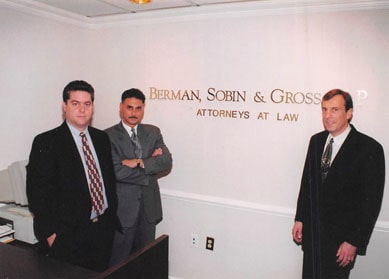
Communication workers in Greenbelt and the surrounding Prince George’s County area face job hazards that rarely make it into safety briefings but show up constantly in workers’ compensation filings. Climbing poles and towers, working in confined cable vaults, operating heavy equipment near active traffic on the Baltimore-Washington Parkway, handling high-voltage lines at facilities clustered around the NASA Goddard corridor. When those hazards result in injury, the workers’ compensation process in Maryland can move in directions that catch people off guard. The attorneys at Berman | Sobin | Gross LLP have spent 35 years representing Maryland workers, including Greenbelt communication workers, and they know how to move these claims forward, through the Maryland Workers’ Compensation Commission if necessary, and into the courts when that is what it takes.
What Makes Communication Worker Injuries in Greenbelt Distinct
Telecommunications, cable, and broadband infrastructure work in Prince George’s County is not desk work. Technicians regularly operate at height, work in poorly ventilated underground spaces, handle energized equipment, and spend hours in vehicles between job sites. The Greenbelt area in particular sits at the intersection of significant federal communications infrastructure and dense residential and commercial development, which pushes crews into tighter, more hazardous working conditions than they would encounter in rural parts of the state.
The injuries that come out of this work reflect those conditions. Traumatic falls from utility poles and ladder trucks. Repetitive stress injuries to the shoulders and wrists from years of cable pulling and equipment installation. Hearing loss from prolonged exposure to equipment noise. Electric shock injuries. Low back injuries from sustained lifting and awkward positioning in crawl spaces and vaults. Injuries sustained when vehicles are struck on roadsides. Each of these has its own medical trajectory, its own documentation requirements, and its own set of arguments that carriers and employers will raise to limit or deny benefits.
Maryland’s workers’ compensation statute covers all of these scenarios, but coverage does not mean payment without a fight. Employers and their insurers scrutinize whether an injury arose out of and in the course of employment, whether pre-existing conditions account for the worker’s current limitations, and whether the medical treatment being sought is causally related to the work injury. A communication worker dealing with a shoulder impingement after years of overhead cable work, for example, will almost certainly face a dispute about what part of the condition is occupational and what part is degenerative. These are exactly the disputes where legal representation makes the difference between a full award and a fraction of what the law allows.
How Maryland’s Workers’ Compensation System Actually Operates in These Claims
Maryland uses an administrative framework that funnels most claims through the Workers’ Compensation Commission before any court gets involved. That means hearings before commissioners who evaluate medical evidence, employer arguments, and the statutory framework that governs your benefits. For communication workers in the Greenbelt area, those benefits can include payment for temporary total or partial disability while recovering, coverage of all reasonable and necessary medical expenses, permanent partial disability awards for lasting impairment, and vocational rehabilitation if the injury prevents a return to the same work.
Occupational disease claims, which frequently arise in communication work through repetitive motion injuries or noise-induced hearing loss, carry their own procedural requirements under Maryland law. The timeline for filing, the proof required to establish the occupational origin of the condition, and the calculation of average weekly wages all operate differently than they do in a straightforward traumatic injury claim. Workers who handle these claims without representation often miss procedural steps or accept settlements that do not account for the full scope of what the law provides.
Berman | Sobin | Gross LLP has handled not just administrative hearings but also hundreds of workers’ compensation jury trials and appeals before Maryland’s appellate courts. The firm’s founding attorneys have shaped the law itself through cases that changed how benefits are calculated and what workers are entitled to receive. That depth matters because employers in the telecommunications and cable industry often have well-resourced legal teams. The answer to that is not a solo practitioner fitting in a few hearing appearances. It is a firm prepared to litigate every stage of the case.
Third-Party Claims When Another Party Caused the Injury
Some communication worker injuries in Greenbelt involve a party other than the employer. A technician struck by a negligent driver while working roadside on Route 193 or the Capital Beltway has a workers’ compensation claim and may also have a civil negligence claim against the driver. A worker injured by defective equipment has a potential product liability claim against the manufacturer. These parallel claims operate under different legal frameworks, different statutes of limitations, and different damage calculations than workers’ comp alone.
The interaction between a workers’ comp award and a third-party recovery involves subrogation rights, lien calculations, and strategic decisions about timing and settlement that require careful analysis. A firm that handles only one side of that equation will leave money on the table or create problems that complicate the other claim. Berman | Sobin | Gross LLP handles both workers’ compensation and personal injury matters, which means clients do not have to coordinate between separate firms while navigating an already stressful situation.
Questions Communication Workers Ask About Their Claims
Can my employer deny my claim if I was partially at fault for the accident?
Maryland workers’ compensation is a no-fault system, which means your own negligence does not bar you from receiving benefits. You do not have to prove the employer did something wrong. The issue is whether the injury arose out of and in the course of your employment, not who was at fault for causing it.
What if my employer says my injury is a pre-existing condition and not work-related?
Pre-existing condition arguments are common in communication worker claims, especially for repetitive use injuries and hearing loss. Maryland law allows recovery when work activity aggravated, accelerated, or combined with a pre-existing condition to cause the current disability. The burden is on having medical evidence that supports the work connection, which is why medical documentation and the right experts matter from the beginning.
My employer says I can do light duty, but there is no light duty work available. Do I still receive benefits?
If your doctor has released you to light duty but your employer cannot actually provide work within your restrictions, you may still be entitled to temporary total disability benefits. This is a common point of dispute in communication worker claims, and how it resolves depends on the specific medical restrictions and what the employer can document about available assignments.
Does it matter which doctor I see for my work injury in Maryland?
Maryland workers’ compensation law gives employers and insurers the right to direct medical care in many circumstances, particularly early in the claim. However, you have the right to seek an independent medical evaluation, and disputes over the adequacy or appropriateness of employer-directed care can be brought before the Commission. The medical record that develops in those early stages carries significant weight throughout your case.
What does a permanent partial disability award cover for a communication worker?
Permanent partial disability benefits compensate for lasting impairment after maximum medical improvement is reached. In Maryland, the Commission uses statutory schedules for certain body parts and evaluates whole-person impairment ratings for conditions affecting the spine and other non-scheduled body parts. For communication workers who suffer injuries to the back, shoulders, or hearing, these awards can be substantial, and the way medical impairment is rated and presented directly affects the outcome.
How long does a workers’ compensation claim in Maryland typically take to resolve?
Straightforward claims with clear medical evidence and no disputes can move through the Commission relatively quickly. Claims involving permanent disability, disputed causation, or occupational disease often take considerably longer, particularly if appeals are involved. The timeline varies based on the complexity of the injury, the employer’s response, and whether hearings are contested.
What happens to my workers’ compensation claim if I also have a personal injury case against a third party?
The two claims proceed on parallel tracks but are legally connected through Maryland’s subrogation rules. Your workers’ compensation carrier may have a lien against a third-party recovery. How those claims are coordinated and resolved involves legal analysis that affects the net amount you receive. This is not a situation where the simpler approach is the better one.
Representing Greenbelt Communication Workers Across the Full Scope of Their Claims
Berman | Sobin | Gross LLP serves workers throughout Prince George’s County and the broader Maryland and Washington, D.C. area from offices in Lutherville, Baltimore, Gaithersburg, and Frederick. For communication workers in Greenbelt dealing with the aftermath of a serious work injury, that reach means the firm is accessible without requiring a long drive when you are already managing medical appointments and recovery. More than geography, the firm brings 35 years of concentrated workers’ compensation experience, a legal team large enough to handle contested and complex litigation, and Spanish-speaking attorneys and staff for clients who communicate more comfortably in Spanish. If you have already been told your claim is too complicated or that it is not worth taking to a hearing, that is a reason to call Berman | Sobin | Gross LLP, not a reason to accept less than the law provides. Greenbelt communication workers injured on the job have real rights under Maryland law, and this firm has the resources and experience to pursue them fully.