

Greenbelt Transit Worker Injury Attorney
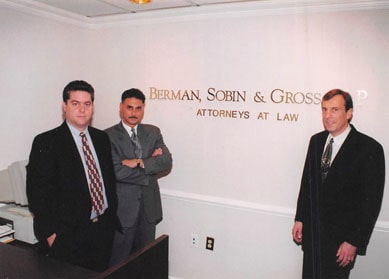
Transit work in Greenbelt and the broader Prince George’s County corridor carries risks that most commuters never consider. Bus operators navigate congested routes on Route 1 and the Beltway. Metro maintenance crews work in active rail environments at the Greenbelt station and the yards adjacent to it. Support staff, dispatchers, and platform workers handle physical demands that accumulate across years of service. When those risks result in a serious injury, the question of what benefits are actually available, and how to secure them, becomes one that deserves careful attention. A Greenbelt transit worker injury attorney at Berman | Sobin | Gross LLP has spent more than 35 years representing the workers who keep Maryland moving, and transit employees are among the workers this firm knows how to represent well.
What Makes Transit Worker Injuries Legally Distinct from Other Workplace Claims
Transit workers occupy a specific legal position that affects how their claims are filed, who the responsible party might be, and what compensation systems apply. A bus operator employed by a county or municipal transit authority may be covered under Maryland workers’ compensation but may also be a public employee, which triggers additional benefit frameworks. Workers employed directly by the Washington Metropolitan Area Transit Authority, known as WMATA, are in a different category still, since WMATA operates under a compact between Maryland, Virginia, and the District of Columbia, and its sovereign immunity issues require navigation that differs from a standard employer claim.
For workers employed by private contractors who maintain transit infrastructure, the analysis changes again. A contractor repairing track, a company maintaining fleet vehicles, or a private operator running shuttle services under a government contract may each present a different combination of employers, insurers, and potential third-party defendants. Identifying which legal framework actually applies to your situation, before filing anything, is not a procedural formality. Getting it wrong can affect which benefits are available and whether a third-party civil claim can run alongside a workers’ compensation case.
The Injury Patterns That Appear Most Often in This Work
The Greenbelt Metro station and the transit infrastructure surrounding it generate a specific set of recurring injury types. Bus operators who work the Prince George’s County routes face risks from vehicle accidents, sudden braking events, and assaults by passengers. These injuries often involve the spine, shoulder, and knee, and they do not always announce themselves immediately after the incident. A driver who absorbs a hard jolt during a collision may feel stiffness for a day, continue working under pressure not to miss shifts, and then find two weeks later that an MRI reveals a disc herniation.
Rail workers and maintenance staff at the Greenbelt yard face different hazards. Exposure to electrical systems, moving equipment, fall risks in confined spaces, and cumulative orthopedic injuries from years of track maintenance are all well-documented in this industry. The challenge these workers face is that their employers and their insurers tend to argue strenuously that degenerative changes seen on imaging were not caused by the work. Rebutting that argument requires understanding both the medical evidence and how Maryland’s workers’ compensation system handles occupational disease and cumulative trauma claims.
Occupational hearing loss is another category worth noting. Workers in bus depots, in the yards, and in signal maintenance regularly work in environments with sustained noise exposure. Maryland has a specific statutory framework for occupational deafness claims, and Berman | Sobin | Gross LLP has litigated that framework before the Maryland Court of Appeals, producing precedent that directly affects how hearing loss claims are calculated for injured workers.
Public Safety Status and What It Means for Certain Transit Workers
Maryland law provides enhanced benefits to public safety employees, recognizing that some workers face elevated occupational risks tied to the nature of their public duties. Transit workers who fall within this classification, including operators and supervisors for certain government-run systems, may be entitled to presumptions that make it easier to connect a heart, lung, or hypertension condition to their work. These are not automatic. Employers contest them, and the legal standards that govern when a presumption applies and when it can be rebutted are not intuitive.
Berman | Sobin | Gross LLP has handled these arguments at the highest levels of Maryland’s courts. The appellate decisions the firm has secured include cases directly addressing when the heart, lung, and hypertension presumption applies to public safety workers and what it takes for an employer’s medical expert to challenge that presumption. For a transit worker in Greenbelt who has developed a cardiovascular condition after years of stress-heavy work, understanding whether public safety status applies to their position is not an academic question. It determines whether a claim is worth pursuing seriously.
What People in This Situation Actually Want to Know
I was injured on a WMATA-operated train platform. Can I file a workers’ compensation claim in Maryland?
If you are employed by WMATA, the situation involves the interstate compact governing the Authority and its specific liability rules. Workers’ compensation may still apply, but the framework is not identical to a standard Maryland employer claim. An attorney who handles transit worker injuries can evaluate the specifics of your employment relationship and identify the correct filing path before a deadline runs.
My employer says my back injury is just degenerative and not work-related. What can I do?
This is one of the most common arguments transit employers and their insurers raise, and it is frequently overstated. Many workers have some level of degenerative change on imaging, but that does not eliminate a workers’ compensation claim if the work activity aggravated, accelerated, or combined with that condition to cause disability. Maryland law recognizes this. Documenting how the work contributed to your current condition is a medical and legal issue that requires careful development of the record.
I kept working after my injury because I could not afford to miss time. Does that hurt my claim?
Not necessarily. Many transit workers continue working after an injury under economic pressure or because symptoms worsen gradually. Maryland’s workers’ compensation system allows claims to be filed within a defined period from the date of injury or the date the disability became apparent, and continuing to work after an injury does not automatically disqualify a claim. However, the longer a claim waits, the more complex the evidentiary picture becomes, which is why it is worth reviewing your situation sooner rather than later.
What if another driver or third party caused my injuries while I was on the job?
A workers’ compensation claim and a separate personal injury claim can coexist when a third party, meaning someone other than your employer, caused your injury. A bus operator hit by a negligent driver while on route, for example, may have both claims available. The two cases involve different legal standards and different compensation structures, and coordinating them requires attention to how a recovery in one case affects the other.
My hearing has gotten worse over my career driving buses in the depot. Is that compensable?
Occupational deafness resulting from sustained workplace noise exposure is specifically addressed under Maryland’s workers’ compensation statutes. There are particular rules about how the loss is measured, what the employer must show, and how the age deduction in the statute is applied. Berman | Sobin | Gross LLP has obtained appellate decisions interpreting these rules in favor of injured workers, so this is an area where the firm has direct and relevant experience.
The workers’ compensation insurer denied my claim. Is there anything left to do?
A denial at the initial stage is not the end of the process. Maryland’s workers’ compensation system includes a hearing process before the Maryland Workers’ Compensation Commission, and decisions from that body can be appealed further into the courts. Berman | Sobin | Gross LLP has handled hundreds of workers’ compensation jury trials and appeals before Maryland’s highest courts. The firm does not treat an administrative denial as a final answer when the facts and law support fighting further.
Do I need to use the doctor my employer’s insurer sends me to?
Maryland workers’ compensation rules govern how medical treatment is authorized and who can direct care. While an employer’s insurer will typically attempt to direct you to specific providers, you have rights regarding independent medical evaluations and second opinions that can significantly affect the outcome of your claim. Understanding those rights early in the process, before opinions are locked in, matters more than most workers realize.
Representing Greenbelt Transit Workers Throughout Their Claims
Berman | Sobin | Gross LLP is the largest workers’ compensation law firm in Maryland representing injured workers, with attorneys and offices across the state including locations accessible to workers in Prince George’s County. The firm represents bus operators, Metro maintenance workers, dispatchers, transit support personnel, and workers employed by the contractors and agencies that keep Maryland’s transit infrastructure running. When you begin working with an attorney at this firm, that attorney stays with you as your primary contact from filing through resolution, whether that means a Commission hearing, a jury trial, or an appeal. For anyone evaluating their options after a transit work injury in or around Greenbelt, the attorneys at Berman | Sobin | Gross LLP are available to review the specifics of what happened and what the realistic path forward looks like. Contact the firm to arrange a confidential case analysis with a Greenbelt transit injury attorney who can give you a straight assessment of where your claim stands.