

Glen Burnie Postal Worker Injury Attorney
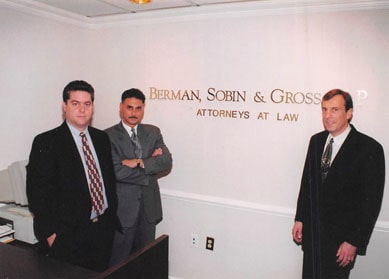
Postal workers in Glen Burnie and throughout Anne Arundel County face a daily grind that most people never see up close. Dog bites on residential routes, slip and falls on icy front steps, repetitive strain from sorting and carrying heavy mail loads, vehicle accidents in USPS fleet trucks, back injuries from loading docks at the Jessup and Linthicum mail processing facilities. Federal employment adds a layer of complexity to these injury claims that most workers’ compensation attorneys rarely encounter. At Berman | Sobin | Gross LLP, representing injured workers is the core of what this firm has done for 35 years, and that includes the distinct federal systems that govern what happens when a Glen Burnie postal worker injury occurs on the job.
Federal Injury Claims Are Not Maryland Workers’ Comp, and That Difference Matters
USPS employees are federal workers. That means the Maryland Workers’ Compensation Commission has no jurisdiction over their injury claims. Instead, injured postal workers file through the Federal Employees’ Compensation Act, administered by the Office of Workers’ Compensation Programs within the Department of Labor. This is a separate system with its own forms, its own deadlines, its own medical authorization process, and its own appeals structure.
The CA-1 form covers traumatic injuries that happen at a specific time and place. The CA-2 covers occupational diseases or conditions that develop over time, which applies to a large number of postal injuries: tendinitis, carpal tunnel syndrome, shoulder impingement, herniated discs from repetitive heavy lifting. Getting the form right, filing it on time, and documenting the connection between your condition and your duties is where claims succeed or get denied at the outset.
OWCP also controls which physicians you can treat with and whether specific treatment gets authorized. Disputes about medical authorization, continuation of pay, and wage loss compensation require navigating an administrative system that does not operate like a state workers’ comp hearing. The process has its own rhythm and its own failure points, and attorneys who handle only state workers’ comp cases regularly underestimate those differences.
The Specific Hazards Postal Workers in Glen Burnie Actually Face
Glen Burnie’s layout, with its mix of residential subdivisions, strip commercial corridors along Crain Highway, and industrial areas near BWI, means letter carriers and delivery drivers are moving through genuinely varied terrain throughout a shift. Dog attacks are among the most common traumatic injuries reported nationally, and the volume of residential stops in Anne Arundel County neighborhoods puts carriers at real risk. USPS generally tracks dog incident data by ZIP code, and carriers themselves know which routes come with hazards.
Slip and fall injuries spike during Maryland winters. Front walks are not always treated. Mail processing facilities have their own injury profile: forklift traffic, conveyor equipment, high-volume repetitive sorting tasks. Long-haul driving between facilities contributes to both acute accidents and chronic musculoskeletal conditions. None of these are unusual in the postal worker injury world, but they each require specific documentation and a specific approach to connect the medical condition to the work activity under OWCP standards.
One underappreciated issue is the second injury. A carrier who sustains a knee injury on a Glen Burnie residential route may later develop a hip or lower back condition as a result of compensating for that knee. OWCP does allow consequential conditions to be claimed, but they require their own medical development and their own formal acceptance. Missing that step leaves injured workers with partial coverage for an injury that stems directly from their accepted claim.
When the USPS Disputes Your Claim or Stops Your Benefits
OWCP denials are not uncommon. USPS may challenge whether an injury is work-related, dispute the degree of disability, or question whether a proposed treatment is medically necessary. The agency may also issue a formal controversion, which effectively contests the claim before it is accepted.
When a claim is denied, injured workers have recourse through OWCP’s own review process, including reconsideration requests and hearings before OWCP district offices. If those avenues are exhausted, the Employees’ Compensation Appeals Board provides another level of review. None of this is fast. Medical evidence, physician reports, vocational assessments, and procedural arguments all carry weight at different stages.
Interrupted wage loss payments are a separate and often more immediate problem. A postal worker who cannot return to full duty and is not receiving proper continuation of pay or compensation faces real financial pressure quickly. Understanding how to challenge a termination of benefits or push back on an inadequate light duty offer requires knowing the specific regulatory provisions that govern those decisions, not just general advocacy instincts.
Third-Party Claims That Run Alongside FECA
FECA is not always the only avenue. If a postal worker is injured through the negligence of someone outside the federal employment relationship, a separate personal injury claim may be available. A carrier struck by a distracted driver on a Glen Burnie route, for example, may have both an OWCP claim and a third-party vehicle accident claim. FECA has its own subrogation provisions that affect how these claims interact, including OWCP’s right to recover from any third-party settlement. Managing both tracks simultaneously, and structuring any resolution correctly, requires attention to the intersection of federal regulatory law and Maryland tort law.
The firm’s practice extends beyond workers’ compensation to personal injury and vehicle accident claims, which means clients dealing with these overlapping situations are working with attorneys who understand both sides of that equation rather than having to piece together representation from multiple sources.
Questions Glen Burnie Postal Workers Ask About Injury Claims
My supervisor told me I did not need to file a formal claim because the injury was minor. Was that right?
No. Any work-related injury should be documented through a formal notice of injury. Informal treatment without a filed CA-1 or CA-2 can create gaps in your record that become serious problems if the condition worsens or requires extended time off. Supervisors do not control your right to file, and filing is your protected right under FECA.
How long do I have to file after a postal injury in Glen Burnie?
For traumatic injuries under a CA-1, you have three years from the date of injury to file a formal claim for compensation, but the notice of injury should go to your supervisor within 30 days to preserve your continuation of pay rights. Occupational disease claims under a CA-2 run three years from when you first knew or should have known the condition was work-related. Missing those windows can have serious consequences.
Can USPS force me back to light duty before I am medically ready?
USPS can offer light duty and may affect your compensation if you refuse a medically suitable offer. Whether a specific offer is actually suitable given your medical restrictions is a question that often requires a careful comparison of the position description against your physician’s functional limitations. Accepting an unsuitable assignment can worsen your condition and complicate your claim.
What if the OWCP physician disagrees with my own doctor about my condition?
OWCP relies heavily on the second opinion physicians it selects. Challenging those opinions requires developing strong, well-documented evidence from your own treating physicians that meets OWCP’s specific evidentiary standards. Physician reports that simply state a conclusion without rationale carry little weight. This is one of the most common points where claims stall.
My OWCP claim was denied. Do I have any options?
Yes. A denial can be challenged through a reconsideration request, a hearing before an OWCP hearing representative, or an appeal to the Employees’ Compensation Appeals Board. Each path has its own procedural requirements and timelines. The strength of your medical evidence and how the factual record was developed in your initial claim will significantly affect what is available to you at the appeal stage.
Does Berman | Sobin | Gross LLP handle cases outside the Baltimore metro area?
The firm serves clients throughout Maryland and has offices in Lutherville, Baltimore, Gaithersburg, and Frederick. Anne Arundel County, including Glen Burnie and surrounding communities, is well within the firm’s geographic reach.
Are there FECA attorneys or only state workers’ comp attorneys at the firm?
Berman | Sobin | Gross LLP handles workers’ compensation in its full range, including the federal FECA system applicable to postal and other federal employees. The firm also handles personal injury claims that may arise alongside a federal employment injury claim.
Talking to a Postal Worker Injury Lawyer in the Glen Burnie Area
Thirty-five years of workers’ compensation representation in Maryland means this firm has seen OWCP claims at every stage: initial filings, denials, appeals, long-running wage loss disputes, and third-party cases running parallel to federal benefits claims. Berman | Sobin | Gross LLP is the largest workers’ compensation law firm in Maryland representing injured workers, with attorneys and staff members who are fluent in Spanish and positioned to serve clients across Anne Arundel County and beyond. If you have been injured as a Glen Burnie area postal worker and need to understand what your claim involves, contact the firm for a confidential case analysis. There is no obligation, and the earlier you have accurate information about the FECA process, the better positioned you are to protect what you are owed.