

Essex Firefighters, Paramedics & EMTs Injury Attorney
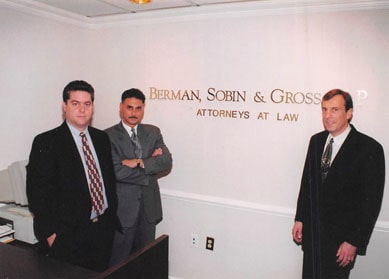
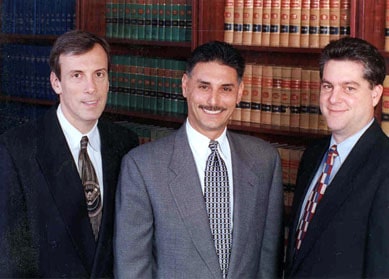
Firefighters, paramedics, and EMTs in Essex and the surrounding Baltimore County communities put themselves in harm’s way every shift. The physical demands of the job are relentless, and the injuries that follow, whether from a structural collapse, a patient-handling incident, a vehicle accident, or years of toxic exposure, can end careers and upend families. Essex firefighters, paramedics, and EMTs injury attorneys at Berman | Sobin | Gross LLP have spent 35 years representing Maryland’s first responders specifically, not as a small part of a general practice, but as the core of what this firm does.
What Sets First Responder Injury Claims Apart from Standard Workers’ Compensation
Workers’ compensation in Maryland operates under a general framework, but public safety employees like firefighters and EMTs have access to distinct statutory protections that most workers do not. These protections exist because the legislature recognized that certain diseases and injuries, heart conditions, lung disease, hypertension, cancer, are so strongly correlated with firefighting and emergency response work that injured workers should not have to prove a direct causal link from scratch in every case.
Maryland law provides a legal presumption that these conditions are job-related when a firefighter or paramedic develops them. That presumption shifts the burden. The employer has to disprove the connection rather than the worker having to prove it. That is a meaningful legal advantage, but it only works if the claim is filed correctly, the right evidence is preserved, and the presumption is properly invoked. Employers and their insurance carriers do not simply concede these claims, and many hire medical experts specifically to challenge the presumption. Berman | Sobin | Gross LLP won the appellate case City of Frederick v. Shankle, which established that employer medical experts who claim the occupational disease presumption lacks scientific support cannot testify against it. That ruling changed the legal landscape for public safety workers statewide.
EMTs in Maryland are also recognized as public safety employees entitled to the same enhanced compensation benefits as firefighters and law enforcement officers. That classification was not always obvious to employers or insurers, and Berman | Sobin | Gross LLP secured that protection through the appellate decision Downer v. Baltimore County, which confirmed EMTs’ status and the benefits that come with it.
Injuries Common to Essex-Area First Responders and Why Documentation Matters Early
Essex sits in eastern Baltimore County, served by volunteer and career fire and emergency medical services that respond to a dense residential population, industrial corridors, and the waterfront along the Middle River and Back River areas. The physical environment of this territory, including older commercial structures, industrial sites, and high call volumes, creates specific hazard profiles for the responders who work it.
Musculoskeletal injuries are among the most frequent: torn rotator cuffs from forcible entry and hose handling, knee and back injuries from patient lifting and dragging, ankle injuries on uneven terrain. These injuries often accumulate over time rather than resulting from one dramatic event, and that pattern creates complications. When a claim looks like it developed gradually, insurers may argue preexisting conditions are the real cause. Getting a thorough medical evaluation early, and connecting treatment records clearly to work activities, is critical to preserving these claims.
Cardiovascular disease and pulmonary conditions are different in character. They often do not appear until years into a career or after retirement. The presumption under Maryland law helps, but it has to be properly invoked. Montgomery County v. Pirrone, another appellate decision the firm is associated with, confirmed that the heart, lung, and hypertension presumption applies to public safety workers even after retirement or while off duty. Essex firefighters who develop these conditions years after leaving active service are not barred from pursuing the benefits they are owed.
The importance of filing correctly and on time cannot be overstated. Maryland has specific filing deadlines for workers’ compensation claims, and for occupational diseases, those deadlines run from when the worker knew or should have known the condition was work-related, not necessarily from the first diagnosis. Missing that window is typically fatal to a claim, regardless of its merits.
How Compensation and Benefits Actually Work for Injured Public Safety Employees
An injured firefighter or EMT in Essex may be entitled to several distinct categories of benefits depending on the nature of the injury, the employer, and how long the person has been out of work. Medical benefits cover reasonable and necessary treatment. Temporary total or temporary partial disability benefits replace lost wages during recovery. Permanent partial or permanent total disability awards compensate for lasting impairment.
Public safety employees may also have rights under local government policies that provide full salary continuation for job-related injuries, separate from workers’ compensation temporary disability payments. The interaction between these salary benefits and workers’ compensation is not always straightforward, and it matters. Montgomery County v. Deibler, decided in part because of Berman | Sobin | Gross LLP’s advocacy, clarified that public safety workers receiving full salary on light duty can still claim compensation for lost overtime wages that were part of their pre-injury earnings. Overtime is often a substantial portion of a first responder’s income, and protecting that component of a wage loss claim requires specific legal argument.
Vocational rehabilitation is another benefit that applies when an injury prevents a return to the original job. Fikar v. Montgomery County established that injured workers receiving service-connected disability retirement can also access vocational rehabilitation services. That ruling matters for first responders who retire due to injury and later want to transition to a new career with support.
Questions Essex First Responders Ask About Injury Claims
I was injured during a training exercise, not an actual emergency call. Is that still covered?
Yes. Injuries sustained during required training activities are generally compensable under Maryland workers’ compensation. The test is whether the activity was in the course of employment, and mandatory training qualifies. The claim process is the same as for injuries on active calls.
My employer says my heart condition is not work-related because I have risk factors like family history. Can they do that?
Employers and their insurers do raise these arguments. The presumption is designed precisely to counter them, but the rebuttal effort is real. Medical evidence, employment records, and in some cases expert testimony become part of the dispute. This is not a situation where the presumption operates automatically without any advocacy on your side.
I worked as a volunteer firefighter. Do the same protections apply to me?
Maryland workers’ compensation coverage for volunteer firefighters is a specific area with its own rules. Coverage often exists but may operate differently than for career employees. The public safety presumptions can apply to volunteers in certain circumstances. This is worth evaluating carefully with an attorney who handles these claims regularly.
How long do I have to file a workers’ compensation claim after a work injury?
For traumatic injuries, Maryland generally requires filing within 60 days of the accident or the employer learning of it, with a two-year outer limit for filing the actual claim. Occupational disease claims have different timelines tied to knowledge of the condition’s work-related nature. These deadlines are strictly applied, and exceptions are narrow.
My department is pushing me to return to full duty before I feel ready. What can I do?
Your treating physician’s assessment of your functional capacity matters significantly in this process. If your doctor has not cleared you for full duty, a return-to-work order from your department does not override that medical determination for purposes of your workers’ compensation claim. Documenting your condition and communicating clearly through your attorney is important in these situations.
Can I get compensation for hearing loss from years of working near sirens and heavy equipment?
Yes. Occupational deafness is a recognized compensable condition under Maryland law. Berman | Sobin | Gross LLP secured a ruling in Collins v. Montgomery County and in Montgomery County v. Cochran and Bowen that clarified how the age-deduction calculation for hearing loss is computed for firefighters, specifically that it runs from the last date of injurious noise exposure, not from the date of the audiogram. That distinction can significantly affect the value of a hearing loss claim.
What if the Workers’ Compensation Commission denies my claim? Is that the end?
No. Commission decisions can be appealed, first to circuit court and potentially higher if warranted. Berman | Sobin | Gross LLP has handled hundreds of workers’ compensation jury trials and appeals before Maryland’s highest courts. If another attorney has told you the Commission’s decision is final or has declined to take your case further, that assessment should not go unchallenged without a second evaluation.
Representing Essex and Baltimore County First Responders
Berman | Sobin | Gross LLP serves injured first responders throughout Baltimore County and the broader region from offices in Lutherville, Baltimore, Gaithersburg, and Frederick. The firm has represented firefighters, paramedics, and EMTs across Maryland for 35 years, grown to more than 20 attorneys, and built a reputation that stands on actual courtroom and appellate results, not just administrative hearings. One of the firm’s founders authored the authoritative two-volume treatise on Maryland workers’ compensation law, the reference Maryland practitioners rely on when questions arise that do not have easy answers. For Essex-area emergency responders dealing with work injuries, the attorneys at this firm understand both the legal framework specific to public safety employees and the physical and financial realities of a career-altering injury.
To speak with a Baltimore County first responder injury attorney about your situation, contact Berman | Sobin | Gross LLP for a confidential case analysis. The firm takes on the difficult claims that require real advocacy, and representation for Essex paramedics, firefighters, and EMTs injured on the job is a core part of what the firm has built over three and a half decades.