

Essex Transit Worker Injury Attorney
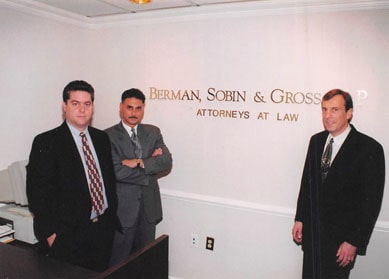
Transit work in Essex carries real physical risk. Bus operators navigate congested routes along Eastern Avenue and Stemmers Run Road. Maintenance crews work in tight spaces on aging equipment. Station and yard workers face hazards from moving vehicles, heavy machinery, and unpredictable conditions. When those risks produce serious injuries, the question workers face is not just about recovery, it is about whether they will receive the benefits Maryland law actually entitles them to. An Essex transit worker injury attorney at Berman | Sobin | Gross LLP has spent 35 years representing the workers who keep Maryland moving, and we understand the specific pressures transit employees face when a claim gets complicated.
What Makes Transit Worker Injuries Legally Distinct in Maryland
Transit workers do not fit neatly into one legal category, and that distinction matters. Depending on the employer, a transit worker in Essex may be covered under the Maryland Workers’ Compensation Act, may have access to federal protections under FELA if working for a rail employer, or may deal with a mix of state and local governmental employer rules if employed by a transit authority. The applicable framework shapes every significant aspect of a claim: the filing deadlines, the types of benefits available, the procedures for challenging a denial, and the standards that govern permanent disability determinations.
Repetitive strain injuries are particularly common among bus operators and maintenance workers, and they are also among the most contested claim types. Employers and their insurers routinely argue that cumulative injuries to the back, shoulders, and knees are pre-existing conditions unrelated to job duties. Occupational hearing loss from years of engine noise is another recognized injury that employers frequently challenge. Getting these claims accepted requires a thorough understanding of how Maryland’s Workers’ Compensation Commission evaluates occupational disease and cumulative trauma, and how to build the medical record that supports those claims from the start.
The Gap Between What Transit Workers Receive and What They Are Owed
Workers’ compensation for transit employees in Maryland can cover lost wages, medical treatment, permanent partial or total disability, and vocational rehabilitation when returning to prior duties is not possible. In practice, the gap between what an insurer initially offers and what an injured worker is actually entitled to is often significant. That gap gets wider when the injury is serious, when surgery is involved, or when the worker cannot return to the same position.
Temporary total disability benefits are designed to replace a portion of lost wages while a worker recovers, but insurers sometimes terminate those benefits before a worker has truly reached maximum medical improvement. Permanent disability ratings produced by employer-selected medical examiners frequently understate the actual functional impact of an injury. Berman | Sobin | Gross LLP does not accept those ratings as the final word. Our attorneys know how to challenge unfavorable medical opinions and how to develop the evidence necessary to support a more accurate assessment of a worker’s permanent impairment.
For Essex transit workers employed by governmental entities, there are additional layers. Public safety employees and certain transit workers may be entitled to enhanced benefits under Maryland law, including presumption statutes that apply to specific conditions. Our firm has litigated these presumption issues at the highest levels. In Downer v. Baltimore County, we established that EMTs qualify as public safety employees entitled to enhanced compensation benefits, and in Montgomery County v. Pirrone, we secured recognition that heart, lung, and hypertension presumptions apply even after retirement or while off duty. These are not abstract legal victories. They are rulings that changed what benefits real workers could access.
When a Third Party, Not Just an Employer, Bears Responsibility
Workers’ compensation covers injuries that happen on the job regardless of fault, but it does not always represent the full scope of legal recovery available. Transit workers in Essex who are injured because of a defective vehicle component, unsafe equipment manufactured by a third party, or a negligent driver who caused a collision during a route may have a separate personal injury claim against a party other than their employer. That third-party claim exists alongside the workers’ compensation claim and can produce compensation for damages that workers’ comp does not cover, including pain and suffering and full lost earning capacity.
Identifying whether a third-party claim exists requires looking beyond the workers’ compensation filing and asking who else may have contributed to the conditions that caused the injury. Vehicle defects, road hazards created by contractors, and inadequate equipment maintenance by entities separate from the transit authority all deserve scrutiny. Berman | Sobin | Gross LLP handles both workers’ compensation and personal injury matters, which means injured transit workers do not need multiple law firms to pursue every avenue of recovery available to them.
Questions Essex Transit Workers Ask After a Job Injury
I reported my injury but my supervisor said it was not serious enough to file a claim. What should I do?
Report the injury in writing and file a workers’ compensation claim with the Maryland Workers’ Compensation Commission regardless of what a supervisor says. A supervisor’s assessment of severity has no bearing on your legal right to file, and delays in filing can hurt your claim. The Commission, not your employer, determines whether a claim is compensable.
My back injury developed over years of driving, not from one specific incident. Can I still file a workers’ compensation claim?
Yes. Maryland law recognizes occupational diseases and cumulative trauma injuries. You do not need to point to a single accident. What matters is demonstrating that your work activities were a contributing cause of the condition. These claims are frequently challenged, but they are recognized under Maryland law and can be supported with proper medical documentation and work history evidence.
The insurance company wants me to see their doctor. Do I have to go?
In Maryland, employers and insurers have the right to request an independent medical examination. Refusing to attend can affect your claim. However, that examination is not necessarily independent in the practical sense, and the opinions it produces can be contested. An attorney can help you understand how to prepare, what your rights are during the process, and how to respond if the report comes back with conclusions that do not match your actual condition.
My claim was denied. Is that the end of the process?
A denial is not the final outcome. Workers have the right to request a hearing before the Maryland Workers’ Compensation Commission, and if the Commission’s decision is unfavorable, there are further appeal rights into the circuit courts and beyond. Berman | Sobin | Gross LLP has handled workers’ compensation jury trials and appeals before both of Maryland’s highest courts. We do not stop at the Commission level when a worker’s case requires more.
I am still employed by the transit authority on light duty. Can I receive any benefits while working in that capacity?
Possibly. In Montgomery County v. Deibler, Berman | Sobin | Gross LLP established that workers receiving full salary on light duty may still be entitled to compensation for overtime wages they were earning before the injury but can no longer earn. If your light duty assignment represents a real reduction in earning capacity, that loss may be compensable even if your base salary has not changed.
How long do I have to file a workers’ compensation claim in Maryland?
For most work accidents in Maryland, a claim must be filed within two years of the date of accidental injury. For occupational diseases, the time period runs from when the worker knew or should have known the condition was work-related. These are hard deadlines, and missing them can forfeit your right to benefits entirely. If there is any uncertainty about the applicable deadline for your specific situation, getting a legal evaluation promptly is critical.
What if another firm already told me my case is not worth pursuing?
Berman | Sobin | Gross LLP regularly evaluates cases that other attorneys have declined or abandoned, including cases other firms did not want to take past an administrative hearing. The firm’s founders literally wrote the authoritative legal treatise on Maryland workers’ compensation, and our attorneys have the resources and willingness to pursue claims that require more than a routine hearing. A prior rejection by another attorney is not a verdict on your case.
Representing Essex Transit Workers Throughout the Baltimore Region
Berman | Sobin | Gross LLP is the largest workers’ compensation law firm in Maryland representing injured workers, with offices in Lutherville, Baltimore, Gaithersburg, and Frederick. Essex workers have direct access to attorneys who know the Baltimore County workers’ compensation landscape, the Commission’s local procedures, and the specific challenges that transit industry employers and their insurers present. The firm has Spanish-speaking attorneys and staff members, and we work to ensure that language is never a barrier to getting a claim evaluated and pursued properly.
Talk to a Transit Injury Attorney in Essex Before Accepting Any Outcome
The workers’ compensation process is designed to move toward resolution, but that resolution is not always a fair one without representation. If you were injured working on Essex transit routes or in a transit facility in the Baltimore area, speaking with an Essex transit worker injury lawyer before accepting any settlement or benefit determination can make a meaningful difference in the outcome of your claim. Berman | Sobin | Gross LLP offers confidential case evaluations, and our attorneys will give you an honest assessment of what your claim is worth and how to pursue it.