

Ellicott City Correctional Officers Injury Attorney
Correctional officers in Howard County face physical dangers every shift that most workers never encounter. Assaults by incarcerated individuals, injuries from restraint procedures, exposure to infectious disease, and the accumulated toll of working in a high-stress confined environment all create real, documented risk of serious injury. When those injuries happen, the path through Maryland’s workers’ compensation system is rarely straightforward for public safety employees. An Ellicott City correctional officers injury attorney who understands the specific legal protections Maryland extends to corrections professionals can be the difference between receiving the full benefits the law provides and settling for something far less than what you earned.
What Maryland Law Actually Provides for Injured Corrections Officers
Correctional officers in Maryland occupy a defined category under the state’s workers’ compensation framework. Public safety employees, including those working in county and state correctional facilities, are entitled to certain presumptions and enhanced benefit provisions that do not apply to the general workforce. These are not mere procedural details. They fundamentally shape how a claim is evaluated and what an employer or insurer is required to prove in order to deny it.
Maryland’s occupational disease presumptions, which Berman Sobin Gross LLP has litigated and helped shape through appellate decisions, are particularly significant for corrections officers. Heart disease, hypertension, and certain respiratory conditions can be presumed work-related under statute, shifting the burden to the employer to demonstrate that the condition did not arise from your duties. The firm’s appellate win in Montgomery County v. Pirrone established that this presumption applies even after retirement or while off duty, a ruling that directly benefits long-serving officers whose conditions develop or worsen after they leave active service.
In addition to disease presumptions, corrections officers are often entitled to enhanced wage replacement benefits and broader vocational rehabilitation rights than standard employees. The firm’s victory in Fikar v. Montgomery County confirmed that injured workers receiving service-connected disability retirement can also receive vocational rehabilitation services, a result that matters especially for officers whose injuries prevent return to corrections work but who need support transitioning to other employment.
The Injuries That Define a Career in Corrections
The injuries that bring Howard County corrections officers into the workers’ compensation system span a wide range, and each type carries its own challenges when it comes to establishing compensability and value. Physical assaults are common and can produce orthopedic injuries, traumatic brain injuries, and injuries to the face, neck, and spine that require surgery and extended rehabilitation. Because these incidents are sometimes documented through facility reports that describe events in ways that minimize officer injury or suggest the officer contributed to the situation, having legal counsel review that documentation before it becomes part of a formal record is critical.
Repetitive strain injuries to the back, shoulders, and knees arise from the physical demands of restraint, transport, and prolonged standing and walking on concrete. These injuries are often contested by employers who argue that the condition is degenerative rather than work-related, or who point to prior injuries as the real cause. The medical evidence in these cases requires careful development, and the attorneys at Berman Sobin Gross LLP have handled exactly this type of dispute across thousands of hearings and hundreds of jury trials.
Mental health conditions, including post-traumatic stress disorder, are increasingly recognized in the workers’ compensation system for public safety employees who have experienced traumatic incidents in the line of duty. These claims are among the most aggressively disputed by employers and their insurers, and they require the kind of strategic commitment that the firm has demonstrated in taking challenging cases that other attorneys decline.
Why Corrections Officer Claims Get Complicated Quickly
Employers and their insurers do not simply accept workers’ compensation claims at face value, especially when the claim involves a public safety employee entitled to enhanced benefits. The stakes are higher for the employer when presumptions apply, when wage replacement rates are elevated, and when permanent disability benefits are on the table. As a result, these claims are frequently met with aggressive medical review, independent medical examinations conducted by physicians retained by the defense, and interpretations of job duties designed to narrow what qualifies as a covered injury.
Howard County and state correctional facilities operate through institutional employment systems that have their own risk management departments, legal teams, and established relationships with defense medical experts. An officer navigating a disputed claim without representation is at a structural disadvantage from the beginning. Decisions made in the early stages of a claim, including which medical providers are authorized, whether a second opinion is requested, and how injury reports are filed and characterized, can affect the outcome of proceedings that happen months or years later before the Maryland Workers’ Compensation Commission.
If a claim reaches a point where an employer’s position needs to be contested beyond the Commission level, having attorneys who have handled workers’ compensation appeals before Maryland’s highest courts matters in a real and practical way. Berman Sobin Gross LLP’s history of appellate advocacy in workers’ compensation is not an incidental credential. It reflects the firm’s willingness to take a case as far as it needs to go.
Questions Corrections Officers in Howard County Actually Ask
If I was assaulted by an inmate and the facility’s incident report doesn’t fully describe what happened, does that hurt my claim?
Facility incident reports are generated under institutional pressure and sometimes reflect the facility’s perspective rather than a complete account of events. They are not the final word on what happened. Witness statements, medical records documenting the nature and mechanism of injury, surveillance footage where available, and your own contemporaneous written account all contribute to the record. An attorney can help ensure the evidentiary picture is as complete as possible before a hearing.
My employer told me I have to see their doctor. Do I have any choice in who treats me?
Maryland workers’ compensation law does allow employers to designate initial medical providers, but injured workers have rights regarding medical treatment that should be understood clearly before any appointments are made. The treatment you receive, and the opinions those physicians document, can significantly affect your claim. Discussing your options with an attorney before the process locks in is worth doing early.
I developed a heart condition after years working in corrections. Can I still file a workers’ compensation claim?
Yes. Maryland’s occupational disease presumptions for public safety employees are specifically designed for conditions like cardiovascular disease that develop over time rather than from a single incident. The Berman Sobin Gross LLP appellate decision in Montgomery County v. Pirrone extended this presumption even to retirees and off-duty situations. The timing of your claim relative to your employment history matters, and an attorney can evaluate whether your situation qualifies.
What if another law firm already told me my case wasn’t worth pursuing?
Berman Sobin Gross LLP specifically handles cases that other firms have declined. The firm takes on challenging claims that require more time and resources, including those where prior counsel felt the administrative hearing process was the end of the road. A second evaluation is always worth requesting.
Can I receive workers’ compensation benefits and disability retirement benefits at the same time?
The intersection of service-connected disability retirement and workers’ compensation benefits is an area where the law has developed through litigation. The firm’s victory in Fikar v. Montgomery County addressed exactly this question and confirmed that receiving one does not automatically foreclose the other. The specific facts of your retirement arrangement and injury matter, and this is a question an attorney should review carefully.
What happens if my injury prevents me from ever returning to corrections work?
Permanent total or significant partial disability benefits, along with vocational rehabilitation services, may be available depending on the nature and extent of your injury and your employment history. The valuation of permanent disability is a contested area, and the difference between an offer from an employer and what a properly prepared claim can establish at hearing can be substantial.
Does it matter that my facility is in Howard County versus a state-run facility?
The employing agency, whether county or state, affects which workers’ compensation provisions apply, how benefit calculations are structured, and what presumptions are available. Howard County corrections employees and Maryland Division of Correction employees at state facilities are not in identical legal positions. This distinction shapes how a claim is built and what arguments are available.
Representing Ellicott City Correctional Officers in Howard County and Throughout Maryland
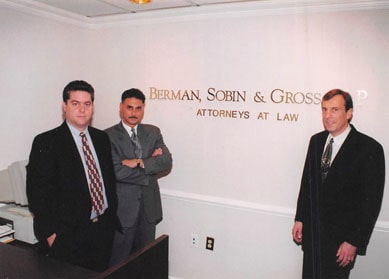
Berman Sobin Gross LLP serves corrections officers and other public safety employees across Maryland, including those working in and around Ellicott City and Howard County. The firm’s offices in Lutherville, Baltimore, Gaithersburg, and Frederick cover the geography where most of the firm’s clients live and work, and the attorneys here have represented public safety employees before the Workers’ Compensation Commission in proceedings that draw on decades of institutional knowledge about how these claims are fought and won. Howard County corrections officers dealing with disputed claims, serious injuries, or long-term disability questions can work with attorneys who have built this body of experience across tens of thousands of hearings and hundreds of trials.
Corrections work in Howard County is demanding in ways that are easy to underestimate from the outside. The officers who perform it deserve legal representation that understands what they face, knows the statutory protections that apply to them, and will not back down when an employer decides to contest a legitimate claim. Reach out to Berman Sobin Gross LLP for a confidential case analysis with a Maryland correctional officer injury attorney who can evaluate your situation and tell you honestly what your options are.