
Easton Teachers & School Employees Injury Attorney
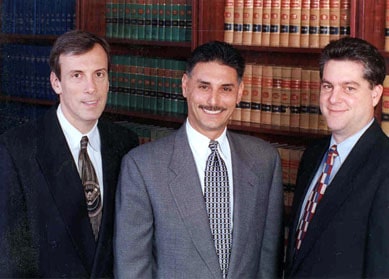
School employees in Easton and across Talbot County carry physical and emotional demands that rarely make the news. Teachers manage classrooms that can turn volatile. Custodians handle equipment, chemicals, and slippery floors. Cafeteria workers operate in fast-moving, high-heat environments. Paraprofessionals routinely assist students with mobility limitations, putting their own backs and joints at risk with every transfer. When any of these workers are hurt on the job, the workers’ compensation system is supposed to provide a path forward. In practice, that path is often more complicated than it looks. The attorneys at Berman | Sobin | Gross LLP have spent 35 years representing the people Maryland depends on to run its schools, and that work extends to Easton teachers and school employees injury claims throughout the Eastern Shore.
What School Employees in Easton Actually Face When They File a Claim
Talbot County Public Schools employs teachers, aides, bus drivers, maintenance staff, food service workers, and administrative personnel across multiple school buildings. Each of those job categories carries its own risk profile, and each comes with its own set of complications when something goes wrong.
A teacher assaulted by a student may find that the school system disputes whether the incident counts as an injury arising from employment. A special education aide who develops chronic back problems from years of lifting and repositioning students may be told there is no single incident that qualifies as a compensable injury. A custodian exposed to cleaning chemicals may face resistance when connecting respiratory symptoms to workplace exposure. These are not edge cases. They represent the types of disputes that Berman | Sobin | Gross LLP handles regularly on behalf of Maryland school workers.
The Maryland Workers’ Compensation Commission governs these claims, and the rules it applies are technical. Deadlines for filing, requirements for reporting injuries to your employer, and requirements for establishing that an injury is work-related all have to be satisfied correctly. Missing a step early in the process can affect your ability to recover benefits later, even when the underlying injury is real and well-documented.
The Injuries Schools Produce That Workers’ Comp Was Built For
Physical injuries in school settings tend to cluster in patterns that are predictable once you know where to look. Repetitive stress injuries are common among teachers who spend years writing on boards, carrying materials, and performing the same physical motions daily. Back and shoulder injuries frequently affect paraeducators and special education staff. Slips, trips, and falls happen in hallways, cafeterias, gyms, and parking lots. Bus drivers sustain injuries in accidents and also develop musculoskeletal conditions from years of operating large vehicles.
Beyond physical trauma, school employees are one of the more exposed groups when it comes to occupational disease. Prolonged exposure to chalk dust, chemical cleaning agents, mold in aging buildings, and latex in older school materials can all produce documented health conditions. Maryland workers’ compensation law covers occupational diseases, not just acute injuries, though proving the work-relatedness of a disease often requires more thorough medical documentation and, in some cases, expert testimony.
There is also the category of injuries that arise from student behavior. Teachers and aides who are struck, bitten, scratched, or otherwise physically harmed by students have valid workers’ compensation claims. These incidents are not a normal part of the job that employees must absorb without recourse, even if administrators sometimes present them that way.
Public Employees and the Workers’ Compensation Rules That Specifically Apply to Them
Teachers and support staff employed by Talbot County Public Schools are public employees, and that classification matters in Maryland workers’ compensation. Public safety employees in Maryland benefit from specific statutory presumptions, particularly regarding heart disease, hypertension, and certain other conditions, and Berman | Sobin | Gross LLP has litigated and won appellate cases that shaped how those presumptions apply. While classroom educators do not fall into the public safety category, the broader framework of public employee workers’ compensation in Maryland has its own procedural characteristics that experienced representation helps to navigate.
Notably, school board legal teams and their insurers handle claims on behalf of the county school system. They are not neutral parties. They represent the employer’s interests, which means an injured school employee is dealing with an institutional opponent from the moment a claim is filed. Having an attorney who has handled volume in this area, and who knows how school system claims are typically evaluated and disputed, matters when you are negotiating over medical treatment, temporary disability payments, or permanent impairment ratings.
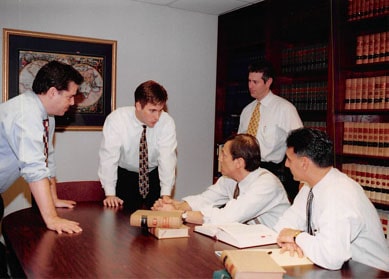
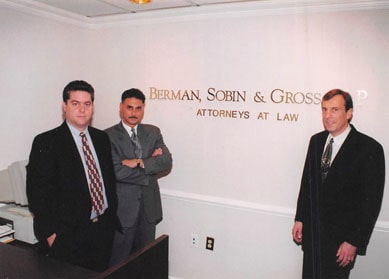
Berman | Sobin | Gross LLP is the largest workers’ compensation law firm in Maryland representing injured workers. One of the firm’s founders literally authored the authoritative two-volume treatise on Maryland workers’ compensation law, the resource that practitioners across the state rely on. That depth of knowledge directly benefits school employees whose claims involve nuanced factual or legal disputes.
Questions Easton School Employees Ask Before Contacting an Attorney
Does a student assault qualify for workers’ compensation in Maryland?
Yes. An injury caused by a student’s physical behavior during the course of your employment is a compensable workplace injury under Maryland law. Whether the incident was foreseeable or unprovoked does not eliminate the employer’s workers’ compensation obligation. What matters is that the injury occurred while you were performing your job duties.
I reported the injury but the school told me it was minor. Do I still have a claim?
The school administration’s characterization of an injury as minor has no bearing on your legal rights. If you experienced a work-related injury that required medical treatment or caused you to miss time from work, you have the right to pursue a workers’ compensation claim regardless of how the incident was labeled internally.
What if my injury developed gradually over years of teaching rather than from one incident?
Maryland workers’ compensation covers what are called accidental injuries and occupational diseases. Gradual onset conditions caused by the nature of your work, such as repetitive stress injuries or hearing loss from occupational noise, can qualify. These claims require careful documentation linking the condition to your work activities, and they are sometimes disputed more aggressively than acute injury claims, but they are legally recognized.
Can I choose my own doctor for a work-related injury?
Maryland workers’ compensation rules govern how and when you can treat with a physician of your choosing versus one selected by the employer or insurer. There are specific circumstances where you can establish a treating physician relationship with a doctor you select. An attorney can clarify how those rules apply to your specific situation so you do not inadvertently lose treatment options.
Will I lose my job if I file a workers’ compensation claim against the school system?
Maryland law prohibits retaliation against employees who file workers’ compensation claims. That protection does not mean retaliation never happens, but it does mean you have legal recourse if your employment is adversely affected because you exercised your right to seek benefits. Document any changes in your employment status, assignments, or treatment after filing a claim.
What benefits can a school employee recover through a successful workers’ compensation claim?
Benefits available under Maryland workers’ compensation include coverage for medical treatment related to the injury, temporary total disability payments if you cannot work during recovery, temporary partial disability payments if you can work in a reduced capacity, and permanent partial or total disability awards if the injury results in lasting impairment. Vocational rehabilitation may also be available in appropriate cases. The firm successfully established in appellate litigation that injured workers receiving service-connected disability retirement can also access vocational rehabilitation services.
How long does a school employee in Easton have to file a workers’ compensation claim?
Maryland law imposes filing deadlines that vary depending on the type of injury and circumstances involved. Missing a deadline can eliminate your right to benefits. If you were recently injured, or if you are unsure whether a deadline is approaching for a prior incident, consulting with an attorney promptly is the right move.
School Workers Throughout the Eastern Shore Deserve Representation That Has Done This Before
Berman | Sobin | Gross LLP represents school employees, teachers, support personnel, bus drivers, and other workers across Maryland, including those in Easton and throughout Talbot County. The firm maintains offices in multiple locations across the state and has handled claims in every corner of Maryland. Spanish-speaking staff are available for clients who prefer to communicate in Spanish. The firm’s attorneys have handled tens of thousands of hearings and hundreds of jury trials, and they do not shy away from cases that require sustained effort or litigation beyond the Commission level. If you have been injured working in an Easton school and want a candid evaluation of your claim by attorneys who understand the Maryland workers’ compensation system in detail, Berman | Sobin | Gross LLP is prepared to review your situation and give you a clear picture of where things stand for an injured Easton school employee.