

Easton Federal Employee Injury Attorney
Federal employees in Talbot County and the broader Eastern Shore work in post offices, federal courthouses, wildlife refuges, and government facilities that most residents pass without a second thought. When one of those workers gets hurt on the job, the path to compensation looks nothing like a standard Maryland workers’ compensation claim. The Federal Employees’ Compensation Act governs these cases entirely, and the agency responsible for administering it, the Office of Workers’ Compensation Programs, operates on its own timelines, requirements, and internal logic. An Easton federal employee injury attorney who understands that system can make the difference between a claim that moves forward and one that stalls indefinitely at the paperwork stage.
Why the FECA System Works Differently Than Maryland State Workers’ Comp
Maryland’s workers’ compensation system and the federal system share a basic premise: workers hurt on the job deserve wage replacement and medical coverage. That’s roughly where the similarities end.
Under FECA, there is no Maryland Workers’ Compensation Commission involved. Claims go to the Department of Labor’s Office of Workers’ Compensation Programs, known as OWCP. The forms are different, the deadlines are different, and the standards for what qualifies as a covered injury can be interpreted more narrowly than many injured workers expect. Federal employees often assume their agency’s human resources office will walk them through the process. In practice, HR staff vary enormously in how well they understand FECA, and their job is not to advocate for the employee.
A claim that gets filed on the wrong form, filed late, or filed without adequate medical documentation supporting the causal connection between the injury and federal employment can be denied outright. Reconsideration requests and formal appeals before the Employees’ Compensation Appeals Board add more layers. Having an attorney who has worked through those layers is not a luxury; it’s a practical necessity once a claim starts running into obstacles.
What Federal Workers in the Easton Area Are Actually Dealing With
The Eastern Shore’s federal workforce spans a wider range of job types than people might expect. Postal workers at USPS facilities face repetitive stress injuries from sorting and carrying mail, slip and fall hazards, and dog attacks during delivery routes. Federal wildlife officers and conservation employees at the Blackwater National Wildlife Refuge and similar sites encounter physical demands and outdoor hazards. Court employees, Social Security Administration office staff, and workers at federally administered facilities along the Chesapeake region all fall under FECA rather than the state system.
The nature of the injury matters significantly in how a FECA claim gets built. A traumatic injury, something that happens at a specific moment on a specific date, follows a different filing pathway than an occupational disease or a condition that developed over years of repetitive work. For federal employees dealing with conditions like carpal tunnel syndrome, hearing loss, or back deterioration from physically demanding assignments, establishing the medical and occupational connection to federal employment requires documentation that most people don’t know how to compile on their own.
Continuation of pay provisions, which allow some federal employees to receive their full salary for up to 45 days after a traumatic injury without dipping into leave, can also create confusion. Misunderstanding how COP interacts with a formal FECA claim has derailed more than a few cases before they even get off the ground.
Specific Situations Where Legal Representation Changes Outcomes
Not every denied FECA claim gets corrected. Some federal employees simply accept an initial denial without realizing they have recourse. Others attempt reconsideration on their own, submit the same insufficient documentation, and receive the same result. There are also situations where OWCP accepts a claim but contests the degree of disability, disputes the appropriateness of certain medical treatment, or attempts to reduce benefits on the grounds that the employee has recovered sufficiently to return to some form of work.
Return-to-work determinations under FECA deserve particular attention. OWCP can assign a “light duty” earning capacity to an injured federal worker even when no actual light duty position is available within the employing agency. That assigned earning capacity can then be used to reduce wage loss benefits, regardless of whether the employee is actually earning that amount. Challenging those determinations effectively requires understanding how OWCP vocational rehabilitation staff operate and what documentation is most persuasive in contesting their conclusions.
Federal employees who develop a condition that may be work-related but aren’t sure whether it qualifies also benefit from legal guidance before filing anything. Filing a premature or poorly framed claim can sometimes create a record that complicates a later, better-supported filing. Getting the framing right from the start matters.
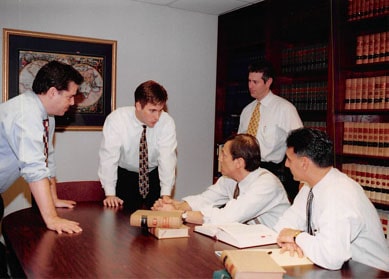
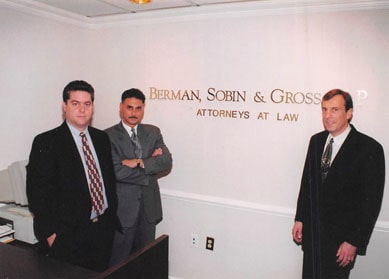
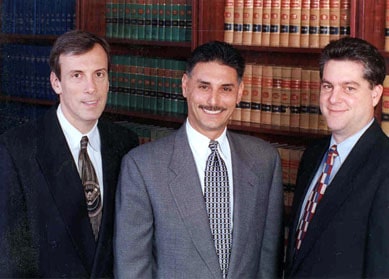
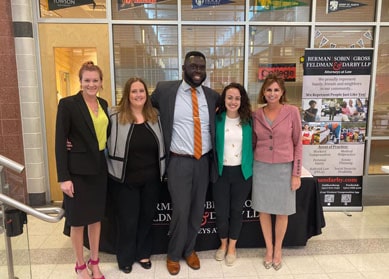
Berman | Sobin | Gross LLP has been representing Maryland workers in complex compensation cases for 35 years, including cases that have gone to the courts when administrative proceedings weren’t enough. The firm’s attorneys have handled workers’ compensation matters across Maryland’s diverse workforce, from first responders to government employees, and understand the kind of sustained effort that difficult claims require.
Questions Easton Federal Employees Are Asking
I’m a federal employee who was hurt at work. Do I file with the Maryland Workers’ Compensation Commission or somewhere else?
Federal employees do not file with the Maryland Workers’ Compensation Commission. Your claim goes to the U.S. Department of Labor’s Office of Workers’ Compensation Programs under the Federal Employees’ Compensation Act. The Maryland state system has no jurisdiction over your claim.
How long do I have to file a FECA claim after a workplace injury?
For traumatic injuries, you generally have three years from the date of injury to file a claim, though you should file as soon as possible. For occupational diseases, the deadline runs from the date you were first aware, or should have been aware, that the condition is work-related. Missing these windows can eliminate your right to benefits entirely, so early attention to filing is critical.
My agency’s HR office told me my injury doesn’t qualify for workers’ comp. Is that the final word?
No. HR staff are not OWCP adjudicators, and their opinions about whether a claim will be accepted are not binding. Many federal employees have been incorrectly discouraged from filing by agency personnel who either misunderstood FECA or had other motivations. An attorney can review the facts of your injury and give you an honest assessment of whether a claim is worth pursuing.
What happens if OWCP denies my claim?
You have the right to request reconsideration within one year of the denial, or to appeal to the Employees’ Compensation Appeals Board within 90 days. Each avenue has its own procedural requirements and strategic considerations. Which path makes sense depends on the reasons for the denial and what additional evidence might be available.
Can I get help paying my medical bills while my FECA claim is pending?
FECA-authorized medical care is provided by physicians and facilities that accept OWCP billing, and approved claims provide medical coverage without the co-pays typical of private insurance. The challenge is that authorization delays can create gaps. Understanding how to work within OWCP’s medical authorization system is part of managing an active federal injury claim.
I’ve already returned to work, but I still have ongoing medical issues from my injury. Can I still pursue anything?
Yes. Returning to work does not necessarily close out your FECA claim, particularly if your injury continues to require medical treatment or if your condition worsens in the future. Claims involving permanent impairment, ongoing medical care, or conditions likely to recur warrant careful attention even after a return to duty.
Does Berman | Sobin | Gross LLP represent federal employees throughout Maryland, including in Easton and Talbot County?
Yes. The firm has offices throughout the state and represents clients across Maryland, including on the Eastern Shore. Geographic distance from one of the firm’s office locations has not been a barrier to effective representation for Maryland workers.
Talking to a Federal Employee Injury Lawyer in Easton
Federal injury claims move at their own pace, and the longer a problematic claim sits without attention, the harder it becomes to fix. Whether you’re dealing with an initial denial, a dispute over your level of disability, or uncertainty about how to file in the first place, the attorneys at Berman | Sobin | Gross LLP are available to review your situation and tell you plainly what they see. The firm has built its reputation over 35 years by taking on cases that require real work, not just the straightforward ones. If you’re a federal worker on the Eastern Shore navigating a workplace injury claim, reaching out to an Easton federal employee injury attorney at the firm is a practical first step toward understanding what your options actually are.