

Easton Hospital Employee Injury Attorney
Hospital work carries risks that most people outside the profession rarely see. Nurses, surgical technicians, environmental services workers, radiology staff, patient transport personnel, and dozens of other employees at Easton-area healthcare facilities deal with physically demanding, sometimes hazardous conditions every shift. When an injury happens at work, the workers’ compensation system is supposed to step in. In practice, hospital employees often find that process far more difficult than it should be. Berman | Sobin | Gross LLP has spent 35 years representing Maryland workers in exactly these situations, and an Easton hospital employee injury attorney from our firm understands the specific pressures that healthcare workers face when they get hurt on the job.
What Hospital Workers in Easton Actually Get Hurt Doing
Healthcare injury claims look different from construction or manufacturing claims, and the distinction matters when building a case. The physical demands of patient care are enormous. Moving, repositioning, lifting, and transferring patients generates a significant share of the musculoskeletal injuries that hospital employees report, and those injuries do not always announce themselves with a single dramatic moment. A nurse who has been managing heavy patients for years may develop a back condition that traces directly to cumulative occupational strain rather than one identifiable incident.
That distinction creates problems for workers. Maryland’s workers’ compensation system handles acute injuries differently from occupational diseases and cumulative conditions, and employers and their insurers are quick to argue that a gradual onset injury is pre-existing, personal, or unrelated to work. Getting the medical evidence framed correctly from the start is critical.
Beyond musculoskeletal conditions, hospital employees face exposure to bloodborne pathogens, hazardous medications, radiation, and infectious disease. Emergency department staff, phlebotomists, and anyone who handles sharp instruments are at documented risk of needlestick injuries. Exposure to certain chemotherapy agents and disinfectants has been connected to longer-term health consequences. These are not speculative risks. They are occupational realities for healthcare workers throughout Maryland, including those working in Talbot County.
Slip and fall injuries remain common in hospital environments despite safety protocols. Wet floors, cluttered corridors during high-census periods, and rushing between patient rooms all contribute. Workplace violence is another serious and underreported category. Healthcare workers are among the most frequently assaulted workers in any industry, and injuries that occur during patient-related incidents are compensable under Maryland workers’ compensation law.
Why Hospital Employers and Their Insurers Dispute These Claims
Hospitals are large employers with established relationships with workers’ compensation insurers and in-house risk management departments. That means injured workers at Easton-area hospitals are not dealing with a small business that will take their claim at face value. They are dealing with an organization that has handled these situations before and has professionals whose job is to limit liability.
Common tactics include arguing that the injury did not occur at work, that a pre-existing condition is the real cause, or that the employee failed to report the injury promptly. Some workers delay reporting because they feel pressure not to disrupt their unit, because they hope the pain resolves on its own, or because they are not certain their condition qualifies. Employers sometimes use that delay to argue the injury cannot be work-related.
Medical causation disputes are particularly common in hospital employee claims. When a radiologist or an emergency department doctor employed by the same hospital system provides an opinion on a workers’ compensation claim, questions about independence and objectivity are legitimate. Getting independent medical documentation of the work connection, and knowing how to challenge an employer’s medical expert, matters enormously in these cases.
Berman | Sobin | Gross LLP has taken contested medical causation questions through the Maryland Workers’ Compensation Commission, through circuit courts, and before both of Maryland’s highest appellate courts. Our attorneys understand how these disputes are argued and how they are won.
Talbot County Workers’ Compensation and the Hospital Employment Context
Maryland workers’ compensation claims involving Easton hospital employees are governed by state law and go through the Maryland Workers’ Compensation Commission. The process includes filing a claim, attending hearings, and dealing with insurance adjuster communications, independent medical examinations, and vocational rehabilitation questions in more serious cases. Understanding how each step works and what can go wrong is not intuitive, particularly when you are recovering from an injury and trying to decide whether you can return to work.
Hospital employment also creates specific questions about modified duty and return-to-work scenarios. Hospitals frequently have light duty or modified work programs, and an insurer may use placement in such a program to suspend or reduce wage replacement benefits. Whether the offered modified duty is genuinely within your medical restrictions, and what happens when no appropriate modified duty exists, are the kinds of questions our attorneys work through with clients on a routine basis.
For healthcare workers who develop conditions that prevent them from returning to their prior clinical role, vocational rehabilitation benefits can be significant. Maryland law gives injured workers certain rights around vocational services, and our firm has successfully litigated cases that clarified and expanded those rights for injured workers throughout the state.
Questions Our Clients in Healthcare Ask Us
Does a workers’ compensation claim mean I have to sue my employer?
No. Maryland workers’ compensation is a no-fault system that exists outside of traditional litigation. You are not suing your employer in the civil courts. The claim goes through the Workers’ Compensation Commission, and your employer’s workers’ compensation insurer handles the claim, not your employer’s legal department. Most hospital employees can pursue a claim without that affecting their employment relationship in any legally actionable way.
My injury developed over time rather than in one incident. Can I still file a claim?
Yes, though the process is more involved. Maryland workers’ compensation covers both acute injuries and occupational diseases, and cumulative trauma conditions can qualify under the occupational disease framework if the condition is characteristic of and connected to your work. These claims require clear medical documentation linking your condition to your job duties, which is one reason having legal representation early is helpful.
My hospital put me on light duty after I was hurt. Am I still entitled to benefits?
Possibly. Being placed on modified duty does not automatically end your entitlement to all benefits. If the modified duty position pays less than your pre-injury wages, you may still be entitled to partial wage replacement. If the modified duty is not within your medical restrictions, you have the right to contest that placement. Our attorneys can review the specifics of what you were offered and what you are owed.
I was hurt by a patient, not in an accident. Does workers’ compensation cover that?
Yes. Injuries that occur as a result of patient behavior, including physical assaults during care, are compensable work injuries under Maryland law. The fact that the direct cause was a patient rather than a piece of equipment or a hazardous condition does not remove the employer’s obligation to provide workers’ compensation coverage.
Can my employer fire me for filing a workers’ compensation claim?
Maryland law prohibits retaliation against employees who file workers’ compensation claims. If you believe adverse employment action was taken because you filed a claim, that is a separate legal issue from the workers’ compensation claim itself, and it is worth discussing with an attorney.
What if I had a prior back injury and my work at the hospital made it worse?
Prior injuries do not disqualify you from receiving workers’ compensation benefits. Maryland law recognizes that work can aggravate, accelerate, or worsen a pre-existing condition, and that aggravation is compensable. Employers and insurers will often argue strongly that any condition is purely pre-existing, which is exactly why having someone in your corner who understands how to document and argue aggravation claims matters.
How long do I have to file a workers’ compensation claim in Maryland?
Generally, Maryland requires a workers’ compensation claim to be filed within two years of the accidental injury or the date the employee knew or should have known that a condition was related to their employment. The timeline for occupational disease claims has specific nuances. Filing late can cost you benefits, so it is worth getting an assessment of where you stand as soon as possible.
Representing Eastern Shore Healthcare Workers Who Need Real Advocacy
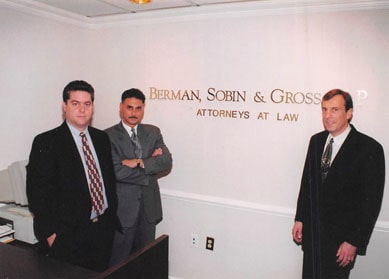
Berman | Sobin | Gross LLP is the largest workers’ compensation law firm in Maryland representing injured workers, with offices in Lutherville, Baltimore, Gaithersburg, and Frederick and the capacity to serve clients throughout the state. Our attorneys have handled tens of thousands of hearings and hundreds of workers’ compensation trials, and our firm has argued cases before both of Maryland’s highest courts, changing the law for injured workers in the process. We represent nurses, emergency medical technicians, hospital support staff, and healthcare workers across every category, and we do not limit ourselves to cases that are easy to win. If your claim has been disputed, denied, or handled in a way that does not reflect what you are owed, an Easton hospital employee injury attorney at our firm will evaluate your situation honestly and tell you where you stand. Reach out to Berman | Sobin | Gross LLP for a confidential case analysis.