
Easton Healthcare Worker Injury Attorney
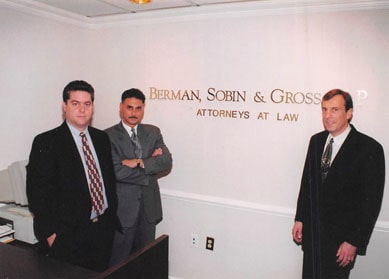
Healthcare workers in Easton and throughout Talbot County carry physical demands that most people never see from the outside. The lifting, repositioning, and transferring of patients. The long shifts on hard floors. The exposure to blood-borne pathogens, latex, cleaning chemicals, and infectious disease. When those demands result in a serious injury, the path to benefits is rarely straightforward, and the decisions made in the first days and weeks after an injury can shape everything that follows. Berman | Sobin | Gross LLP has represented Maryland workers for 35 years, and Easton healthcare worker injury claims are the kind of complex, contested matters our firm was built to handle.
What Makes Healthcare Worker Injuries Different Under Maryland Workers’ Compensation
The workers’ compensation system treats all covered employees the same on paper, but healthcare work generates a specific and recurring pattern of injuries that creates practical complications during claims. Musculoskeletal injuries from patient handling are among the most common, and they almost always involve some pre-existing condition argument from an employer or insurer. If a nurse at University of Maryland Shore Medical Center in Easton hurt her back repositioning a patient, the employer’s insurer may argue that the injury is attributable to prior degeneration rather than the workplace event. That kind of disputed causation requires medical evidence and legal advocacy, not just paperwork.
Occupational exposures create a different set of challenges entirely. A certified nursing assistant who develops a respiratory condition after years of working with disinfectants and aerosolized medications may have a legitimate occupational disease claim, but those claims require a showing that the condition arose out of and in the course of employment, and that the nature of the work placed the employee at a materially greater risk than the general public. Maryland’s occupational disease framework has specific procedural requirements, and missing a filing deadline or failing to establish the right causal connection can mean losing benefits altogether. Getting this right at the outset matters more than most injured workers realize.
The Types of Claims That Arise in Eastern Shore Healthcare Settings
Talbot County’s healthcare community includes Shore Medical Center, outpatient clinics, long-term care facilities, home health agencies, and assisted living communities. Each setting carries its own injury patterns. Emergency department nurses and paramedics face assault and battery risks that go well beyond what most other industries accept as routine. Staff in memory care and behavioral health units are exposed to patient aggression regularly. Home health aides working in private residences throughout the Eastern Shore face a particular challenge: when an injury occurs in a patient’s home, questions about premises liability, course of employment, and workers’ compensation coverage can become genuinely complicated.
Needlestick injuries and exposure incidents deserve separate attention. When a healthcare worker is stuck with a contaminated needle or has a significant blood or bodily fluid exposure, the immediate concern is medical, but the legal concern is not far behind. Workers’ compensation should cover the cost of post-exposure prophylaxis, testing, follow-up monitoring, and any lost time resulting from the incident. If a resulting condition develops weeks or months later, that must also be properly documented and connected to the original workplace event. The window for protecting those rights is not indefinite, and how the initial claim is filed affects the scope of coverage that follows.
Why Disputed Claims in Talbot County Require Experienced Representation
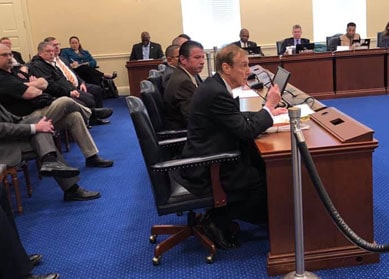
Not every workers’ compensation claim in Maryland proceeds smoothly through the Commission. When a healthcare employer’s insurer disputes compensability, challenges the medical evidence, or offers a settlement that does not fully account for the scope of an injury, the worker faces a real hearing before the Maryland Workers’ Compensation Commission. That hearing is not informal. Evidence is presented, witnesses may testify, and the decision can be appealed through the circuit courts and, if necessary, to Maryland’s appellate courts.
Berman | Sobin | Gross LLP has handled hundreds of workers’ compensation jury trials and has taken cases before both of Maryland’s highest courts. One of the firm’s founders wrote a two-volume legal treatise that continues to serve as the definitive reference on Maryland workers’ compensation law. That depth of experience does not exist at every firm that accepts these cases, and it matters most precisely when a claim becomes contested. If another attorney has declined to take your case past an administrative hearing, or if a prior settlement left you without adequate resources for ongoing medical care, there is still a path forward and it is worth a direct conversation with our attorneys.
Answers to Questions Easton Healthcare Workers Often Ask
Can I file a workers’ compensation claim if my employer says the injury was my fault?
Maryland’s workers’ compensation system is a no-fault system, which means that fault is generally not the basis for accepting or denying a claim. Coverage depends on whether the injury arose out of and in the course of your employment, not on whether you or your employer made a mistake. There are narrow exceptions, such as injuries caused by willful misconduct, but a claim should not be dismissed simply because your employer characterizes the incident as preventable or attributable to your own actions.
My employer told me I have to see their doctor. Do I have any say in my medical care?
Maryland law gives the employer and insurer substantial control over initial medical treatment, which is one of the most frustrating aspects of the system for injured workers. However, you have the right to request a change of treating physician under certain circumstances, and you are entitled to obtain your own independent medical evaluation. Understanding when and how to exercise those rights, and how to protect your claim when an employer’s physician offers a minimizing opinion, is exactly the kind of guidance our attorneys provide.
What benefits am I entitled to if I cannot return to my nursing or healthcare job?
Maryland workers’ compensation provides for temporary total disability benefits while you are unable to work, temporary partial disability if you can work in a reduced capacity, and permanent disability benefits once your condition reaches maximum medical improvement. If your injury prevents you from returning to healthcare work specifically, vocational rehabilitation services may also be available. The scope of benefits depends heavily on how the claim is documented and litigated, which is why early legal involvement often affects outcomes.
I work for a home health agency and was injured at a patient’s home in Talbot County. Am I covered?
In most circumstances, yes. Injuries that occur while you are performing your job duties are covered regardless of whether you are physically located at your employer’s facility. Home health workers are generally covered while traveling between patient homes and while providing care in those homes. Questions about coverage can arise depending on the specific facts of your employment arrangement, particularly if you are classified as an independent contractor, which is a classification that sometimes does not hold up legally under Maryland law.
How long do I have to report a workplace injury and file a claim in Maryland?
For most workplace accidents, you must notify your employer as soon as practicable, and claims before the Maryland Workers’ Compensation Commission must generally be filed within two years of the date of injury. For occupational diseases, the timeline can run from the date you knew or should have known the condition was work-related. Missing these deadlines can result in a loss of benefits, so filing promptly and correctly matters.
What if my employer retaliates against me for filing a workers’ compensation claim?
Maryland law prohibits employers from retaliating against employees for filing workers’ compensation claims. If you have experienced termination, demotion, schedule changes, or other adverse treatment after filing or expressing an intent to file, that conduct may give rise to a separate legal claim. Documenting the sequence of events from the date of injury forward is important, and our attorneys can evaluate whether retaliation has occurred alongside the underlying workers’ compensation matter.
Can I also sue my employer or a third party for my injuries?
Workers’ compensation is generally the exclusive remedy against your direct employer, which means you cannot file a separate personal injury lawsuit against them. However, if a third party contributed to your injury, such as a defective piece of medical equipment, a negligent contractor working in the facility, or a driver involved in an accident during a work-related commute, a separate civil claim may be possible alongside your workers’ compensation claim. These situations require careful analysis of who was involved and in what capacity.
Serving Healthcare Workers Throughout the Eastern Shore and Maryland
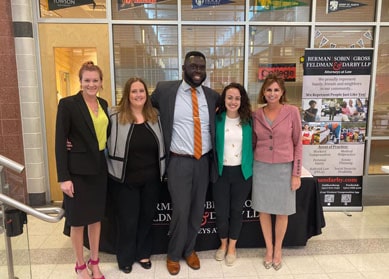
Berman | Sobin | Gross LLP is the largest workers’ compensation firm in Maryland representing injured workers, with offices in Lutherville, Baltimore, Gaithersburg, and Frederick and a practice that extends across the state including the Eastern Shore communities of Easton, St. Michaels, Cambridge, and surrounding Talbot and Dorchester County areas. Spanish-speaking staff and attorneys are available for clients who prefer to communicate in Spanish, and the firm’s attorneys come from diverse professional backgrounds that reflect the wide range of workers they represent.
Talk to an Easton Healthcare Injury Lawyer About Your Claim
Healthcare work carries real physical cost, and when that cost results in an injury that affects your ability to work and support your family, the benefits system exists to help you recover. The challenge is that recovering those benefits fully, especially when a claim is disputed or an injury is serious, requires knowing how Maryland’s workers’ compensation law actually operates and how to respond when an employer or insurer pushes back. The attorneys at Berman | Sobin | Gross LLP have spent 35 years helping workers navigate exactly these situations. Contact our firm today to speak with an Easton healthcare worker injury attorney about what happened and what your options are.