Easton Construction Worker Injury Attorney
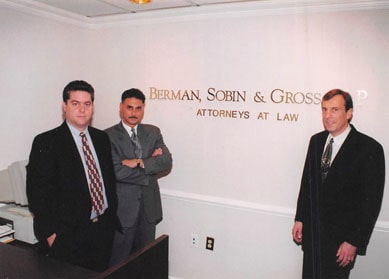
Construction work puts people in harm’s way every single day. Framing crews, roofers, ironworkers, electricians, concrete workers, and laborers in and around Easton face conditions that office workers will never encounter: heights without adequate fall protection, heavy equipment moving in tight spaces, live electrical systems, trenches that can collapse without warning. When something goes wrong on a Talbot County job site, the physical toll is almost always serious. The legal and financial questions that follow can be just as overwhelming to deal with. The attorneys at Berman | Sobin | Gross LLP have spent 35 years representing Maryland workers who get hurt on the job, and that experience directly applies to construction workers in Easton and across the Eastern Shore.
Why Construction Injuries in Easton Present Distinct Legal Challenges
Talbot County’s construction industry reflects the region’s growth. Residential development along the Miles River corridor, commercial projects in and around downtown Easton, waterfront rehabilitation work, and infrastructure jobs along Route 50 all draw large crews from multiple subcontractors. That layered structure, a general contractor overseeing a dozen subcontractors, each with their own employees, creates real complications when someone gets hurt.
Workers’ compensation in Maryland is employer-specific, which means the first question after a construction injury is often: who exactly employs this person, and is that employer properly covered? In construction, workers are sometimes misclassified as independent contractors to avoid insurance obligations. Some crews are employed by out-of-state subcontractors whose insurance situation is murky. Some smaller outfits on Easton-area jobs are uninsured entirely, which triggers a different set of options through Maryland’s Uninsured Employers’ Fund.
Beyond workers’ comp, construction injuries frequently involve third parties whose negligence contributed to the accident. A scaffolding manufacturer whose product failed, a property owner who created a dangerous condition, a subcontractor whose crew created a hazard for workers from a different company, these are all potentially liable parties separate from your employer. Maryland law allows injured construction workers to pursue a third-party claim at the same time as their workers’ compensation case. That parallel path can make a significant difference in total recovery, particularly for injuries that leave long-term limitations.
The Injuries That Happen on Talbot County Job Sites
Falls from rooftops, scaffolding, and ladders account for a large share of serious construction injuries statewide, and Easton-area sites are no exception. What makes fall injuries particularly difficult is the range of what they produce: some workers walk away with fractures that heal relatively well; others suffer traumatic brain injuries, spinal cord damage, or injuries that require multiple surgeries and years of rehabilitation. Workers’ compensation benefits are calibrated to address medical costs and lost wages, but the calculation for a permanent or catastrophic injury is far more involved than for a straightforward broken arm.
Struck-by injuries, where a worker is hit by falling materials, swinging equipment, or a vehicle moving through the site, are another common category. So are caught-in and caught-between injuries involving machinery. Electrical contact on construction sites causes burns, cardiac events, and neurological damage that are often underappreciated in the immediate aftermath. Chemical exposure from construction materials, including older buildings in Easton that may contain lead paint or asbestos, can produce occupational disease claims rather than acute injury claims, which follow a different process under Maryland law.
The common thread across all of these injury types is that the consequences for the worker rarely resolve quickly. Missing weeks or months of work while managing medical treatment, navigating coverage disputes, and dealing with an employer or insurer who may not be responding in good faith, that combination is why having legal representation from the outset matters.
What a Construction Injury Claim Actually Involves
Maryland workers’ compensation requires that an injured worker report the injury to their employer and file a claim with the Workers’ Compensation Commission. The deadline to file is generally two years from the date of injury, though earlier action is almost always better because evidence is preserved, witnesses are available, and delays can create gaps that insurers use to question the claim.
Once a claim is filed, the employer’s insurer will begin evaluating it. For straightforward injuries with clear causation, the process may move without major friction. For serious injuries, the insurer will almost certainly request an independent medical examination conducted by a physician they select. Those examinations frequently produce opinions that minimize the severity of an injury or dispute whether it was work-related. Responding to an adverse IME opinion requires medical evidence and legal argument, both of which are areas where representation makes a concrete difference.
Hearings before the Workers’ Compensation Commission are administrative proceedings with their own procedural rules. Appeals from Commission decisions can go to the Circuit Court and, in significant cases, further still. The attorneys at Berman | Sobin | Gross LLP have litigated workers’ compensation cases at every level of Maryland’s courts, including before the state’s highest courts. Firms that handle only routine cases up to the administrative level are not always equipped to take on the fight that serious construction injuries sometimes require.
Where a third-party claim is viable alongside the workers’ comp claim, the two tracks interact in ways that require careful management. Maryland law provides for a lien in favor of the employer or insurer against any third-party recovery, but there are strategies available that can reduce how much of a third-party settlement or verdict is consumed by that lien. Getting that analysis right takes attorneys who understand both sides of the equation.
Questions Construction Workers in Easton Often Ask
Does it matter if I was partly at fault for the accident?
For workers’ compensation purposes, fault is generally not relevant. Maryland’s workers’ comp system is a no-fault system, meaning an injured worker can receive benefits even if their own actions contributed to the accident, with narrow exceptions for intentional self-injury or intoxication. A third-party negligence claim operates differently, under Maryland’s contributory negligence standard, which is why the legal analysis on the third-party side requires more factual development about how the accident actually occurred.
What if my employer says I was an independent contractor?
That classification is not always accurate, and in Maryland it does not automatically control. Courts and the Workers’ Compensation Commission look at the actual nature of the work relationship, not just what an employer calls it. Many workers labeled as independent contractors in construction are entitled to workers’ comp coverage when the actual working conditions are examined.
My employer was uninsured. Do I have any recourse?
Yes. Maryland maintains an Uninsured Employers’ Fund specifically to address situations where a covered employer has failed to carry required workers’ compensation insurance. An attorney can help navigate that process, which differs from a standard comp claim.
Can I choose my own doctor?
Maryland workers’ compensation does provide injured workers with some ability to select treating physicians, though the employer or insurer may have influence over the initial treatment direction. The specifics depend on how the claim is being handled. This is an area worth discussing with an attorney early, because the treating physician’s records and opinions become central to how the claim develops.
How long do construction injury claims take to resolve?
It varies considerably based on the nature of the injury, how much of the medical picture is still unfolding, and whether there are disputes about causation or extent of disability. Claims involving permanent disability or third-party litigation typically take longer. Resolving a claim before the full medical picture is clear can leave money on the table, which is one reason not to accept early settlement offers without legal review.
What benefits can I actually recover through workers’ compensation?
Maryland workers’ comp provides coverage for medical treatment related to the injury, temporary total or temporary partial disability benefits to replace a portion of lost wages during recovery, and permanent disability awards based on the nature and extent of lasting impairment. In cases involving death, benefits extend to dependents. Third-party claims can recover damages beyond what workers’ comp provides, including pain and suffering and the full value of lost future earnings.
What if I already tried to handle the claim on my own and it went badly?
It is not too late to get representation in many situations, though the options available depend on where the case stands procedurally and what deadlines may have passed. Berman | Sobin | Gross LLP also takes on cases that other attorneys have turned down or declined to pursue past an administrative hearing. If a prior attorney walked away from your case, that does not mean the case has no merit.
Representing Injured Construction Workers Across the Eastern Shore
Berman | Sobin | Gross LLP is the largest workers’ compensation firm in Maryland representing injured workers. The firm serves clients throughout the state from offices in Lutherville, Baltimore, Gaithersburg, and Frederick, and represents construction workers, first responders, and other working people from every region of Maryland. For workers in Easton and Talbot County, the firm’s reach across the state and its history of handling complex, high-stakes claims means access to the same level of representation available in any major Maryland market. The firm has attorneys and staff fluent in Spanish, and every client works with the same attorney throughout their case rather than being passed between staff members. One of the firm’s founding attorneys literally authored the leading treatise on workers’ compensation law in Maryland, and that depth of knowledge runs through how the firm approaches every case it handles.
If you were hurt on an Easton construction site, an Easton construction injury attorney at Berman | Sobin | Gross LLP can evaluate your situation, explain what you are actually entitled to, and handle both the workers’ compensation claim and any third-party recovery that may apply. The consultation is confidential, and there is no obligation on your end to proceed.