
Dundalk Firefighters, Paramedics & EMTs Injury Attorney
The men and women who staff Dundalk’s fire stations and emergency response units absorb a level of physical and chemical risk that most workers never encounter. Structural fires in the older row homes and industrial corridors along the Patapsco waterfront, chemical exposures near the Dundalk Marine Terminal, and the relentless physical toll of emergency medical calls combine to make this one of Maryland’s more demanding environments for first responders. When injuries happen, the workers’ compensation system that governs their claims is substantially different from what applies to other Maryland workers. The specialized presumption laws, benefit structures, and procedural rules that apply to Dundalk firefighters, paramedics and EMTs injury attorney representation require someone who handles these claims every day, not as an occasional addition to a general practice.
Why Occupational Disease Claims Are the Central Challenge for Dundalk First Responders
Traumatic injuries, broken bones, torn ligaments, burns sustained at a scene, these get reported and processed in ways that are generally straightforward. The claims that become contentious are the ones that develop over years of exposure: cancers linked to smoke and combustion byproducts, heart disease, hypertension, hearing loss from years of alarm and engine noise, and lung conditions accumulated through decades of interior firefighting or emergency intubations without adequate respiratory protection.
Maryland’s statutory presumption framework is built specifically for these situations. Under Maryland law, certain diseases, including heart disease, hypertension, and lung disease, are presumed to be occupationally related for public safety employees who have served a defined period of time. That presumption shifts the burden to the employer or its insurer to disprove the connection rather than requiring the worker to prove it from scratch. This is a significant legal protection, but employers and their medical experts have become sophisticated about challenging it. In Montgomery County v. Pirrone, Berman Sobin Gross LLP secured a ruling confirming that the heart, lung, and hypertension presumption applies even after a public safety employee retires or is off duty. In City of Frederick v. Shankle, the firm established that employer medical experts who claim the occupational disease presumption lacks scientific foundation can be barred from testifying altogether. These are not abstract appellate victories. They are the legal architecture that determines whether a Dundalk firefighter with heart disease walks into a Commission hearing with the burden on the employer or has to fight uphill from the start.
The Legal Standing of EMTs and Paramedics Under Maryland Public Safety Law
There has been ongoing uncertainty about whether EMTs and paramedics qualify for the enhanced protections available to public safety employees, or whether they fall into a lesser category. Berman Sobin Gross LLP litigated this question directly in Downer v. Baltimore County, where the firm obtained a ruling confirming that EMTs are public safety employees and are entitled to the same enhanced compensation benefits as other public safety workers. For Dundalk-area paramedics and EMTs, many of whom respond to the same scenes as firefighters and face equivalent chemical and biological exposures, this classification matters enormously when it comes to both the presumption protections and the benefit calculations that follow.
Baltimore County operates a substantial emergency services apparatus that covers Dundalk directly, and the jurisdictional and administrative details of how claims move through Baltimore County’s systems versus a municipality’s workers’ compensation program differ in ways that affect case strategy. The firm’s three-plus decades of representing firefighters, EMTs, and paramedics throughout Maryland means those procedural specifics are already understood before a claim is filed, not discovered mid-process.
Wage Loss and Light Duty: What Dundalk First Responders Often Get Wrong
A significant number of injured first responders in Maryland accept a light duty assignment and assume that because their salary continues, they have no viable wage loss claim. That assumption is often wrong. If a Dundalk firefighter was regularly working overtime before the injury, and the light duty assignment eliminates access to that overtime, the reduction in overall earnings is compensable. The appellate decision in Montgomery County v. Deibler, a case Berman Sobin Gross LLP was involved in, established that public safety workers receiving full base salary while on light duty can still recover compensation for the overtime wages they were earning before the injury. For first responders who routinely work overtime as part of their normal income structure, this can represent a substantial portion of the actual economic loss from an injury.
Similarly, workers’ compensation benefits and service-connected disability retirement benefits are not mutually exclusive. Fikar v. Montgomery County, another Berman Sobin Gross LLP appellate case, confirmed that injured workers receiving service-connected disability retirement can also access vocational rehabilitation services through the workers’ compensation system. For a paramedic or firefighter who can no longer perform field work, rehabilitation benefits can be the pathway to meaningful reemployment rather than a diminished retirement.
Questions Dundalk First Responders Ask When They Start Looking at a Claim
Does it matter when I report my injury if it developed gradually over years?
Yes, and the timing rules for occupational diseases work differently from traumatic injuries. The statute of limitations for an occupational disease claim generally runs from the date the worker knew or reasonably should have known that the disease was work-related, not the date symptoms first appeared. Getting this right requires careful documentation and often a conversation with an attorney before anything is filed, because errors in the filing timeline are one of the most common ways otherwise valid claims get dismissed.
My employer says my cancer was caused by factors unrelated to firefighting. What happens next?
When the statutory presumption applies, the employer or insurer carries the burden of rebutting it with evidence that the condition was not caused by work. Following City of Frederick v. Shankle, there are meaningful limits on the kinds of expert testimony that can be used to undercut the presumption. However, employers will bring medical experts to challenge the claim, and having attorneys who have litigated these specific disputes extensively makes a real difference in how effectively that challenge can be countered.
I was injured off duty but during a period when I was technically on call. Does workers’ compensation still apply?
The Montgomery County v. Pirrone decision extended the presumption to cover periods after retirement and while off duty for qualifying diseases. Whether a specific off-duty injury or condition qualifies depends on the facts of the employment arrangement and the nature of the condition. This is the kind of jurisdictional question where appellate case law matters and where a general practice attorney without deep workers’ comp experience may miss the argument entirely.
Can I choose my own treating physician?
Maryland workers’ compensation law gives injured workers some ability to select treating physicians, but there are rules governing when and how that choice is exercised. For ongoing conditions like occupational cancers or cardiovascular disease, the treating physician’s documentation and opinions often become central to the claim’s value. The selection of a treating provider is a strategic decision, not just a medical preference.
What if I already went to a hearing and lost? Is the claim over?
Not necessarily. Berman Sobin Gross LLP handles cases that have already been through administrative hearings, including cases other attorneys declined to take further. The firm’s attorneys have litigated hundreds of workers’ compensation jury trials and argued before both of Maryland’s appellate courts. If an initial Commission hearing did not produce a fair result, there are avenues for appeal, and those avenues have timelines that require prompt attention.
Does my employer having a dedicated claims unit affect how I should handle things at the start?
Large employers like Baltimore County often have experienced in-house risk management and outside legal counsel working claims from the beginning. That professional infrastructure is built to manage costs, and early recorded statements, medical authorizations, and procedural choices can affect how the claim develops. Having representation before those early steps happen is not overcaution. It reflects the actual dynamics of how these claims are managed on the employer’s side.
What if I can no longer work as a firefighter or paramedic but I am not fully disabled?
Maryland’s workers’ compensation system includes permanent partial disability benefits and vocational rehabilitation provisions for workers who are left with lasting functional limitations. Depending on the nature of the injury and the availability of suitable alternative employment, the compensation picture can be substantially more complex than a straightforward disability determination. Rehabilitation services and wage differential calculations both factor into these outcomes.
Representing Dundalk-Area Emergency Responders Throughout Their Claims
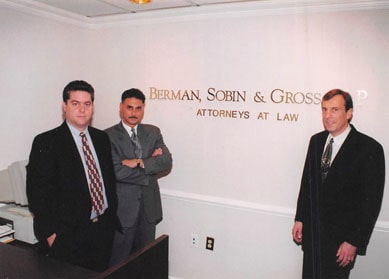
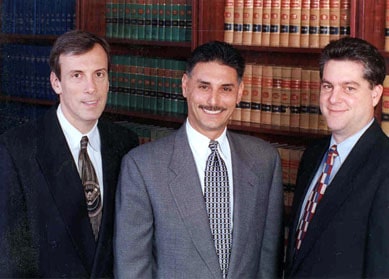
Berman Sobin Gross LLP is the largest workers’ compensation firm in Maryland representing injured workers, with attorneys and staff throughout the state, including offices accessible from Baltimore County. The firm represents firefighters, paramedics, EMTs, and other public safety employees as a core part of its practice, not a peripheral service. One of the firm’s founders authored a two-volume treatise on Maryland workers’ compensation that remains the primary reference resource in the field. For Dundalk first responders navigating a complex occupational disease claim, a disputed wage loss matter, or an appeal from an unsatisfactory Commission decision, the attorneys at Berman Sobin Gross LLP are available to evaluate the claim and explain what options actually exist based on the specific facts and applicable law.
If you are a Dundalk firefighter, paramedic, or EMT who has been injured or developed a work-related condition, contact Berman Sobin Gross LLP to speak with an attorney who handles Maryland first responder injury cases and understands the legal framework that governs your claim.